
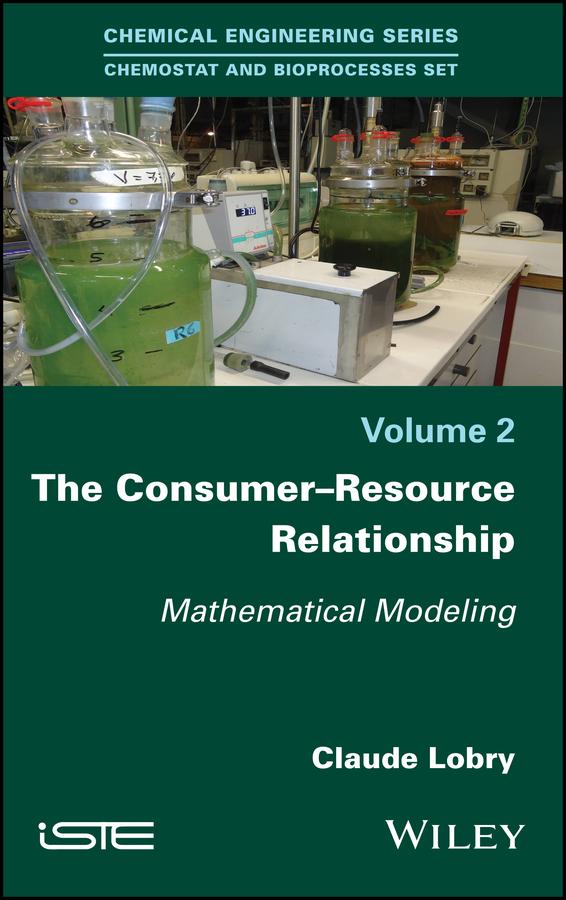
Better known as the "predator-prey relationship," the consumer-resource relationship means the situation where a single species of organisms consumes for survival and reproduction. For example, Escherichia coli consumes glucose, cows consume grass, cheetahs consume baboons; these three very different situations, the first concerns the world of bacteria and the resource is a chemical species, the second concerns mammals and the resource is a plant, and in the final case the consumer and the resource are mammals, have in common the fact of consuming.
In a chemostat, microorganisms generally consume (abiotic) minerals, but not always, bacteriophages consume bacteria that constitute a biotic resource. 'The Chemostat' book dealt only with the case of abiotic resources. Mathematically this amounts to replacing in the two equation system of the chemostat the decreasing function by a general increasing then decreasing function. This simple change has greatly enriched the theory. This book shows in this new framework the problem of competition for the same resource.
Płać wygodnie kartą, Klarną, Apple Pay lub Google Pay. Nie jesteś zadowolony? Zawsze masz 14-dniową gwarancję zwrotu pieniędzy. Więcej przeczytasz w naszych warunkach. Masz pytania? Napisz do nas na hello@memmo.org.
Memmo ułatwia naukę – gdziekolwiek jesteś na świecie. U nas znajdziesz podręczniki i sprytne narzędzia do nauki w jednym miejscu: streszczenia, quizy, podcasty i fiszki. A do tego Ted, Twój kumpel do nauki, który odpowie na wszystko, co Cię nurtuje. Ponad 50 000 studentów już tu się uczy – stworzone, byś uczył się szybciej i mniej stresował.