
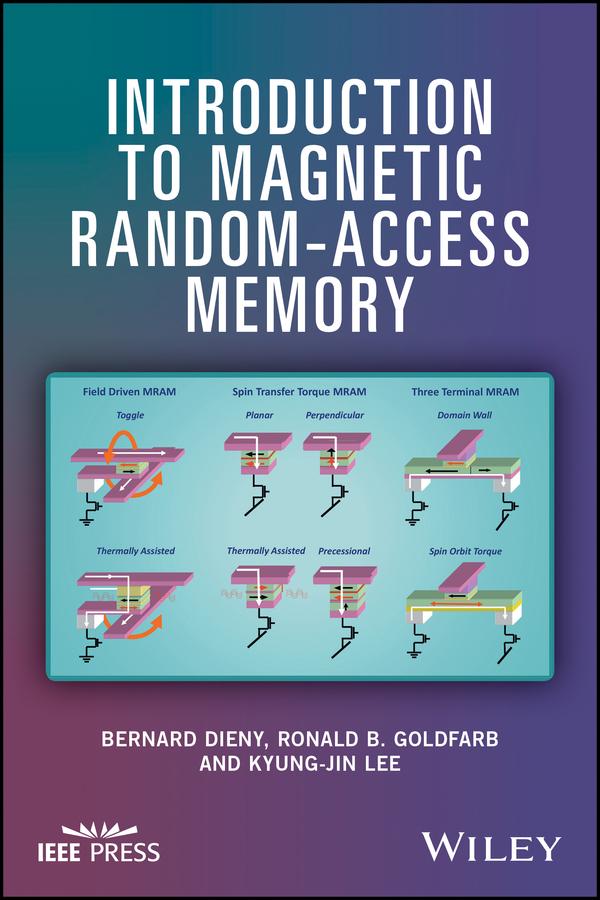
Magnetic random-access memory (MRAM) is poised to replace traditional computer memory based on complementary metal-oxide semiconductors (CMOS). MRAM will surpass all other types of memory devices in terms of nonvolatility, low energy dissipation, fast switching speed, radiation hardness, and durability. Although toggle-MRAM is currently a commercial product, it is clear that future developments in MRAM will be based on spin-transfer torque, which makes use of electrons’ spin angular momentum instead of their charge. MRAM will require an amalgamation of magnetics and microelectronics technologies. However, researchers and developers in magnetics and in microelectronics attend different technical conferences, publish in different journals, use different tools, and have different backgrounds in condensed-matter physics, electrical engineering, and materials science.
This book is an introduction to MRAM for microelectronics engineers written by specialists in magnetic materials and devices. It presents the basic phenomena involved in MRAM, the materials and film stacks being used, the basic principles of the various types of MRAM (toggle and spin-transfer torque; magnetized in-plane or perpendicular-to-plane), the back-end magnetic technology, and recent developments toward logic-in-memory architectures. It helps bridge the cultural gap between the microelectronics and magnetics communities.Płać wygodnie kartą, Klarną, Apple Pay lub Google Pay. Nie jesteś zadowolony? Zawsze masz 14-dniową gwarancję zwrotu pieniędzy. Więcej przeczytasz w naszych warunkach. Masz pytania? Napisz do nas na hello@memmo.org.
Memmo ułatwia naukę – gdziekolwiek jesteś na świecie. U nas znajdziesz podręczniki i sprytne narzędzia do nauki w jednym miejscu: streszczenia, quizy, podcasty i fiszki. A do tego Ted, Twój kumpel do nauki, który odpowie na wszystko, co Cię nurtuje. Ponad 50 000 studentów już tu się uczy – stworzone, byś uczył się szybciej i mniej stresował.