
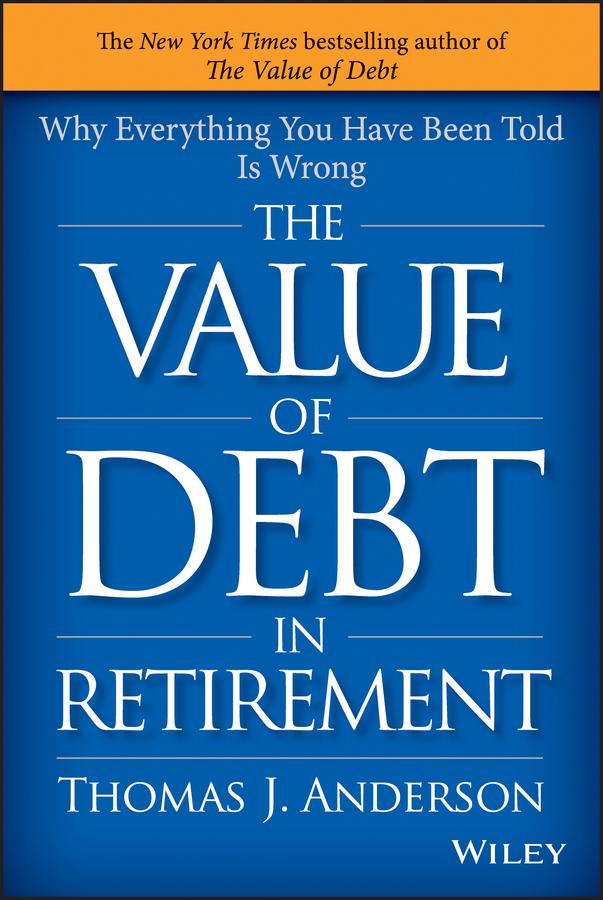
Conventional wisdom is wrong – being debt free in retirement may actually increase your risk. The Value of Debt in Retirement teaches you how incorporating debt into your retirement strategy may increase your return, lower your taxes and actually lower your risk. You read that right. If handled correctly, debt—that thing we've all been taught to avoid—can play an integral role in your life, especially in retirement. New York Times Best Selling Author and nationally acclaimed financial expert Tom Anderson shows you how to use the time tested strategies of the best companies and the ultra rich to retire comfortably, minimize taxes, buy the things you have always wanted to have and do the things you have always wanted to do.
Thought provoking and against the grain, Anderson explains why your risk tolerance doesn't matter, why being debt free may actually increase your risk and why rushing to pay off your mortgage may be a financial disaster. Full of shocking revelations and tricks high- net-worth individuals have used for years, The Value of Debt in Retirement opens the world to a new approach to wealth management in retirement, one that factors in both sides of the balance sheet as an integrated ecosystem.
Real-world case studies illustrate how informed debt strategies can lead to a happier, healthier retirement. See how an individual with a net worth of more than $5 million can spend $20,000 per month - after taxes - and pay less than $5,000 per year in taxes, how it is possible to increase your rate of return by 50%, and how a lower risk portfolio with debt could increase the chances you do not run out of money.
Specifically written to Baby Boomers, practical guides and checklists show how to use debt strategies to fund primary and secondary properties, refinance credit card debt, and finance hobbies, such as cars and boats and recreational vehicles. Additional guides show how you can help your children, help your parents and leave a bigger legacy for your heirs and favorite charities. Regardless of your net worth, The Value of Debt in Retirement provides tools to use to apply these concepts to your personal situation.
There is no free lunch: the book delivers a balanced perspective focusing on the potential risks and benefits of the strategies discussed. A discussion on economic history highlights some of the shocks the economy may face and provides important warnings that you should factor into your retirement plan. Anderson not only shows that your life expectancy may be longer than you think, but also illustrates that many investors may be on track to average returns well under 4% for the next ten years – a potentially devastating combination. Irrespective of your beliefs about debt, The Value of Debt in Retirement proves risk is more important than return for retirees and provides suggestions on ways to minimize that risk.
Not all debt is good and high levels of debt are bad. The Value of Debt in Retirement is about choosing the right debt, in the right amounts, at the right time. Perhaps most importantly, this book isn't for everybody. This book requires responsible actions. If you can't handle the responsibility associated with the ideas then this book then it isn't for you. If you need a rate of return under 3% from your investments then you may not need this book. But if you can handle the responsibility and if you need a return above 3%, this book may offer insights into the best (and potentially only) way to achieve your goals.
Płać wygodnie kartą, Klarną, Apple Pay lub Google Pay. Nie jesteś zadowolony? Zawsze masz 14-dniową gwarancję zwrotu pieniędzy. Więcej przeczytasz w naszych warunkach. Masz pytania? Napisz do nas na hello@memmo.org.
Memmo ułatwia naukę – gdziekolwiek jesteś na świecie. U nas znajdziesz podręczniki i sprytne narzędzia do nauki w jednym miejscu: streszczenia, quizy, podcasty i fiszki. A do tego Ted, Twój kumpel do nauki, który odpowie na wszystko, co Cię nurtuje. Ponad 50 000 studentów już tu się uczy – stworzone, byś uczył się szybciej i mniej stresował.