
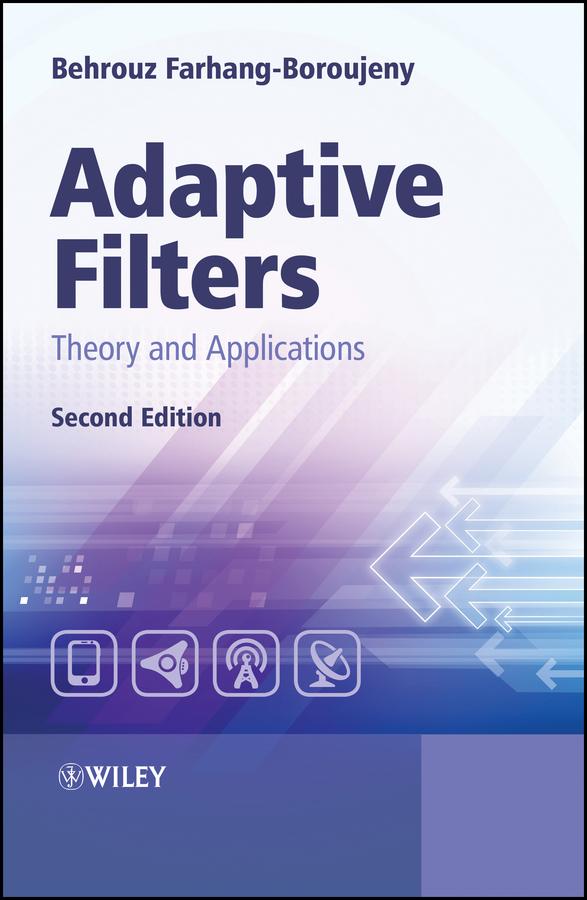
This second edition of Adaptive Filters: Theory and Applications has been updated throughout to reflect the latest developments in this field; notably an increased coverage given to the practical applications of the theory to illustrate the much broader range of adaptive filters applications developed in recent years. The book offers an easy to understand approach to the theory and application of adaptive filters by clearly illustrating how the theory explained in the early chapters of the book is modified for the various applications discussed in detail in later chapters. This integrated approach makes the book a valuable resource for graduate students; and the inclusion of more advanced applications including antenna arrays and wireless communications makes it a suitable technical reference for engineers, practitioners and researchers.
Key features:
• Offers a thorough treatment of the theory of adaptive signal processing; incorporating new material on transform domain, frequency domain, subband adaptive filters, acoustic echo cancellation and active noise control.
• Provides an in-depth study of applications which now includes extensive coverage of OFDM, MIMO and smart antennas.
• Contains exercises and computer simulation problems at the end of each chapter.
• Includes a new companion website hosting MATLAB® simulation programs which complement the theoretical analyses, enabling the reader to gain an in-depth understanding of the behaviours and properties of the various adaptive algorithms.
Płać wygodnie kartą, Klarną, Apple Pay lub Google Pay. Nie jesteś zadowolony? Zawsze masz 14-dniową gwarancję zwrotu pieniędzy. Więcej przeczytasz w naszych warunkach. Masz pytania? Napisz do nas na hello@memmo.org.
Memmo ułatwia naukę – gdziekolwiek jesteś na świecie. U nas znajdziesz podręczniki i sprytne narzędzia do nauki w jednym miejscu: streszczenia, quizy, podcasty i fiszki. A do tego Ted, Twój kumpel do nauki, który odpowie na wszystko, co Cię nurtuje. Ponad 50 000 studentów już tu się uczy – stworzone, byś uczył się szybciej i mniej stresował.