
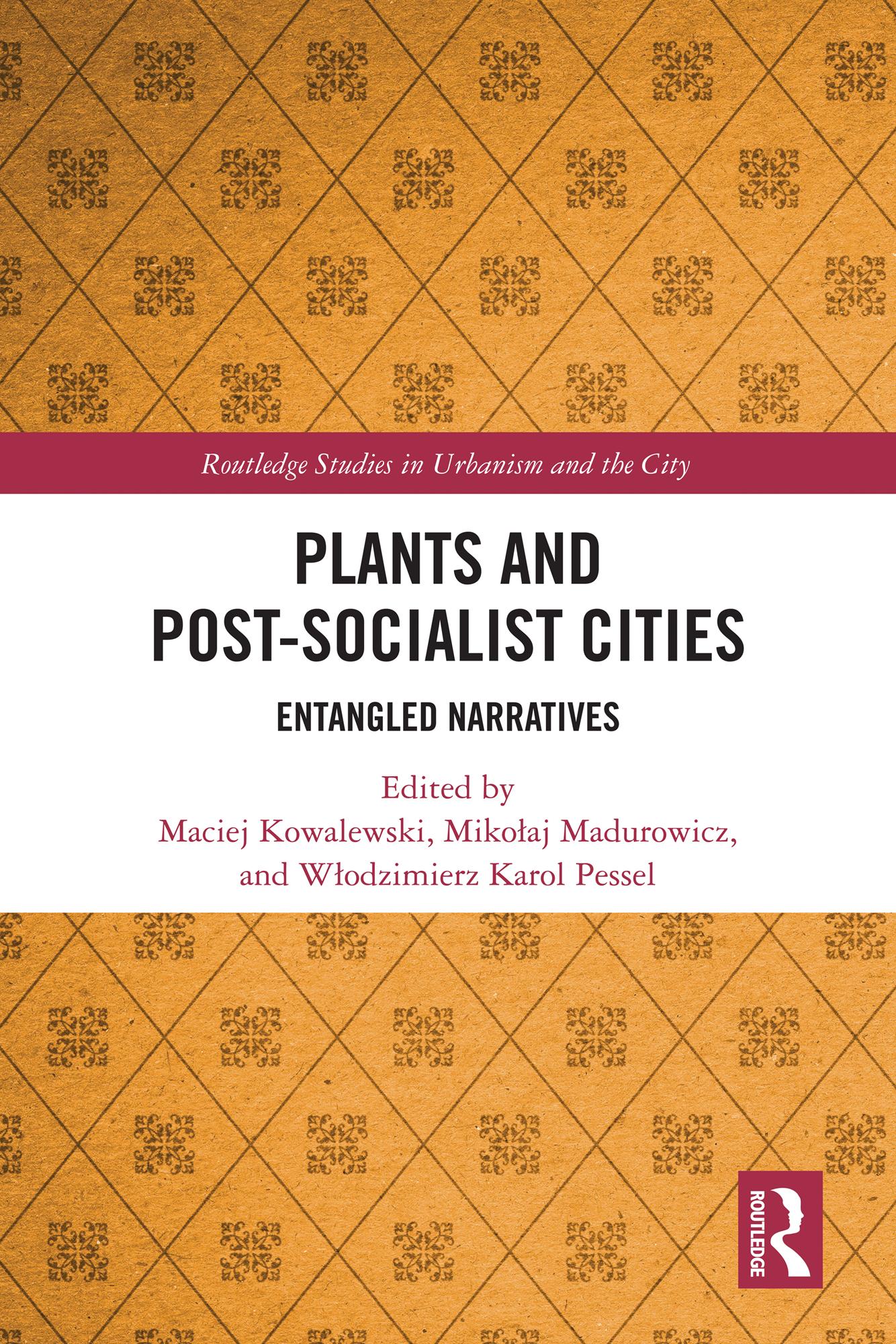
This book offers a theoretically informed exploration of the political, cultural, and ecological significance of urban greenery in post-socialist cities. It traces how plants mediate among memory, infrastructure, and regimes of power across diverse historical and geographical contexts.
The book develops a vocabulary for understanding plants as actors, symbols, archives, and processes within urban transformation. It does so through case studies ranging from Polish housing estates, Nowa Huta, the Upper Silesian brownfields, Elbląg, Szczecin, Warsaw, Vilnius, and Belgrade to Indian urban imaginaries and Chornobyl’s gardens. Drawing on environmental humanities, urban studies, critical plant studies, political ecology, plant blindness, post-political theory, and more-than-human approaches, the book shows how vegetal life participates in memory, governance, conflict, decay, and everyday urban experience.
This book will appeal to scholars and advanced students in urban studies, cultural studies, environmental humanities, anthropology, and human geography, as well as to readers interested in post-socialist transformations, urban ecology, and more-than-human approaches to the city.
Płać wygodnie kartą, Klarną, Apple Pay lub Google Pay. Nie jesteś zadowolony? Zawsze masz 14-dniową gwarancję zwrotu pieniędzy. Więcej przeczytasz w naszych warunkach. Masz pytania? Napisz do nas na hello@memmo.org.
Memmo ułatwia naukę – gdziekolwiek jesteś na świecie. U nas znajdziesz podręczniki i sprytne narzędzia do nauki w jednym miejscu: streszczenia, quizy, podcasty i fiszki. A do tego Ted, Twój kumpel do nauki, który odpowie na wszystko, co Cię nurtuje. Ponad 50 000 studentów już tu się uczy – stworzone, byś uczył się szybciej i mniej stresował.