
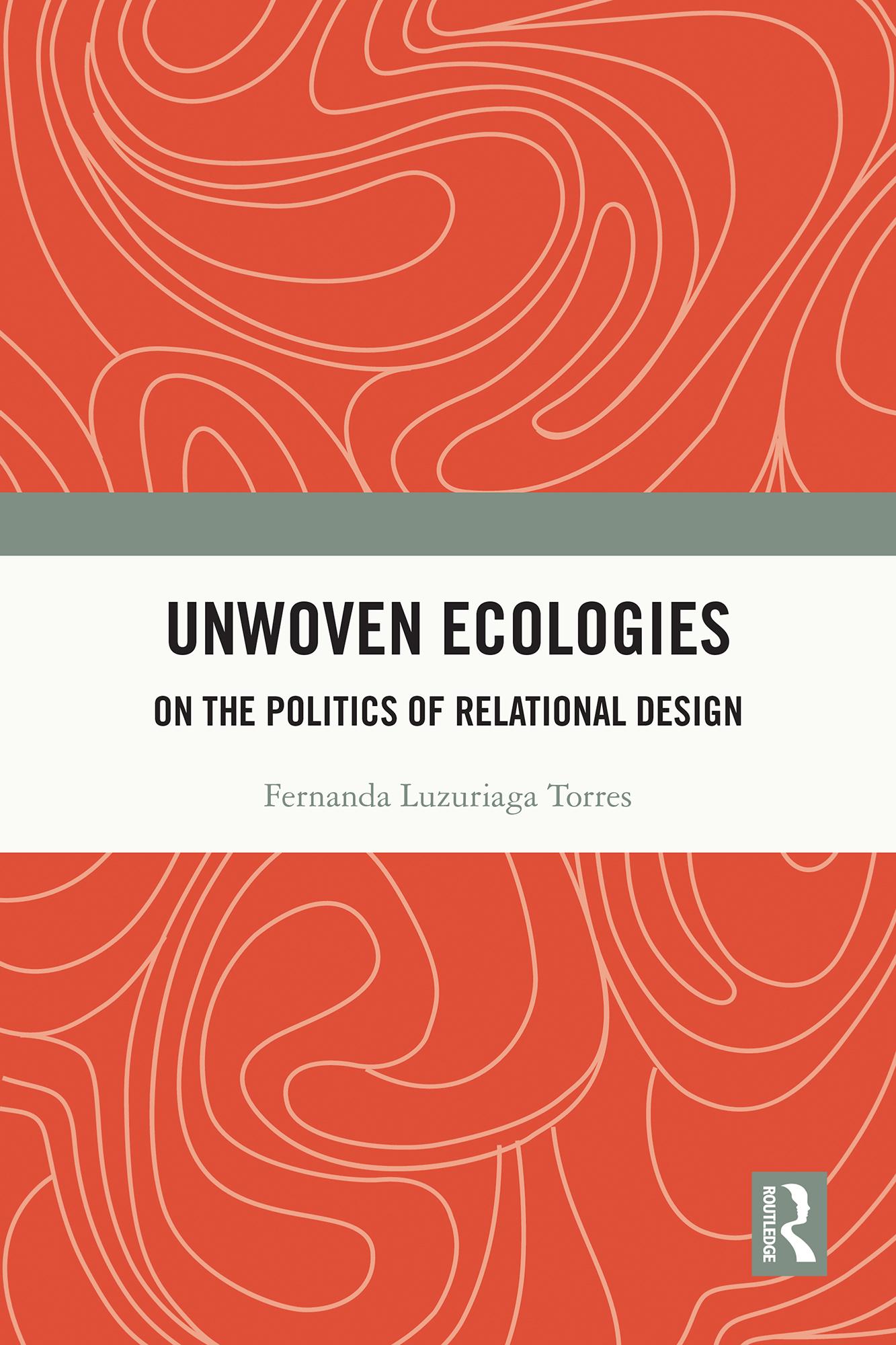
This book addresses the urgency of rethinking coexistence through urbanism. In the face of contemporary global crises, it argues that modern thought and its dichotomies
are insufficient to grasp current territorial conflicts. Instead, it proposes viewing coexistence as a field of friction among beings, knowledges, and economies
intertwined within a relational ecology, suggesting that these connections serve as the very point of departure for urbanism.
Grounded in research from the Ecuadorian Amazon, the work situates local conflicts within global dynamics of the coloniality of power. Methodologically,
it pairs socio-spatial analysis with the microhistories of Kichwa women, bringing to light living spatial configurations. Informed by cannibal thought and the bodyterritory
continuum, these practices reframe urbanism as cosmic diplomacy and predation, while the ch’ixi framework offers a way to conceive coexistence without
assimilation.
Unwoven Ecologies: On the Politics of Relational Design is intended for scholars, postgraduate students, urban planners, and activists in political ecology and decolonial
theory who are seeking relational methodologies to foster resilient models of dwelling on Earth.
Płać wygodnie kartą, Klarną, Apple Pay lub Google Pay. Nie jesteś zadowolony? Zawsze masz 14-dniową gwarancję zwrotu pieniędzy. Więcej przeczytasz w naszych warunkach. Masz pytania? Napisz do nas na hello@memmo.org.
Memmo ułatwia naukę – gdziekolwiek jesteś na świecie. U nas znajdziesz podręczniki i sprytne narzędzia do nauki w jednym miejscu: streszczenia, quizy, podcasty i fiszki. A do tego Ted, Twój kumpel do nauki, który odpowie na wszystko, co Cię nurtuje. Ponad 50 000 studentów już tu się uczy – stworzone, byś uczył się szybciej i mniej stresował.