
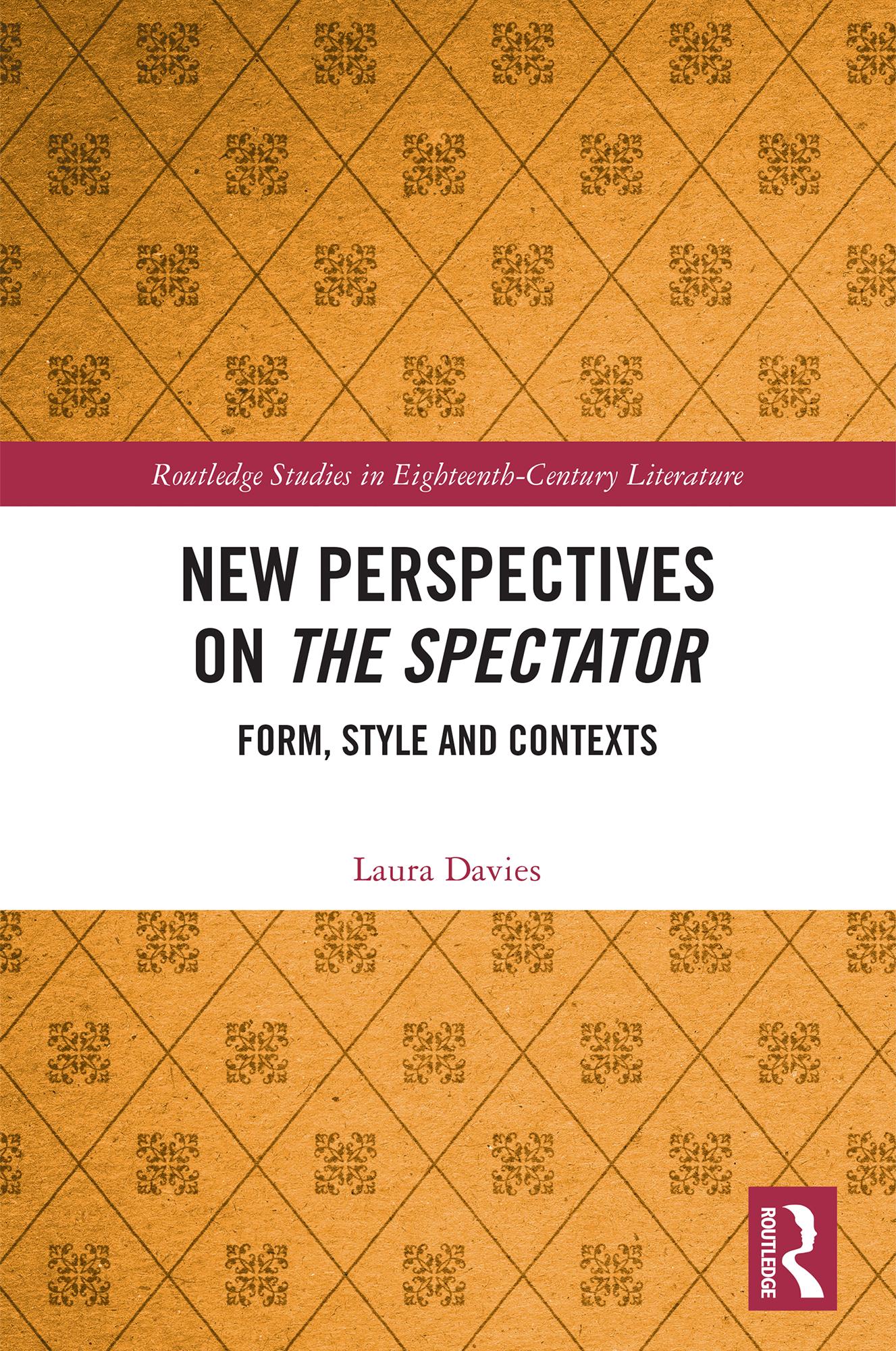
New Perspectives on The Spectator: Form, Style and Contexts offers a fresh approach to the much-referenced but rarely thoroughly read periodical The Spectator. Breaking free from the constraints of existing scholarly debates, which are dominated by issues of commercial and urban life and the emergence of the ‘public sphere’, this book brings to light previously unnoticed themes and features, building an alternative picture of the content, form, style, and significance of this influential work. It focuses on the essays authored by Joseph Addison and develops a mode of immersed close reading to bring out hinterlands of thought concerned with forms of human experience, both interior and societal, that do not align with conventional evaluations of The Spectator as polite, rational and prescriptive. Each chapter draws on an extensive range of writing by Addison, including his prose and poetry beyond The Spectator, and examines a theme that appears distinctively and frequently across the hundreds of essays he contributed to both of its short-lived runs (1711–1712 and 1714). These themes include blanks and blankness, secrets and lies, dreams and visions, death and the afterlife, and excess and waste. In this way, the book reimagines The Spectator’s character as a literary text alongside its role in shaping the reading public of the early eighteenth century, and establishes a new framework for future scholarship across the multiple disciplines in which The Spectator remains a touchstone text.
Płać wygodnie kartą, Klarną, Apple Pay lub Google Pay. Nie jesteś zadowolony? Zawsze masz 14-dniową gwarancję zwrotu pieniędzy. Więcej przeczytasz w naszych warunkach. Masz pytania? Napisz do nas na hello@memmo.org.
Memmo ułatwia naukę – gdziekolwiek jesteś na świecie. U nas znajdziesz podręczniki i sprytne narzędzia do nauki w jednym miejscu: streszczenia, quizy, podcasty i fiszki. A do tego Ted, Twój kumpel do nauki, który odpowie na wszystko, co Cię nurtuje. Ponad 50 000 studentów już tu się uczy – stworzone, byś uczył się szybciej i mniej stresował.