
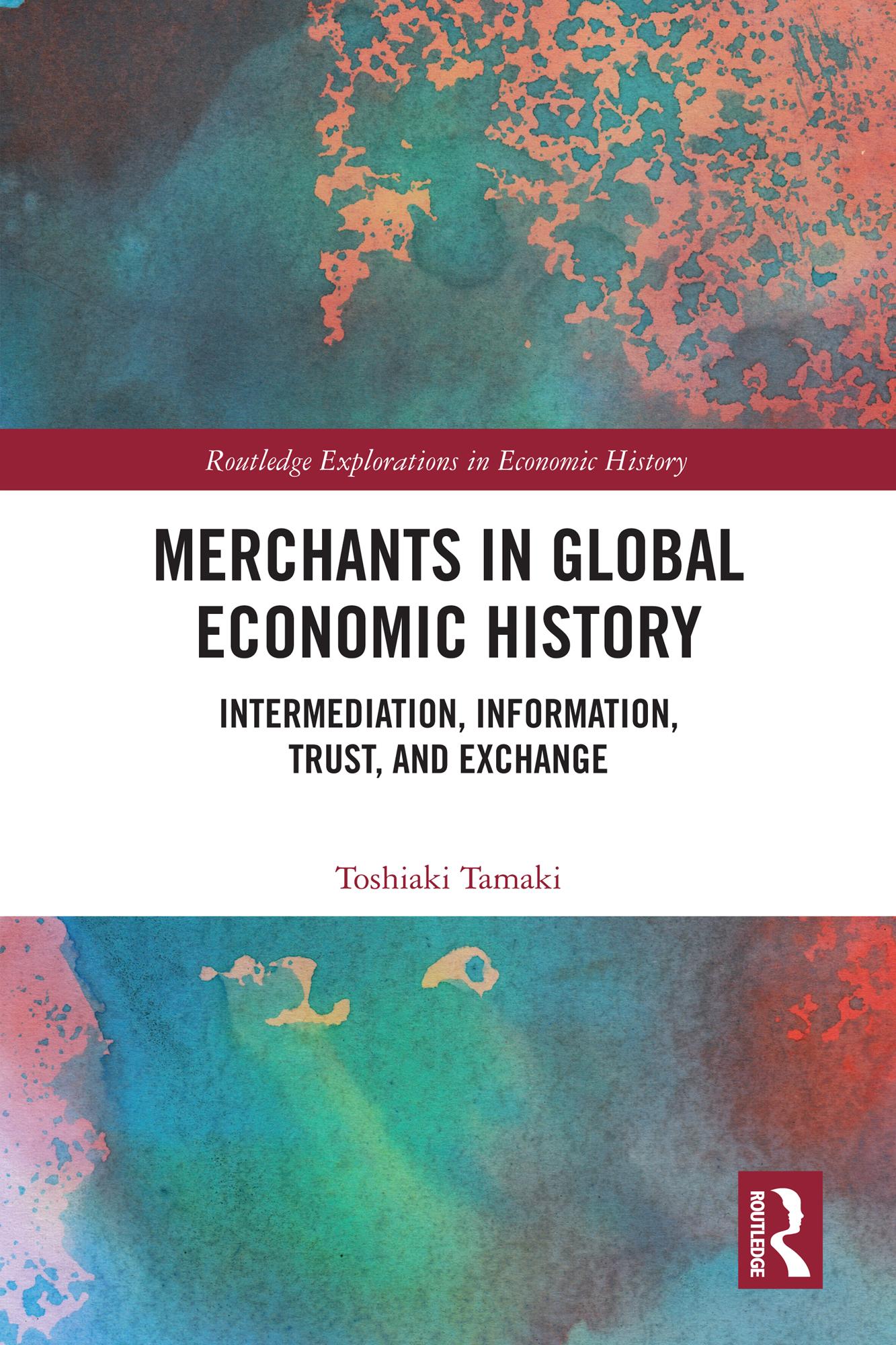
In this book, Toshiaki Tamaki analyses merchant and entrepreneurial activity from ancient times to the twenty-first century, arguing that these intermediaries drive global market expansion and institutional development, as they help to connect distant regions and reduce information asymmetry.
The book begins by framing global economic history through the lens of Homo mobilis (the mobile human) and Homo faber (the fabricating human). It argues that global trade cannot be understood fully without considering how merchants help markets expand through the transmission of information, trust, reputation and commercial knowledge. The book then contextualises this argument through a global survey of trading empires, exploring how merchants and intermediaries profit not through ownership of goods but through the act of exchange. This long-term narrative spans from Mesopotamian traders to Phoenician seafarers to Asian shipping agents and even the global logistics giants of today. Through this survey, readers gain a deeper understanding of how information, trust and circulation – not just production – have shaped the global economy.
Offering a compelling alternative to static economic models and supply-side theories, this book will be of interest to scholars and students of global history, economic history and the history of capitalism.
Płać wygodnie kartą, Klarną, Apple Pay lub Google Pay. Nie jesteś zadowolony? Zawsze masz 14-dniową gwarancję zwrotu pieniędzy. Więcej przeczytasz w naszych warunkach. Masz pytania? Napisz do nas na hello@memmo.org.
Memmo ułatwia naukę – gdziekolwiek jesteś na świecie. U nas znajdziesz podręczniki i sprytne narzędzia do nauki w jednym miejscu: streszczenia, quizy, podcasty i fiszki. A do tego Ted, Twój kumpel do nauki, który odpowie na wszystko, co Cię nurtuje. Ponad 50 000 studentów już tu się uczy – stworzone, byś uczył się szybciej i mniej stresował.