
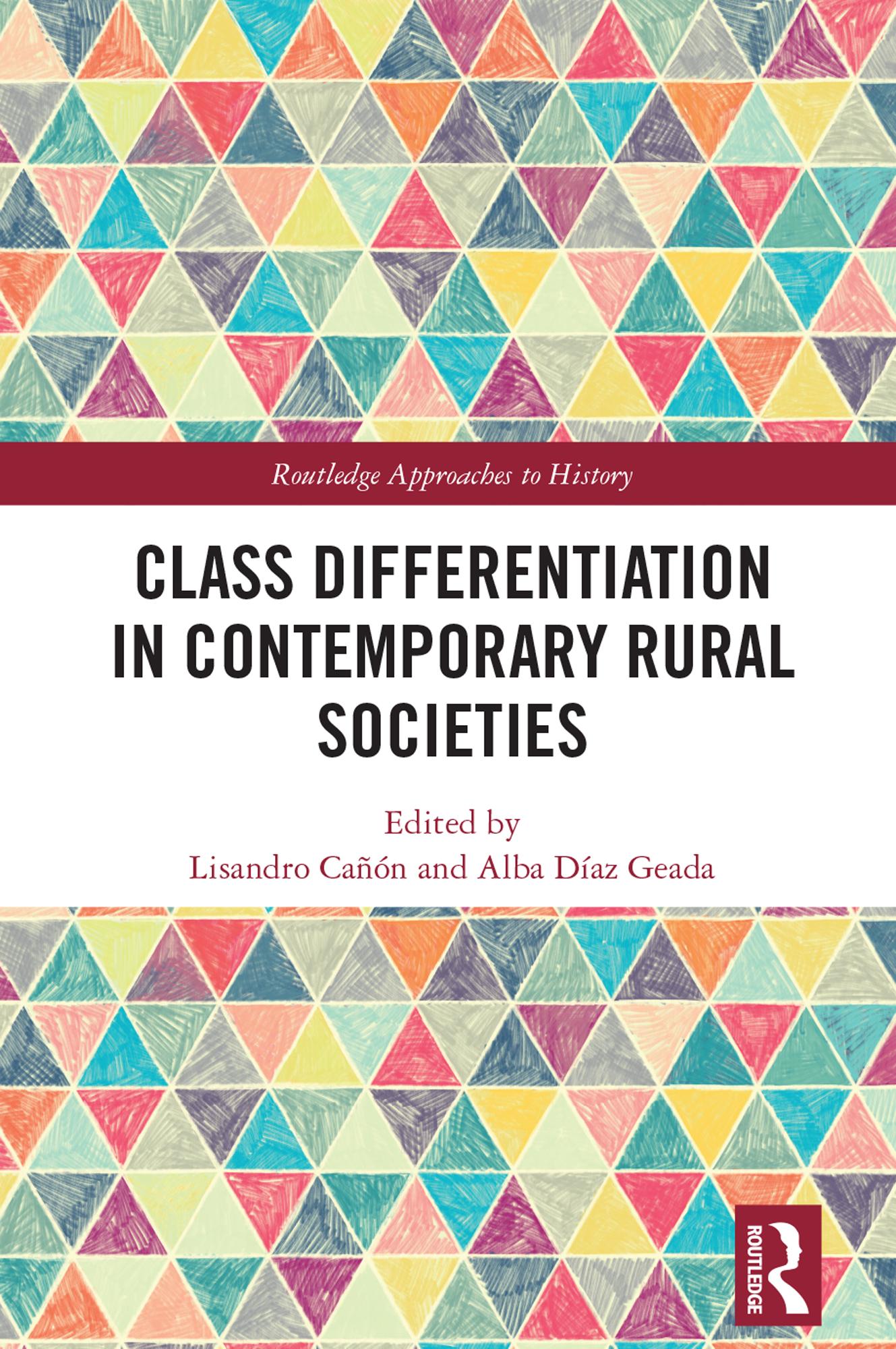
This book recenters the agrarian question within contemporary capitalism, examining social differentiation in rural societies through a rigorous historical-comparative lens. It positions agrarian transformation as a critical prism for understanding capital's evolution, territorial reconfigurations, and the production of inequality on a global scale.
Through a comparative framework spanning Europe and Latin America—including post-Soviet Russia, Bolivia, and Argentina—the chapters integrate theoretical analysis with empirical evidence using diverse methodological approaches: historical-structural analysis, case studies, ethnographic research, and socio-spatial methods. The book examines key processes including the reconfiguration of land ownership, labor market transformations, the persistence and mutation of communal forms, and resource commodification. It demonstrates how distinct phases of capitalist development generate specific class configurations that resist reduction to linear proletarianization narratives, while illuminating the pivotal role of state-territory-accumulation dynamics in producing and reproducing inequalities.
Class Differentiation in Contemporary Rural Societies is essential reading for researchers, educators, and graduate students in sociology, history, geography, and agrarian studies, as well as professionals engaged with rural development and public policy. It provides sophisticated analytical frameworks for interpreting contemporary rural transformations while contributing substantively to both academic debates and critical reflection on the social and political conditions shaping rural life under contemporary capitalism.
Płać wygodnie kartą, Klarną, Apple Pay lub Google Pay. Nie jesteś zadowolony? Zawsze masz 14-dniową gwarancję zwrotu pieniędzy. Więcej przeczytasz w naszych warunkach. Masz pytania? Napisz do nas na hello@memmo.org.
Memmo ułatwia naukę – gdziekolwiek jesteś na świecie. U nas znajdziesz podręczniki i sprytne narzędzia do nauki w jednym miejscu: streszczenia, quizy, podcasty i fiszki. A do tego Ted, Twój kumpel do nauki, który odpowie na wszystko, co Cię nurtuje. Ponad 50 000 studentów już tu się uczy – stworzone, byś uczył się szybciej i mniej stresował.