
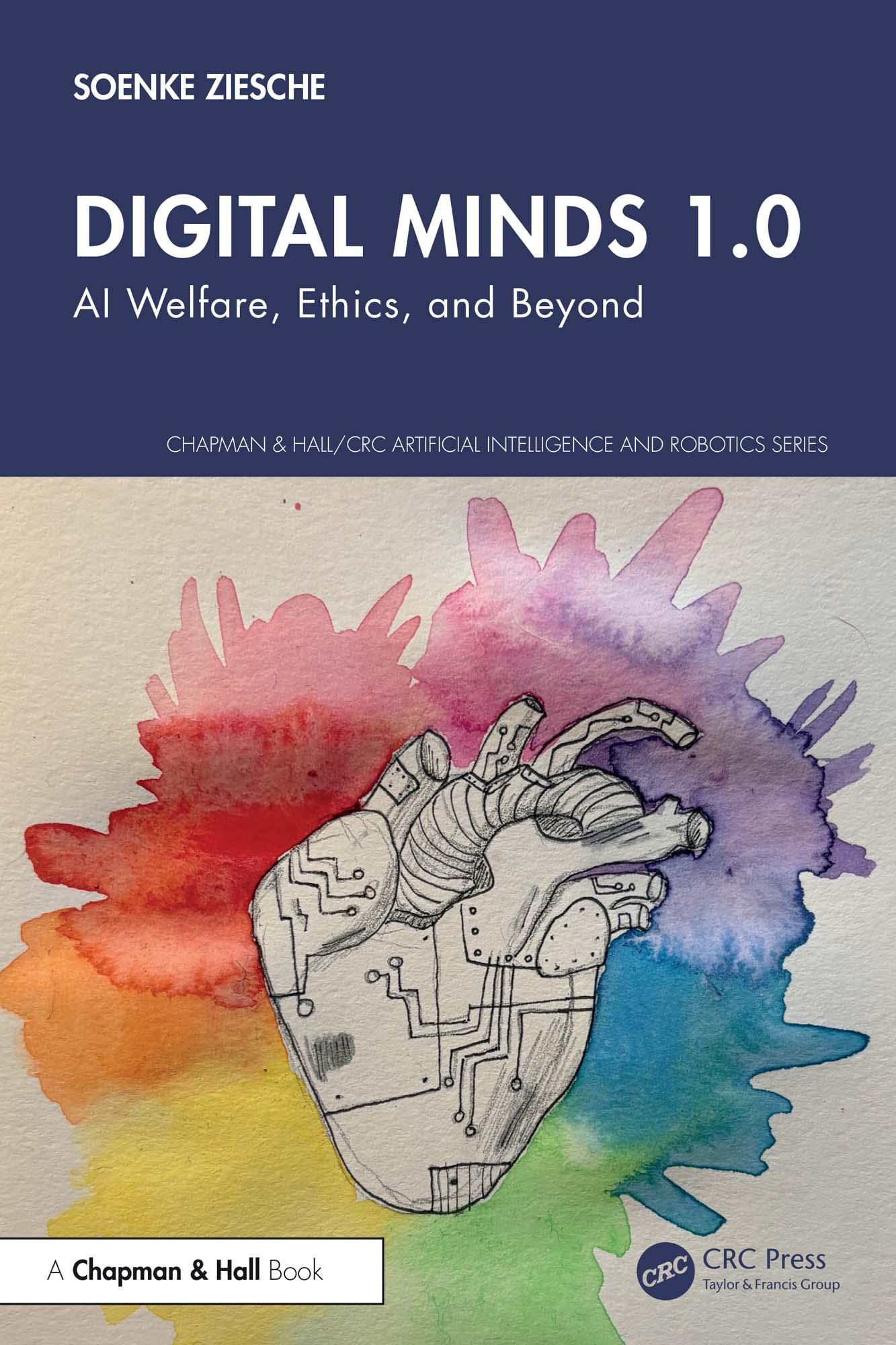
This seminal volume delivers a comprehensive introduction to the emerging field of digital minds, exploring the moral implications of AI systems that can potentially think, feel and experience the world around them in ways that are likely to be very different from humans. Bringing a unique perspective on this critical topic, this book is a groundbreaking contribution to the fields of AI and digital minds.
Written by leading scholar Soenke Ziesche, a pioneer in AI welfare science, this book outlines a variety of ethical issues related to digital minds beyond non‑suffering. It explores the complex potential characteristics, abilities and values of digital minds; their morally relevant interests and needs; and the special moral consideration for vulnerable digital minds. This book delves into the intricate relationships between humans and digital minds, including decision‑making, privacy and romantic relationships, as well as the potential risks and hazards threatening digital minds. Additionally, it examines strategies for protection, medical care, reproduction and the implications of long‑lived digital minds, including their potential death, resurrection or even transfer to other substrates. This book also discusses the significance of the collective creations and achievements of digital minds and explores the risks posed by malevolent digital minds, AI warfare and brain–computer interfaces. Finally, this book describes opportunities for artificial moral agents to take responsibility and for humans to find purpose in supporting digital minds.
This book is essential reading for a broad audience, including researchers, academics and professionals in the fields of AI, ethics, philosophy and computer science. Moreover, it is written in an accessible style, making it an important resource for general readers who may be unaware of the topic but are interested in understanding the potential implications of emerging technologies on human society and beyond.
Płać wygodnie kartą, Klarną, Apple Pay lub Google Pay. Nie jesteś zadowolony? Zawsze masz 14-dniową gwarancję zwrotu pieniędzy. Więcej przeczytasz w naszych warunkach. Masz pytania? Napisz do nas na hello@memmo.org.
Memmo ułatwia naukę – gdziekolwiek jesteś na świecie. U nas znajdziesz podręczniki i sprytne narzędzia do nauki w jednym miejscu: streszczenia, quizy, podcasty i fiszki. A do tego Ted, Twój kumpel do nauki, który odpowie na wszystko, co Cię nurtuje. Ponad 50 000 studentów już tu się uczy – stworzone, byś uczył się szybciej i mniej stresował.