
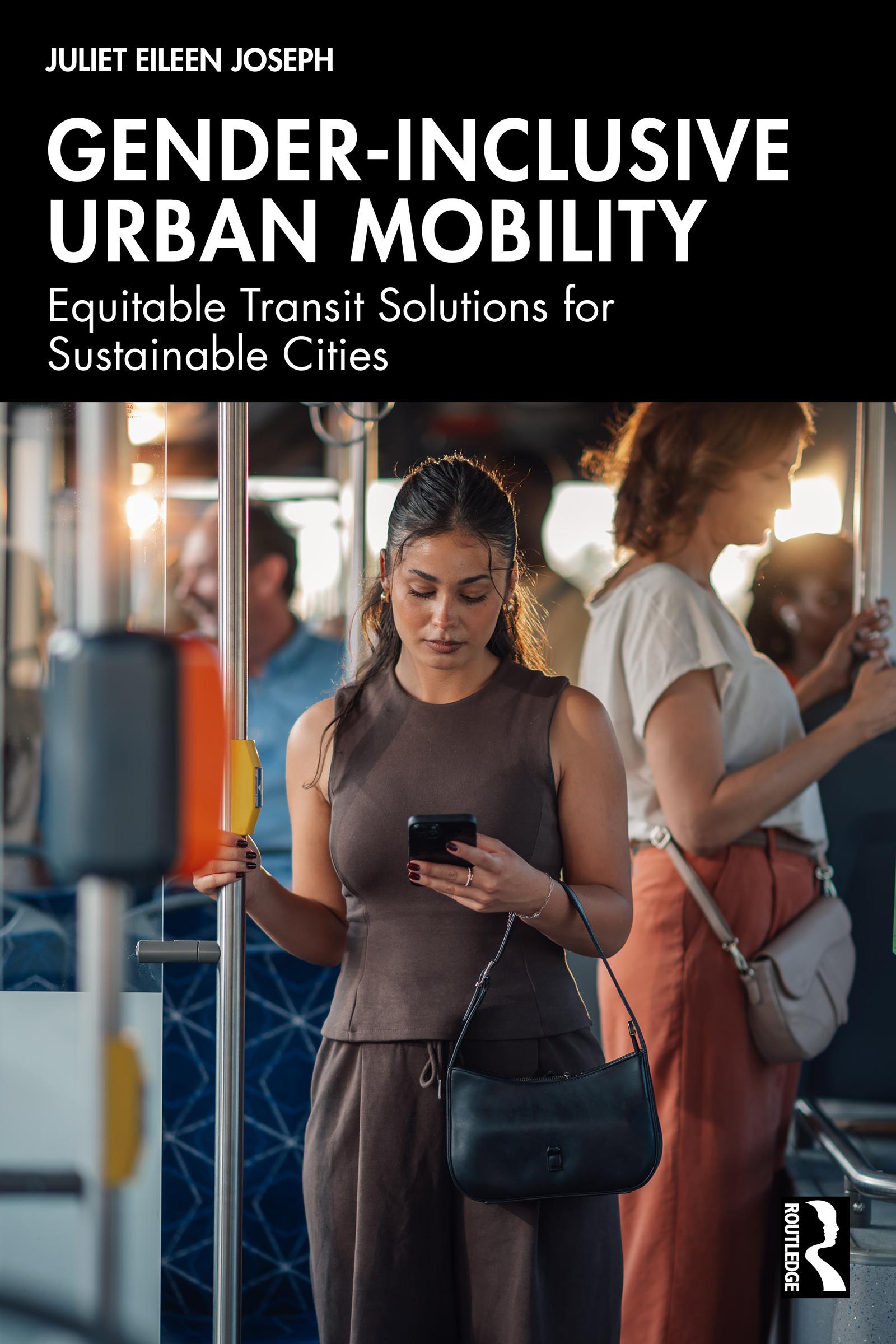
This book critically examines the intersection of gender, governance, and urban mobility through the lens of transit systems in postcolonial and developing countries. Drawing on postcolonial feminist and intersectional theories, it analyses how historical legacies, socio-economic structures, and systemic inequalities have shaped the governance and accessibility of urban transit systems, disproportionately marginalising women. It highlights the compounded challenges women encounter in navigating these systems, including safety, affordability, and representation, whilst also identifying opportunities for their empowerment as stakeholders and decision-makers in governance and shareholding. Through examples from Johannesburg, Lagos, Nairobi, and Dar es Salaam in Africa; Lahore, Jakarta, and Delhi in Asia; and Bogotá, Santiago, and Curitiba in Latin America, the book offers actionable insights for policymakers and urban planners. It will be of interest to researchers, students, and faculty in interdisciplinary fields such as gender studies, public administration, feminist studies, international relations, and urban planning.
Płać wygodnie kartą, Klarną, Apple Pay lub Google Pay. Nie jesteś zadowolony? Zawsze masz 14-dniową gwarancję zwrotu pieniędzy. Więcej przeczytasz w naszych warunkach. Masz pytania? Napisz do nas na hello@memmo.org.
Memmo ułatwia naukę – gdziekolwiek jesteś na świecie. U nas znajdziesz podręczniki i sprytne narzędzia do nauki w jednym miejscu: streszczenia, quizy, podcasty i fiszki. A do tego Ted, Twój kumpel do nauki, który odpowie na wszystko, co Cię nurtuje. Ponad 50 000 studentów już tu się uczy – stworzone, byś uczył się szybciej i mniej stresował.