
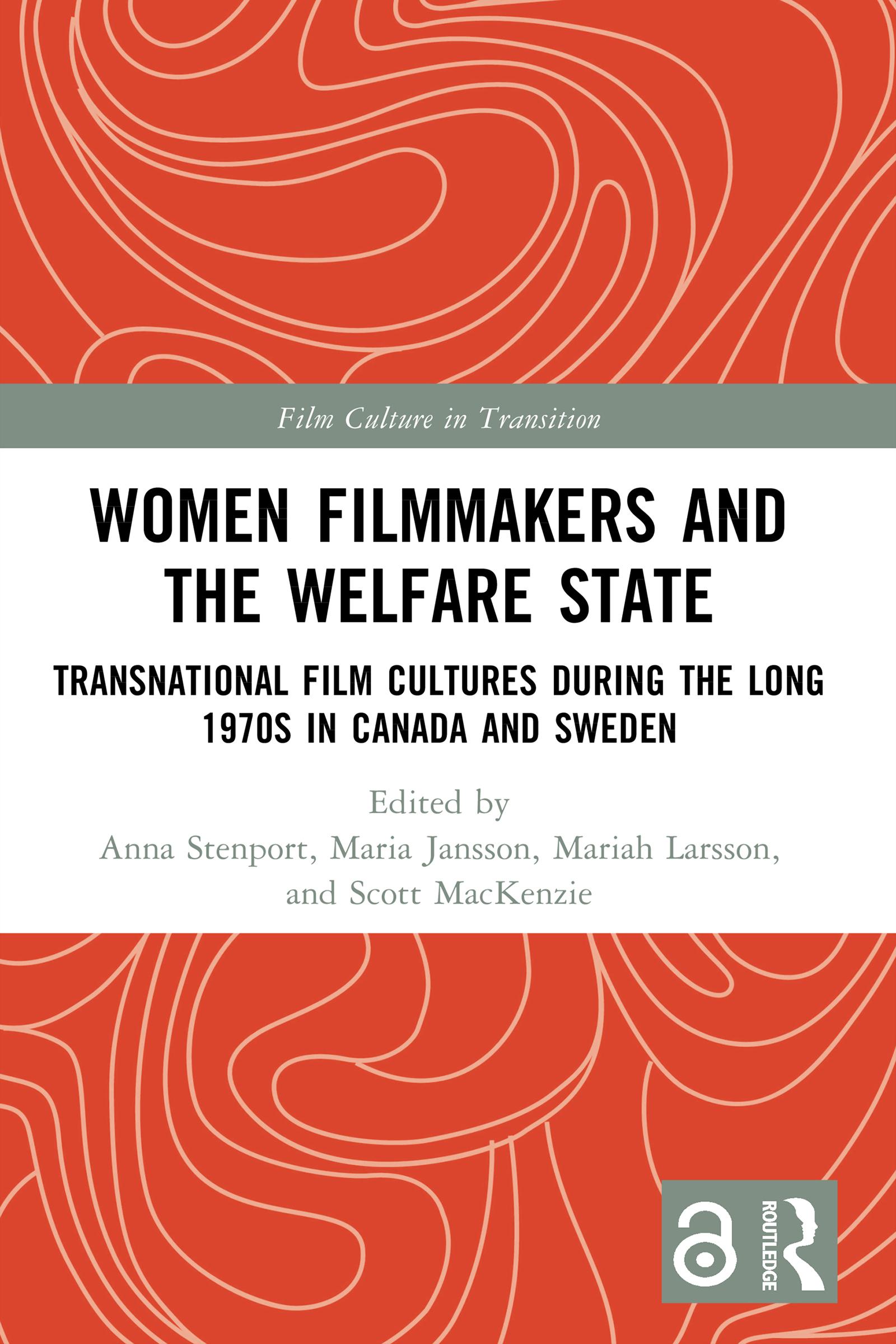
Women Filmmakers and the Welfare State compares conditions for diverse women filmmakers in relation to cultural movements, politics, and welfare state policy during the long 1970s.
The book examines the expansion of women’s filmmaking and transnational collaboration across a range of genres, styles, and forms, foregrounding that film practices of the time were highly varied, ranging from women’s political and “consciousness-raising” films to fiction, art cinema, animation, documentary, experimental, and educational cinema. Welfare states such as Canada and Sweden had related, but different approaches to public support for filmmaking by women, which also influenced Indigenous, queer, and migrant and immigrant access to film production. At the height of second-wave feminism, this expansion took root through transnational collaboration as well as collectives, co-ops, activist networks, film festivals, public television, and government organizations, including in relation to environmentalist, pacifist, and UN Year and Decade of the Woman initiatives. The book includes interviews with filmmakers and also explores the current state of access, circulation, and archival practice.
This book is aimed at a scholarly audience with applicability for undergraduate and graduate students, as well as for adoption across a variety of cinema, media, gender, political science, cultural policy, transnationalism, and gender and women’s studies courses.
Płać wygodnie kartą, Klarną, Apple Pay lub Google Pay. Nie jesteś zadowolony? Zawsze masz 14-dniową gwarancję zwrotu pieniędzy. Więcej przeczytasz w naszych warunkach. Masz pytania? Napisz do nas na hello@memmo.org.
Memmo ułatwia naukę – gdziekolwiek jesteś na świecie. U nas znajdziesz podręczniki i sprytne narzędzia do nauki w jednym miejscu: streszczenia, quizy, podcasty i fiszki. A do tego Ted, Twój kumpel do nauki, który odpowie na wszystko, co Cię nurtuje. Ponad 50 000 studentów już tu się uczy – stworzone, byś uczył się szybciej i mniej stresował.