
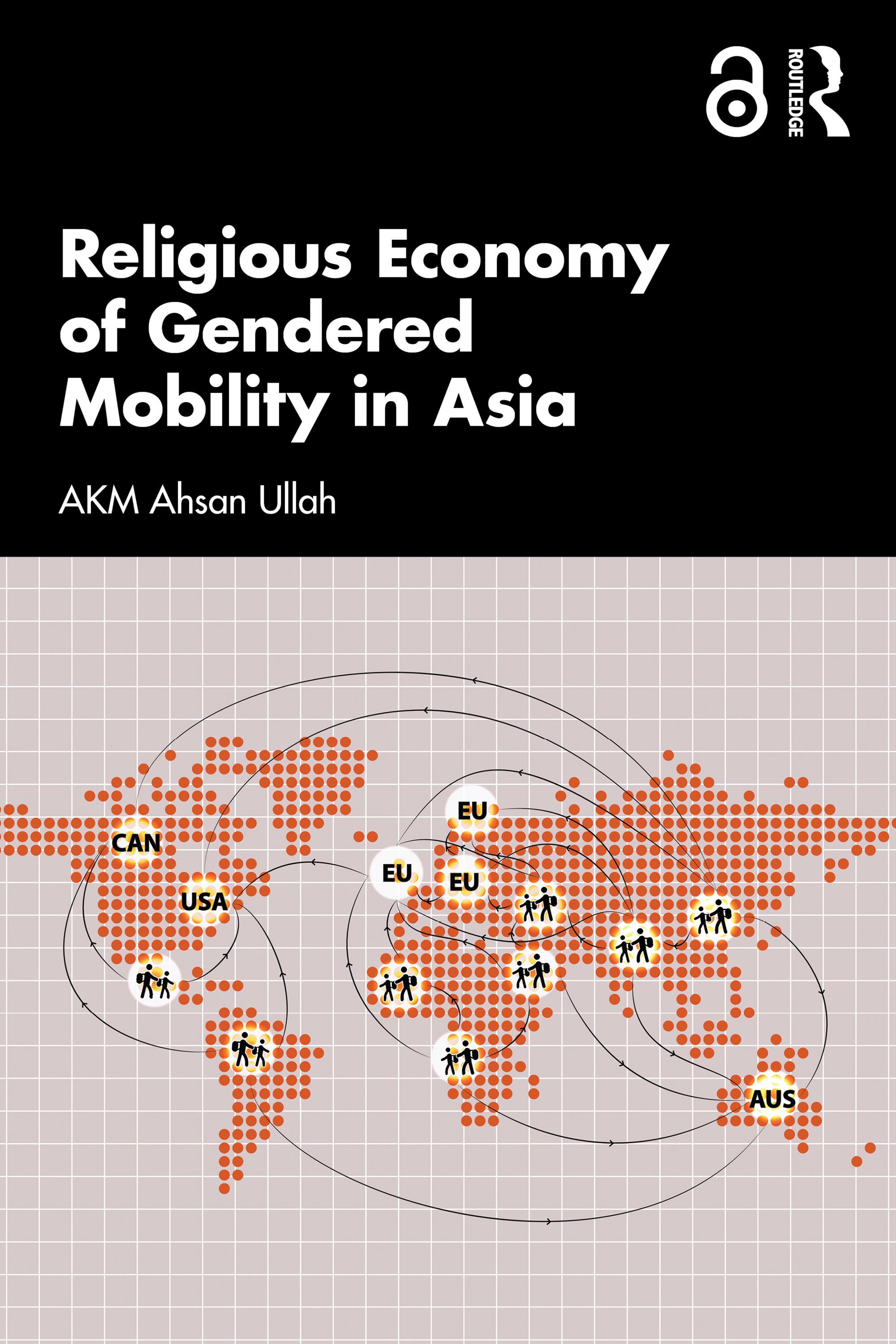
This book explores how religion, gender, and economic structures influence mobility across local, national, and global scales, providing a groundbreaking perspective into urgent debates on migration, gender inequality, religious change, and the global political economy.
Combining theory, comparative analysis, and case studies from Asia, the Gulf, Africa, and the Global North, this book reveals how religious beliefs and institutions act as moral economies that regulate labour, discipline gender roles, and mediate migrants’ access to resources and belonging. By foregrounding women’s mobility, it highlights how patriarchal norms, religious interpretations, and labour markets intersect to shape migration trajectories, while documenting women’s agency in navigating these systems. This book is equally attentive to power, using a Global North–Global South framework informed by world-systems theory to expose how global inequalities, colonial legacies, and geopolitical interests structure migration regimes, including gendered labour migration and the governance of religious minorities.
Religious Economy of Gendered Mobility in Asia is written for scholars, policymakers, and advanced students studying migration, development, gender studies, and social justice.
Chapter 1 and Chapter 3 of this book are freely available as a downloadable Open Access PDFs at http://www.taylorfrancis.com under a Creative Commons Attribution-Non Commercial-No Derivatives (CC BY-NC-ND) 4.0 International license.
Płać wygodnie kartą, Klarną, Apple Pay lub Google Pay. Nie jesteś zadowolony? Zawsze masz 14-dniową gwarancję zwrotu pieniędzy. Więcej przeczytasz w naszych warunkach. Masz pytania? Napisz do nas na hello@memmo.org.
Memmo ułatwia naukę – gdziekolwiek jesteś na świecie. U nas znajdziesz podręczniki i sprytne narzędzia do nauki w jednym miejscu: streszczenia, quizy, podcasty i fiszki. A do tego Ted, Twój kumpel do nauki, który odpowie na wszystko, co Cię nurtuje. Ponad 50 000 studentów już tu się uczy – stworzone, byś uczył się szybciej i mniej stresował.