
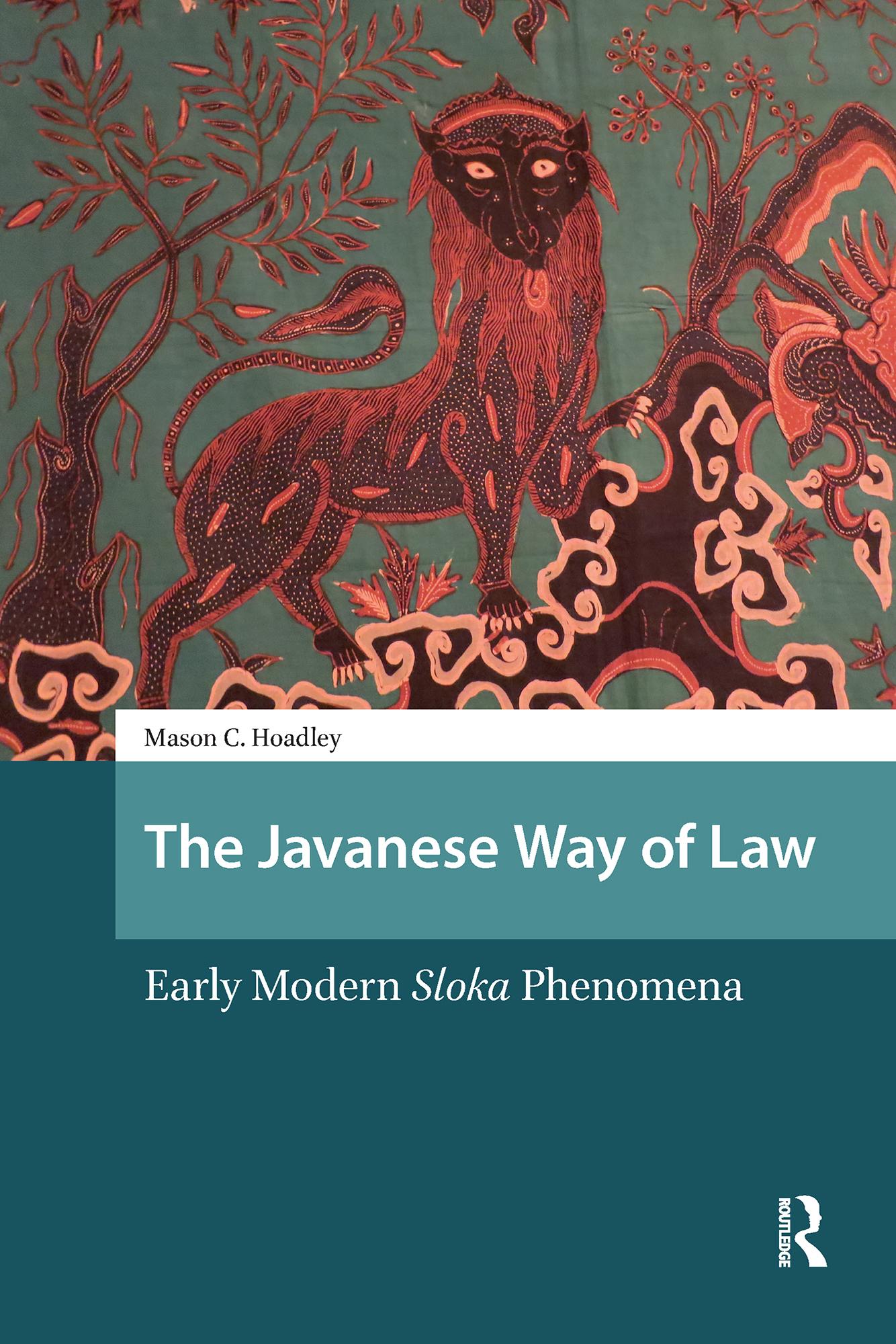
The author's investigation of early-modern Javanese law reveals that judicial authority does not come from the contents of legal titles or juridical texts, but from legal maxims and variations thereof. A century and a half ago Simon Keyzer, a recognized scholar of Javanese law, noted that understanding of that law is dependent upon a grasp of such pithy expressions, which provide the key to the whole body of suits. (Preface, C.F. Winter, Javaansche Zamenspraken, 1858, which examines hundreds of sloka, the majority of which are directed to prevailing legal practice). Drawing upon the contents of 18th century Javanese legal texts, the present work builds upon Keyzer's and Winter's references to 'sloka-phenomena', namely sloka proper (maxims) and its derivatives sinalokan (that made of sloka), aksara here meaning legal principles, and prakara (matter, case). These are usually conveyed in vignettes illustrating their function and as a group, constitute the essence of traditional Javanese written law.
Płać wygodnie kartą, Klarną, Apple Pay lub Google Pay. Nie jesteś zadowolony? Zawsze masz 14-dniową gwarancję zwrotu pieniędzy. Więcej przeczytasz w naszych warunkach. Masz pytania? Napisz do nas na hello@memmo.org.
Memmo ułatwia naukę – gdziekolwiek jesteś na świecie. U nas znajdziesz podręczniki i sprytne narzędzia do nauki w jednym miejscu: streszczenia, quizy, podcasty i fiszki. A do tego Ted, Twój kumpel do nauki, który odpowie na wszystko, co Cię nurtuje. Ponad 50 000 studentów już tu się uczy – stworzone, byś uczył się szybciej i mniej stresował.