
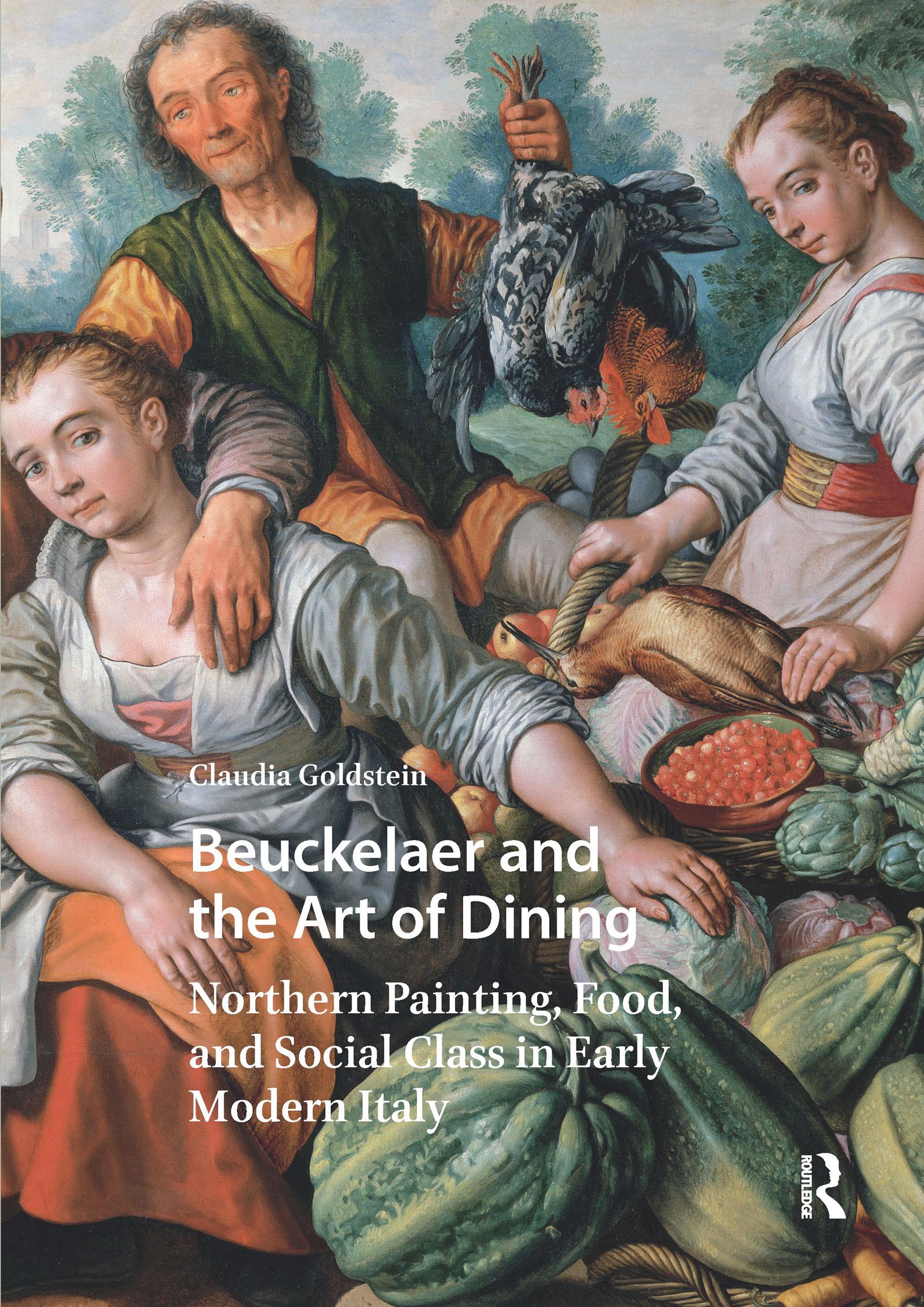
Sixteenth-century Flemish painter Joachim Beuckelaer produced dozens of large-scale paintings of contemporary working women and men selling, presenting, and preparing a visually stunning array of foodstuffs for the viewer. These were new subjects in Antwerp and even newer in Italy, where elite merchants and nobles like Margaret of Parma displayed them as they were meant to be displayed: in dining rooms and spaces used for entertaining. This study explores the cross-cultural meanings of Beuckelaer's distinctly Northern European kitchen and market scenes in the context of North Italian dining and food culture. Examining the functions of Beuckelaer's strange and new subject matter, Goldstein situates his paintings and those of his closest Italian follower, Vincenzo Campi, in the physical space of the dining room, addressing dining practice and the class and gender tensions inherent in a setting that placed both elite and non-elite viewers before life-sized renderings of their employees, and themselves.
Płać wygodnie kartą, Klarną, Apple Pay lub Google Pay. Nie jesteś zadowolony? Zawsze masz 14-dniową gwarancję zwrotu pieniędzy. Więcej przeczytasz w naszych warunkach. Masz pytania? Napisz do nas na hello@memmo.org.
Memmo ułatwia naukę – gdziekolwiek jesteś na świecie. U nas znajdziesz podręczniki i sprytne narzędzia do nauki w jednym miejscu: streszczenia, quizy, podcasty i fiszki. A do tego Ted, Twój kumpel do nauki, który odpowie na wszystko, co Cię nurtuje. Ponad 50 000 studentów już tu się uczy – stworzone, byś uczył się szybciej i mniej stresował.
Może Ci się spodobać
Kup książkę0