
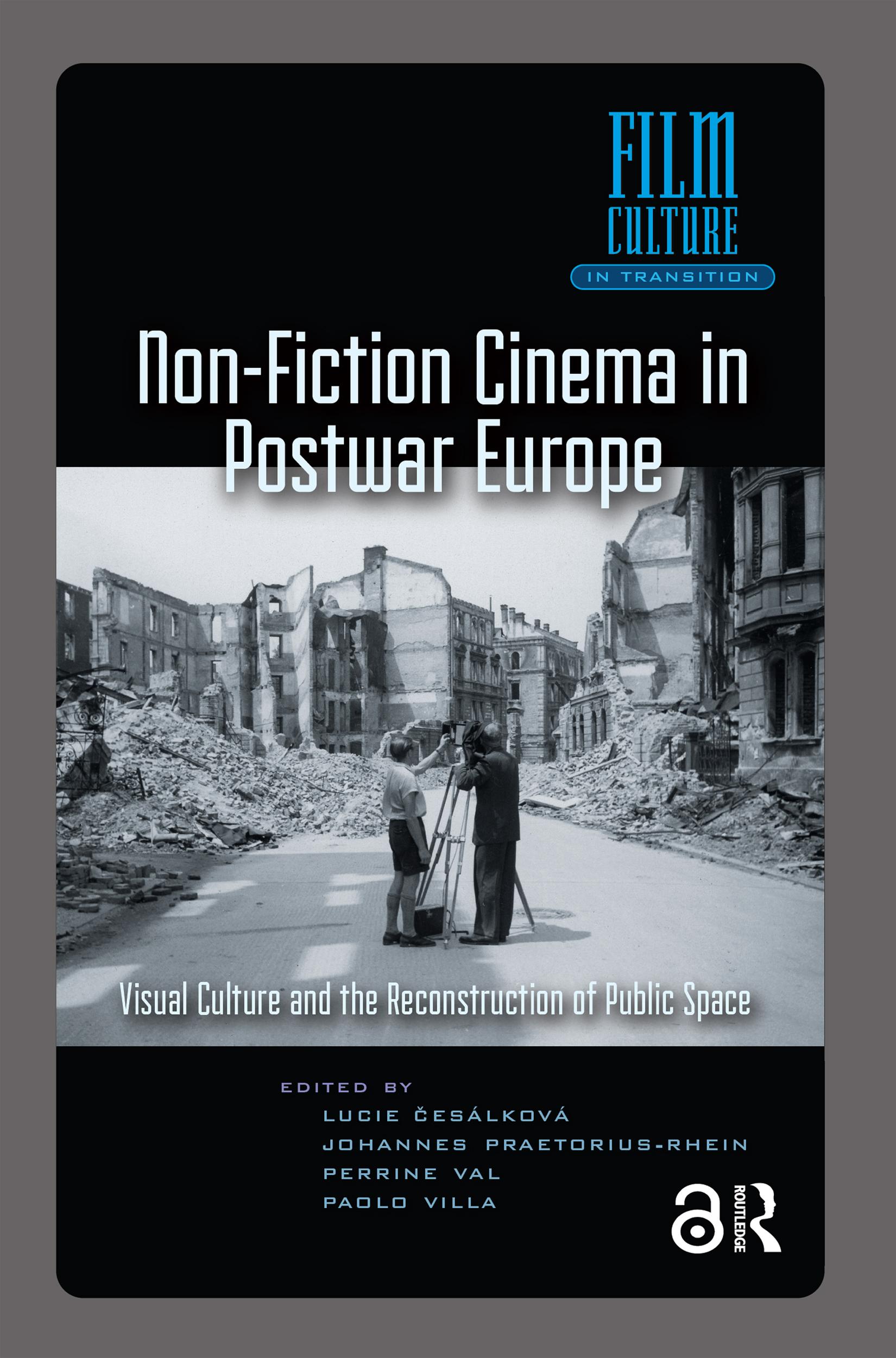
After WWII, cinema was everywhere: in movie theatres, public squares, factories, schools, trial courts, trains, museums, and political meetings. Seen today, documentaries and newsreels, as well as the amateur production, show the kaleidoscopic portrait of a changing Europe. How did these cinematic images contribute to shaping the new societies emerging from the ashes of war, both in the Western and in the Eastern bloc? Why were they so crucial in framing and regulating new places and practices, political systems, economic dynamics, educational frameworks, and memory communities? This edited volume explores the multiple ways nonfiction cinema reconfigured public spaces, collective participation, democratisation, and governmentality between 1944 and 1956. Looking back at it through a transnational perspective and the critical category of spatiality, nonfiction cinema appears in a new light: simultaneously as a specifically situated and as a highly mobile medium, it was a fundamental agent in reshaping Europe’s shared identity and culture in a defining decade.
Strony: 518
Kategoria: Film- & Medievetenskap
e-ISBN: 9781040784853
Waga przesyłki: 1.2 kg
Wysyłka w ciągu: 1-2 dni
Płać wygodnie kartą, Klarną, Apple Pay lub Google Pay. Nie jesteś zadowolony? Zawsze masz 14-dniową gwarancję zwrotu pieniędzy. Więcej przeczytasz w naszych warunkach. Masz pytania? Napisz do nas na hello@memmo.org.
Memmo ułatwia naukę – gdziekolwiek jesteś na świecie. U nas znajdziesz podręczniki i sprytne narzędzia do nauki w jednym miejscu: streszczenia, quizy, podcasty i fiszki. A do tego Ted, Twój kumpel do nauki, który odpowie na wszystko, co Cię nurtuje. Ponad 50 000 studentów już tu się uczy – stworzone, byś uczył się szybciej i mniej stresował.
Może Ci się spodobać
Kup książkę0