
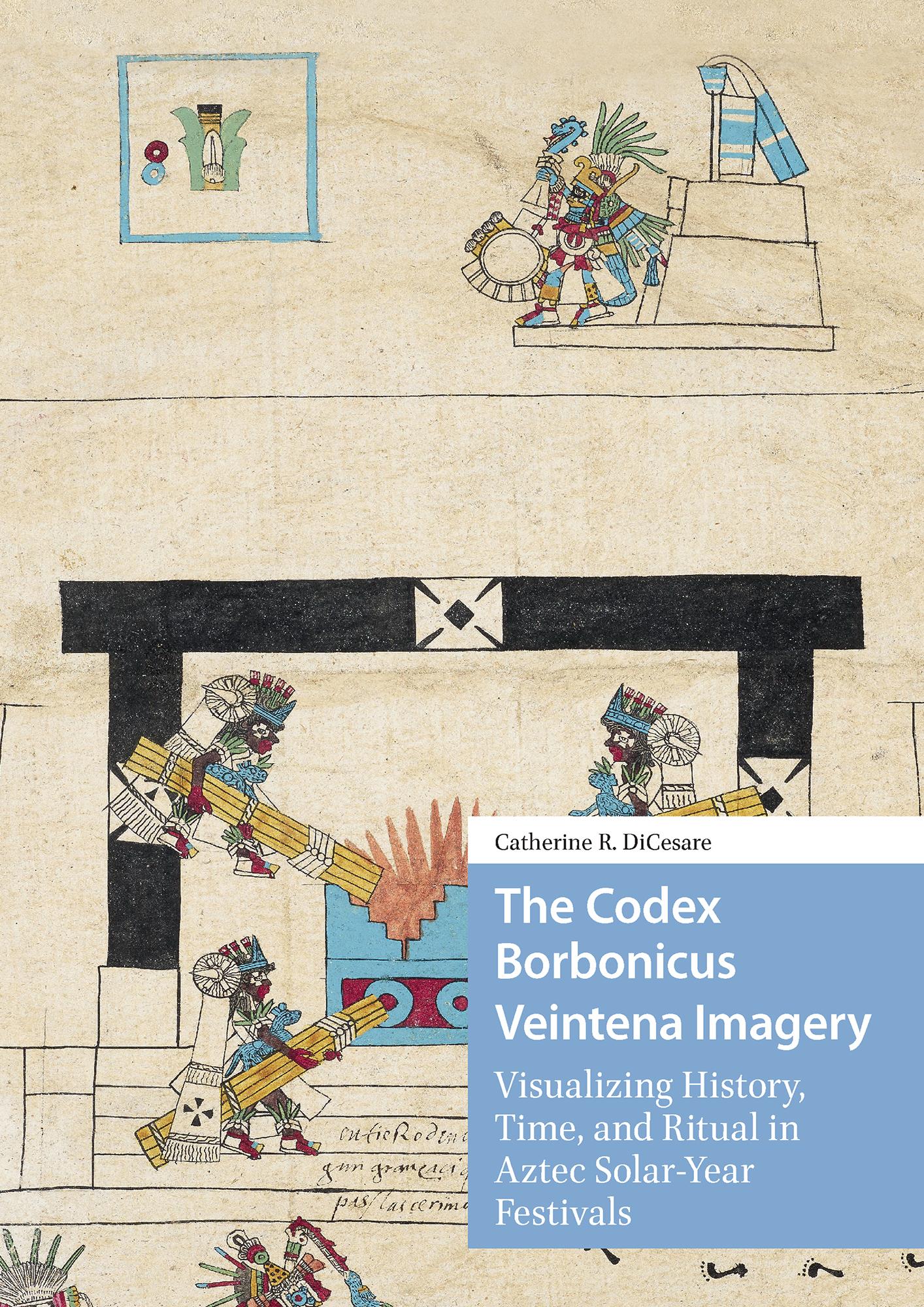
The sixteenth-century pictorial manuscript known as the Codex Borbonicus contains a remarkable record of the eighteen Mexica (or “Aztec”) festival periods of twenty days, known as veintenas, celebrated during the 365-day solar year. Because its indigenous artists framed the Borbonicus veintenas with historical year dates, this volume situates the annually recurring rituals within the march of linear, reckoned time, in the singular year “2 Reed” (1507), during the reign of Moteuczoma II. DiCesare attends to the historical dimensions of several unusual scenes, proposing that the veintenas probably varied significantly from year to year in response to historical concerns. She considers particularly whether the Borbonicus veintenas document the confluence of solar year ceremonies with a second set of ritual feast days, governed by the 260-day cycle known as the tonalpohualli, or “count of days.” In this way, DiCesare analyzes how linear and cyclical conceptions of time intersected in Mexica ritual performance.
Płać wygodnie kartą, Klarną, Apple Pay lub Google Pay. Nie jesteś zadowolony? Zawsze masz 14-dniową gwarancję zwrotu pieniędzy. Więcej przeczytasz w naszych warunkach. Masz pytania? Napisz do nas na hello@memmo.org.
Memmo ułatwia naukę – gdziekolwiek jesteś na świecie. U nas znajdziesz podręczniki i sprytne narzędzia do nauki w jednym miejscu: streszczenia, quizy, podcasty i fiszki. A do tego Ted, Twój kumpel do nauki, który odpowie na wszystko, co Cię nurtuje. Ponad 50 000 studentów już tu się uczy – stworzone, byś uczył się szybciej i mniej stresował.
Może Ci się spodobać
Kup książkę0