
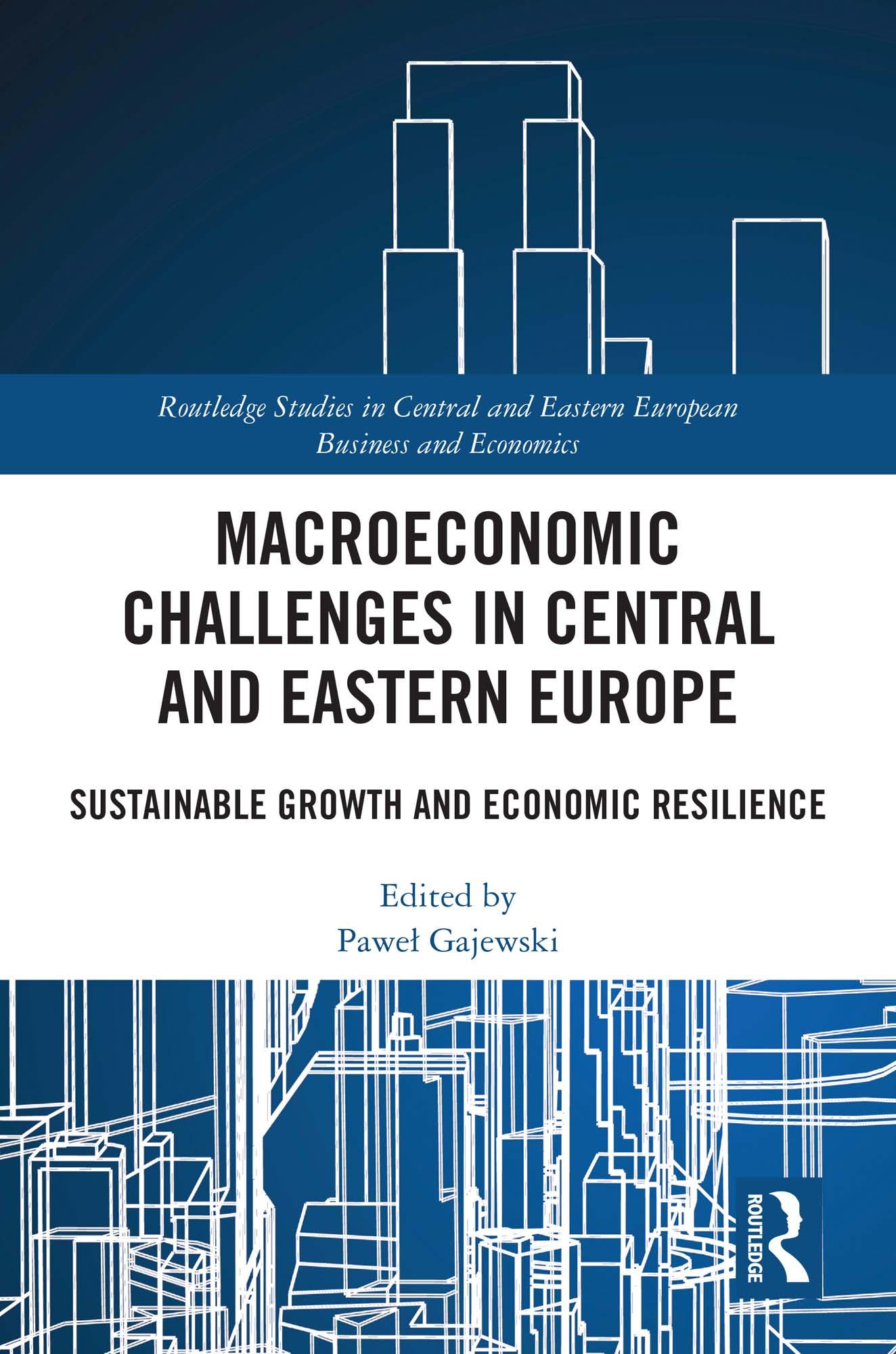
Three decades after the fall of communism, the Central and Eastern European (CEE) countries have achieved income convergence that would have seemed implausible in 1990. This book argues that the growth model which powered this catch‑up, built on integration into foreign‑controlled value chains, large capital inflows, technology adoption rather than indigenous creation, and EU (European Union) transfers, has also created structural dependencies that now constrain further development. Income convergence, in other words, has occurred without comparable convergence in productive capabilities.
Eight thematic chapters examine how this tension plays out across specific domains: macroeconomic convergence and divergence, the evolving role of foreign direct investment (FDI) and productivity, export competitiveness, the deceleration of global trade, energy transition, agricultural modernisation under the
common agricultural policy (CAP), demographic change, and fiscal policy under competing pressures from defence spending, ageing populations, and decarbonisation. The analysis introduces several integrating concepts and draws comparisons with Southern European and East Asian development trajectories.
This book is intended for scholars and advanced students in economics and European studies, policymakers in national governments and EU institutions, and informed readers seeking to understand what lies beneath CEE’s convergence headline and what the region must do differently to sustain its progress.
Paweł Gajewski is Head of the Department of Macroeconomics, University of Łódź, Poland.
Płać wygodnie kartą, Klarną, Apple Pay lub Google Pay. Nie jesteś zadowolony? Zawsze masz 14-dniową gwarancję zwrotu pieniędzy. Więcej przeczytasz w naszych warunkach. Masz pytania? Napisz do nas na hello@memmo.org.
Memmo ułatwia naukę – gdziekolwiek jesteś na świecie. U nas znajdziesz podręczniki i sprytne narzędzia do nauki w jednym miejscu: streszczenia, quizy, podcasty i fiszki. A do tego Ted, Twój kumpel do nauki, który odpowie na wszystko, co Cię nurtuje. Ponad 50 000 studentów już tu się uczy – stworzone, byś uczył się szybciej i mniej stresował.