
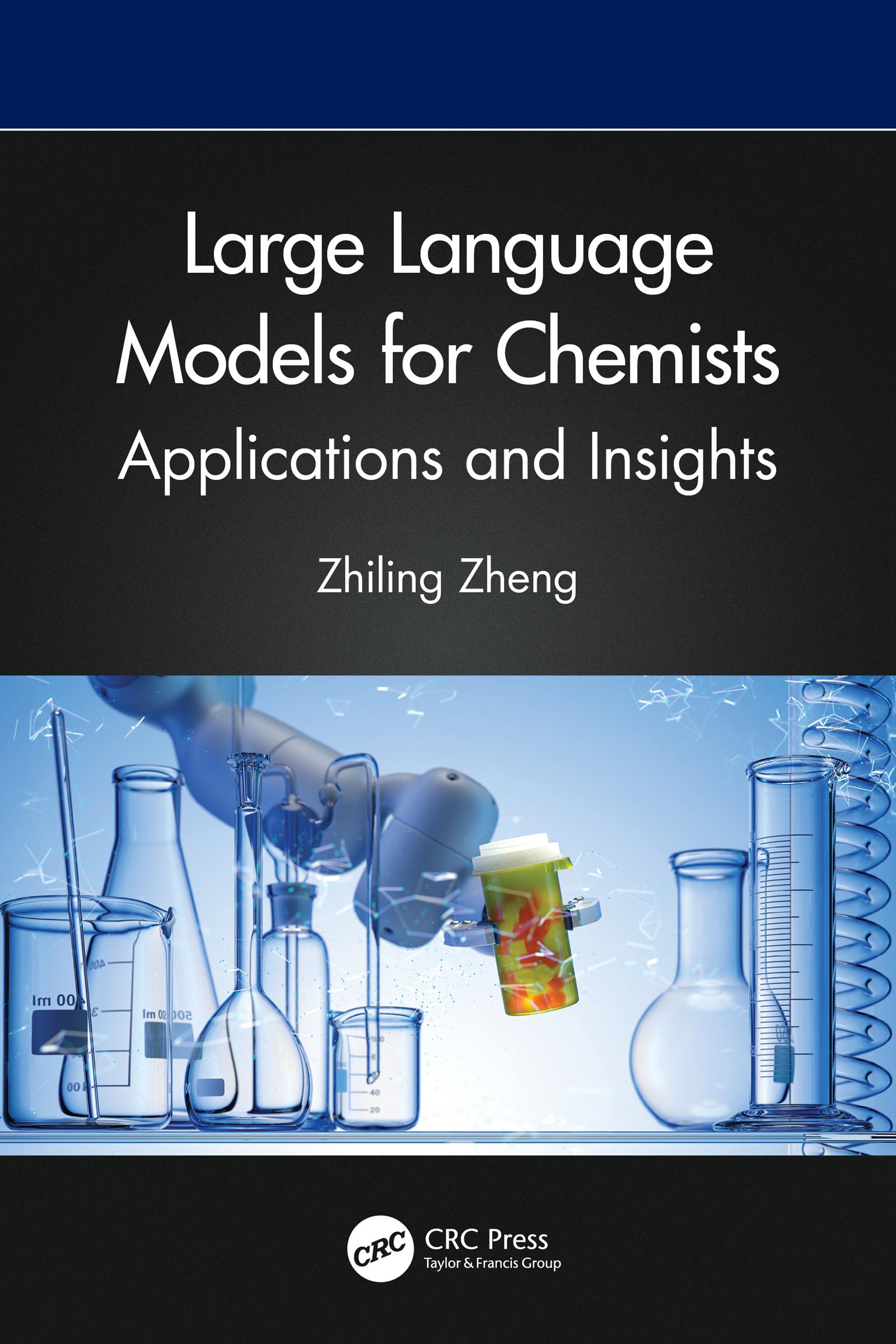
In recent years, LLMs (such as ChatGPT, Claude, DeepSeek, LLaMA, and other transformer-based models) have emerged as powerful tools in chemistry, enabling new approaches to scientific discovery. While many chemists, from undergraduate students to researchers, find these AI models interesting, they may lack a certain knowledge base to better integrate these tools into their daily research.
Large Language Models for Chemists breaks down that barrier by demystifying how LLMs work in an accessible way and showing, step by step, how they can be applied to solve real chemistry problems. Written in a friendly, tutorial style, the book assumes only a basic background in chemistry and minimal programming experience. It begins by gently introducing artificial intelligence and machine learning concepts in lay terms, building up to the inner workings of LLMs without heavy math. Readers will learn how these models “think” and generate text, gaining an intuitive understanding of concepts like neural networks, transformers, and training data using analogies and simple diagrams. Crucially, each concept is reinforced with chemistry-focused examples. It spans from understanding chemical nomenclature and reactions as a “language” to exploring how an LLM can suggest synthetic routes or explain spectral data.
Beyond theory, this book emphasizes practical application. Each chapter includes hands-on tutorials and case studies that invite readers to experiment with real tools. Using open-source libraries (such as RDKit for cheminformatics and standard Python machine learning frameworks), readers will walk through projects like predicting molecular properties with the aid of an LLM, generating novel compound ideas, analyzing research papers, and even using an LLM as a conversational chemistry assistant. For example, one case study guides the reader in using an LLM to mine a chemistry literature database and then write Python code to analyze reaction trends, mirroring cutting-edge research where LLMs assist in code generation and data mining for chemical discovery.
Płać wygodnie kartą, Klarną, Apple Pay lub Google Pay. Nie jesteś zadowolony? Zawsze masz 14-dniową gwarancję zwrotu pieniędzy. Więcej przeczytasz w naszych warunkach. Masz pytania? Napisz do nas na hello@memmo.org.
Memmo ułatwia naukę – gdziekolwiek jesteś na świecie. U nas znajdziesz podręczniki i sprytne narzędzia do nauki w jednym miejscu: streszczenia, quizy, podcasty i fiszki. A do tego Ted, Twój kumpel do nauki, który odpowie na wszystko, co Cię nurtuje. Ponad 50 000 studentów już tu się uczy – stworzone, byś uczył się szybciej i mniej stresował.