
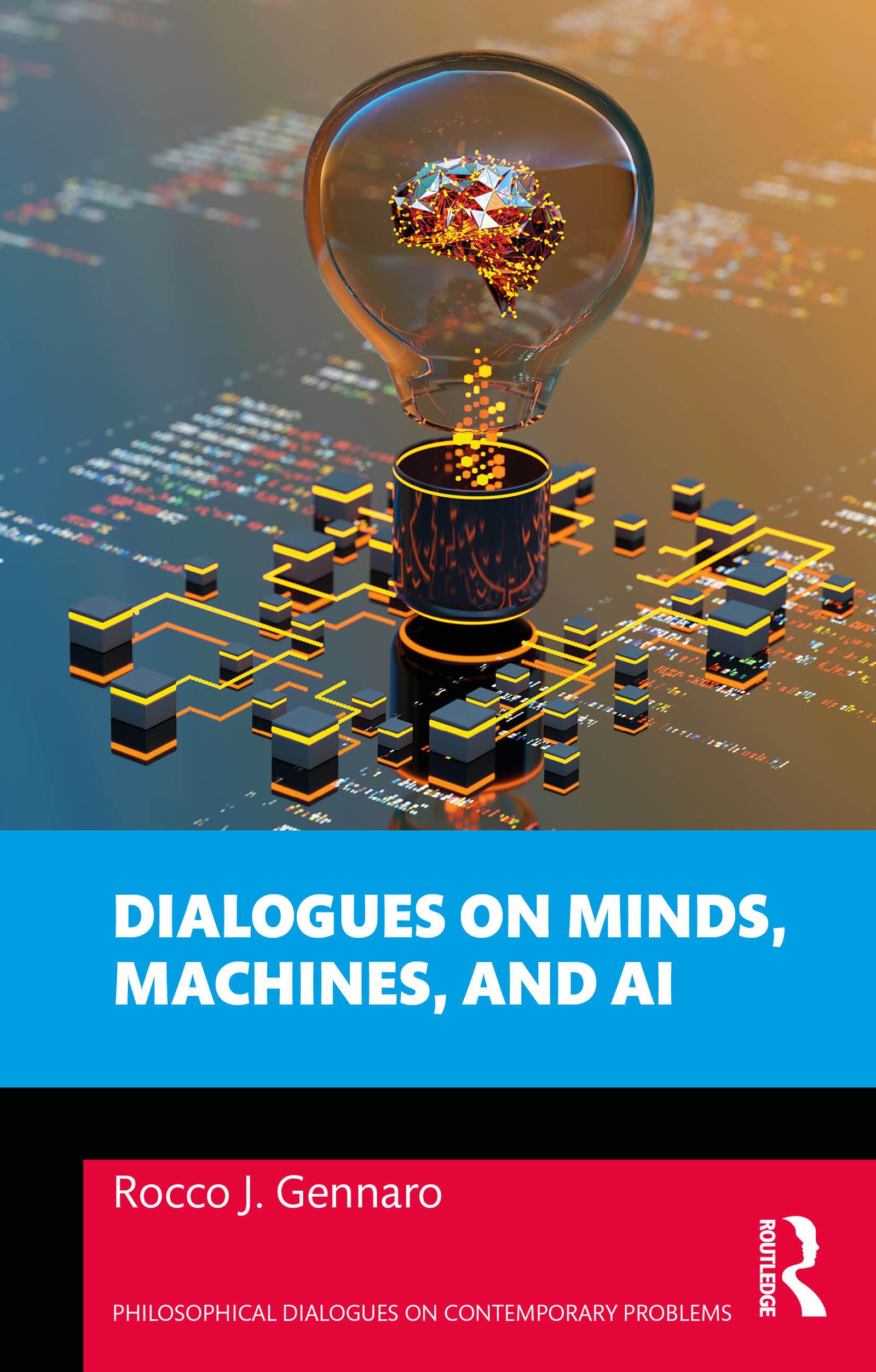
Dialogues on Minds, Machines, and AI invites readers into a series of thought-provoking debates among three college seniors bound for graduate school: Sue, completing her double major in philosophy and cognitive science; John, a computer engineering specialist; and Amy, a psychology major. Through five engaging lunchtime conversations, these students bring their diverse perspectives to fundamental questions about consciousness, artificial intelligence, and the nature of mind.
The dialogues seamlessly blend discussions of popular science fiction films with critical examinations of recent AI developments, including ChatGPT, deep fakes, and other emerging technologies. Readers will explore foundational concepts at the intersection of human consciousness and machine learning: Alan Turing's influential "imitation game," John Searle's provocative "Chinese room argument," computational theories of mind, robot creativity, and the modularity of mind hypothesis. Rather than advocating for any particular viewpoint, these conversations illuminate the strengths, weaknesses, and implications of each perspective.
Perfect for undergraduate students and curious minds from all backgrounds, this accessible introduction to cognitive science requires no prior knowledge of philosophy or technical subjects. The book includes a comprehensive glossary and thoughtful study questions to enhance understanding, while a carefully curated bibliography enables readers to explore specific topics in greater depth.
Płać wygodnie kartą, Klarną, Apple Pay lub Google Pay. Nie jesteś zadowolony? Zawsze masz 14-dniową gwarancję zwrotu pieniędzy. Więcej przeczytasz w naszych warunkach. Masz pytania? Napisz do nas na hello@memmo.org.
Memmo ułatwia naukę – gdziekolwiek jesteś na świecie. U nas znajdziesz podręczniki i sprytne narzędzia do nauki w jednym miejscu: streszczenia, quizy, podcasty i fiszki. A do tego Ted, Twój kumpel do nauki, który odpowie na wszystko, co Cię nurtuje. Ponad 50 000 studentów już tu się uczy – stworzone, byś uczył się szybciej i mniej stresował.