
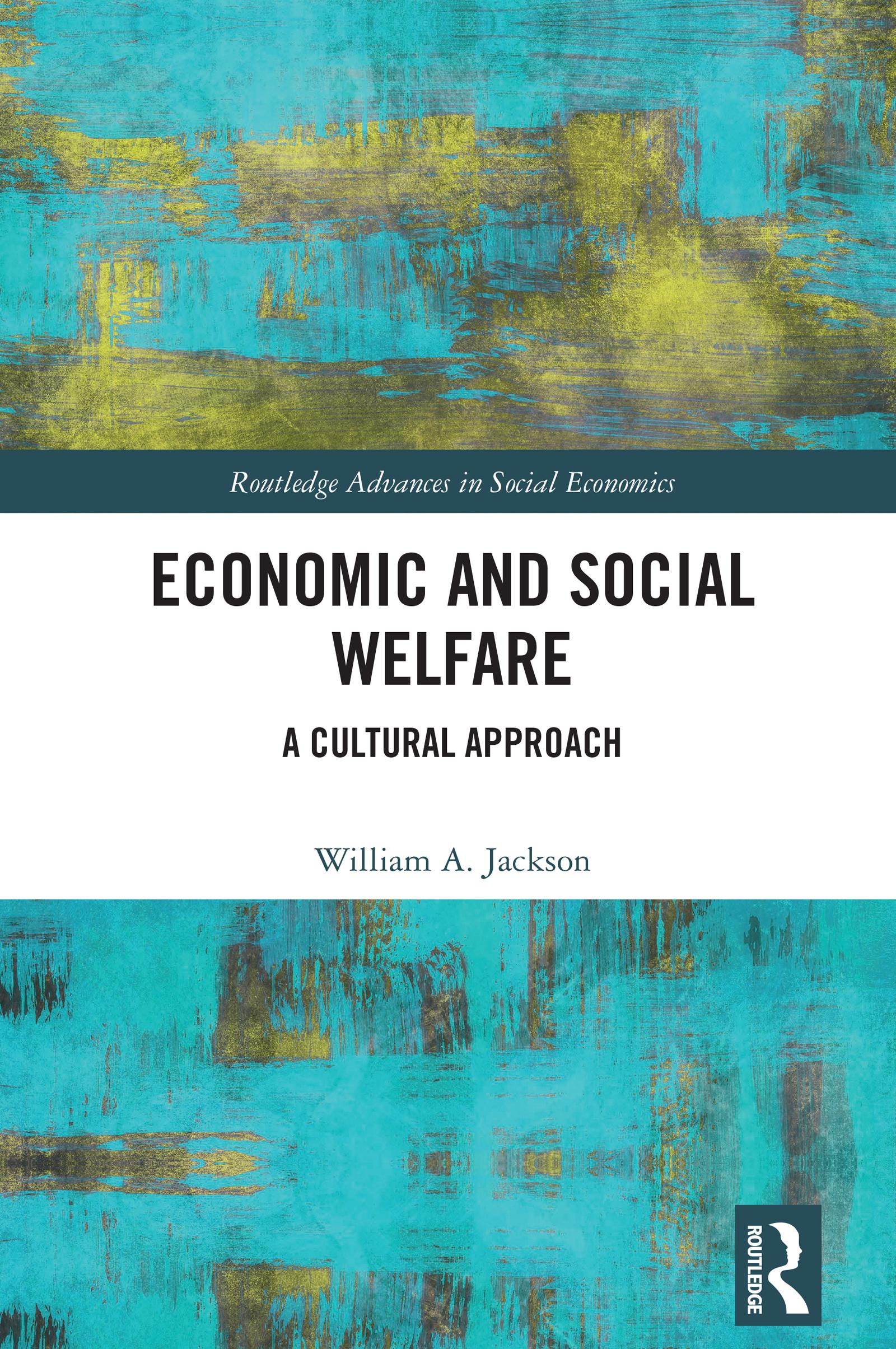
Arguing for a broader understanding of welfare, with culture as a unifying theme, this book demonstrates the explanatory power of an interdisciplinary approach to economic and social welfare.
This approach highlights the narrowness of orthodox economics which, founded on individualistic and utilitarian modelling, has settled for a narrow, simplified picture of welfare that omits many relevant factors, such as production, work, community, identity, lifestyle, preference formation, belief systems, material consumption and the environment.
The book begins by considering definitions of welfare and advocating culture as the core concept needed to capture a whole way of life. It examines economic welfare, on dimensions such as work, income, happiness and the environment, alongside social welfare, on dimensions such as capability, community, identity and freedom. These various dimensions, usually discussed separately, can be interrelated within a larger cultural vision. Prospects for promoting welfare through cultural evolution or public welfare policies are evaluated. Unlike most studies of welfare, the book adopts an interdisciplinary perspective that pulls together numerous strands of literature from heterodox economics, other social sciences and the humanities.
It offers an extensive, non-technical survey of how welfare has been portrayed in the academic literature and how the diverse views can fit within a cultural approach. It will be of great interest to economists, social scientists and policy-makers.
Płać wygodnie kartą, Klarną, Apple Pay lub Google Pay. Nie jesteś zadowolony? Zawsze masz 14-dniową gwarancję zwrotu pieniędzy. Więcej przeczytasz w naszych warunkach. Masz pytania? Napisz do nas na hello@memmo.org.
Memmo ułatwia naukę – gdziekolwiek jesteś na świecie. U nas znajdziesz podręczniki i sprytne narzędzia do nauki w jednym miejscu: streszczenia, quizy, podcasty i fiszki. A do tego Ted, Twój kumpel do nauki, który odpowie na wszystko, co Cię nurtuje. Ponad 50 000 studentów już tu się uczy – stworzone, byś uczył się szybciej i mniej stresował.