
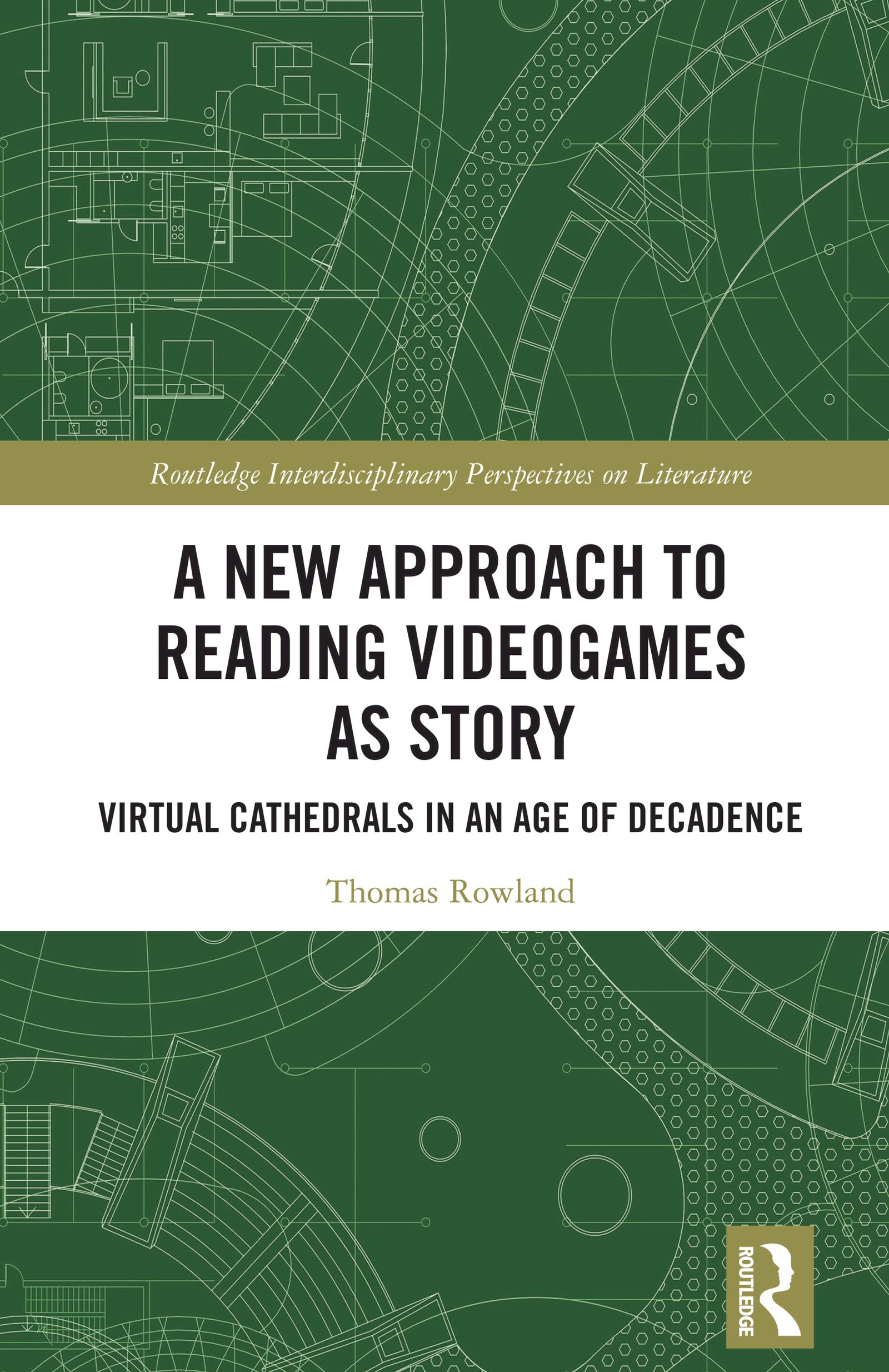
This book introduces a new methodology for understanding videogames, with particular attention to three types of videogames: toy-games, storybook games, and ludonarratives. This methodology pulls from phenomenological and deconstructionist roots, informed by medieval studies and the history of reading, to emphasize how important playing stories can be as a form of narrative. This book explores the idea of storyplaying in connection with new ideas on intromersive movement, game mechanics, and sacred play to develop a typology of videogames that will enable critics, educators, and theorists to situate videogames within a broad continuum of literary history.
Building on this foundation, this book continues by exploring additional facets of this methodology by exploring the relationship between videogames and film criticism, the emerging art world of game-mediated photography, the various economies constructed around videogames, the potential of games to serve as third places, and some suggestions for videogames in the classroom. These ideas are contextualized by the author’s argument that videogames serve a purpose akin to the original function of medieval cathedrals, as intentional virtual spaces with dedicated (and important) meditation, which, given today’s decadent cultural and political climate, underscores the urgency of recognizing videogames as being vital to our scholarly and educational enterprises.
Płać wygodnie kartą, Klarną, Apple Pay lub Google Pay. Nie jesteś zadowolony? Zawsze masz 14-dniową gwarancję zwrotu pieniędzy. Więcej przeczytasz w naszych warunkach. Masz pytania? Napisz do nas na hello@memmo.org.
Memmo ułatwia naukę – gdziekolwiek jesteś na świecie. U nas znajdziesz podręczniki i sprytne narzędzia do nauki w jednym miejscu: streszczenia, quizy, podcasty i fiszki. A do tego Ted, Twój kumpel do nauki, który odpowie na wszystko, co Cię nurtuje. Ponad 50 000 studentów już tu się uczy – stworzone, byś uczył się szybciej i mniej stresował.