
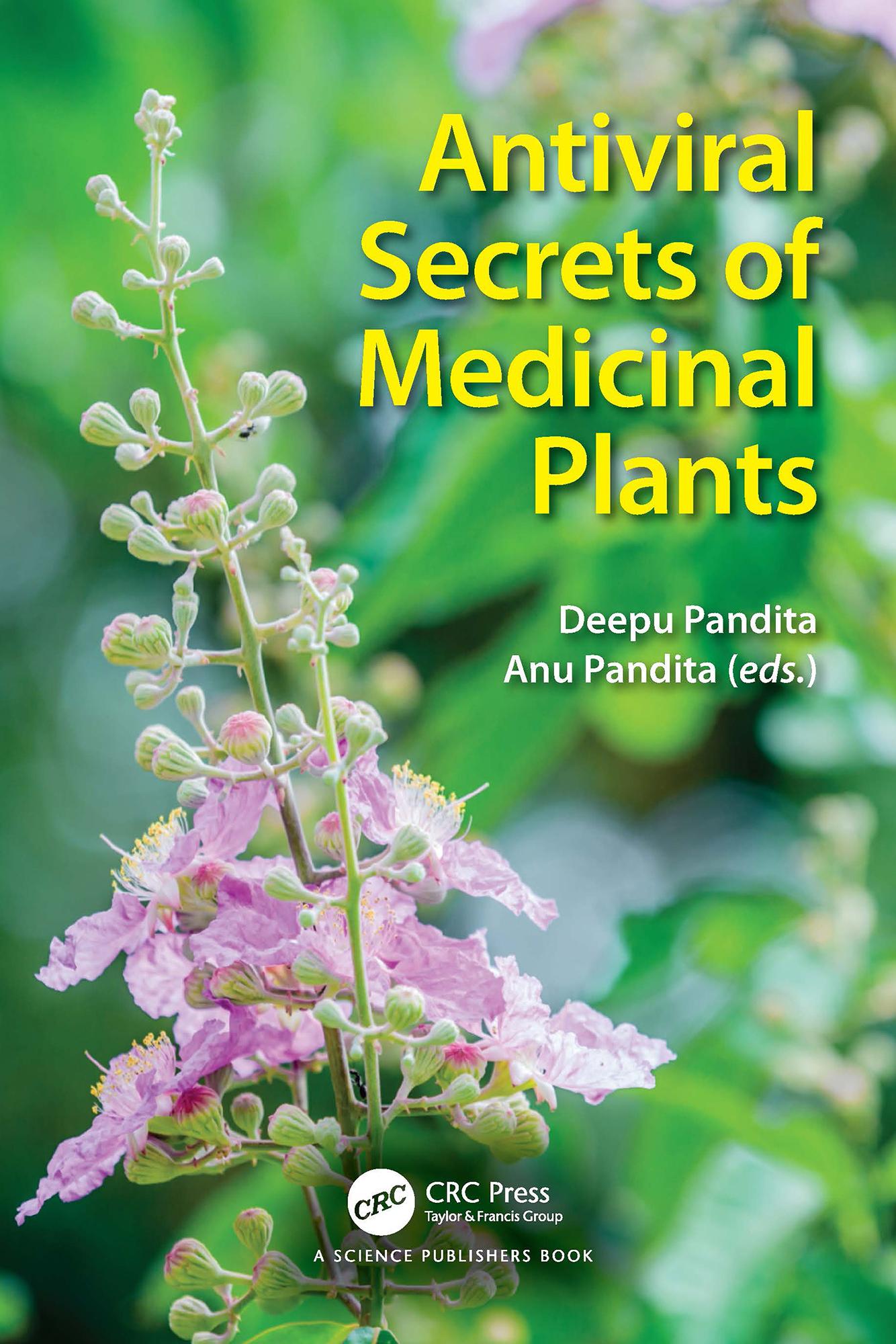
Plant-based therapies are in tune with nature and have relatively little or no side effects. World Health Organisation (WHO) is a strong advocate of herbal inputs in modern systems of medicine. This book contains detailed descriptions of 23 medicinal plants with antiviral properties. The molecules from these plants are known to be effective against viruses. For instance, alkaloids like perivine, pericalline, periformyline, leurocristine, leurosivine, vincaleukoblastine, perividine, vindolinine, and carosine derived from Catharanthus roseus, are effective against viruses like herpes simplex virus type 1, vaccinia virus, poliovirus, and dengue virus type 2 (DENV-2). Large amounts of pentacyclic triterpenoid saponins, also referred as centelloids, are present in C. asiatica. Asiaticoside, centelloside, madecassoside, brahmoside, brahminoside, thankuniside, sceffoleoside, centellose, asiatic-, brahmic-, centellic-, and madecassic acids are some of the terpenoids of this group. Studies show the effectiveness of asiatic acid and their derivatives against the inhibition of human enterovirus 71 replication and anti-HSV-1 and 2 activity of Centella asiatica is because of the asiaticoside.
The book is intended for botanists, biotechnologists, healthcare professionals and general readers interested in enhancing their knowledge on natural plant-based sources of antiviral compounds.
Płać wygodnie kartą, Klarną, Apple Pay lub Google Pay. Nie jesteś zadowolony? Zawsze masz 14-dniową gwarancję zwrotu pieniędzy. Więcej przeczytasz w naszych warunkach. Masz pytania? Napisz do nas na hello@memmo.org.
Memmo ułatwia naukę – gdziekolwiek jesteś na świecie. U nas znajdziesz podręczniki i sprytne narzędzia do nauki w jednym miejscu: streszczenia, quizy, podcasty i fiszki. A do tego Ted, Twój kumpel do nauki, który odpowie na wszystko, co Cię nurtuje. Ponad 50 000 studentów już tu się uczy – stworzone, byś uczył się szybciej i mniej stresował.