
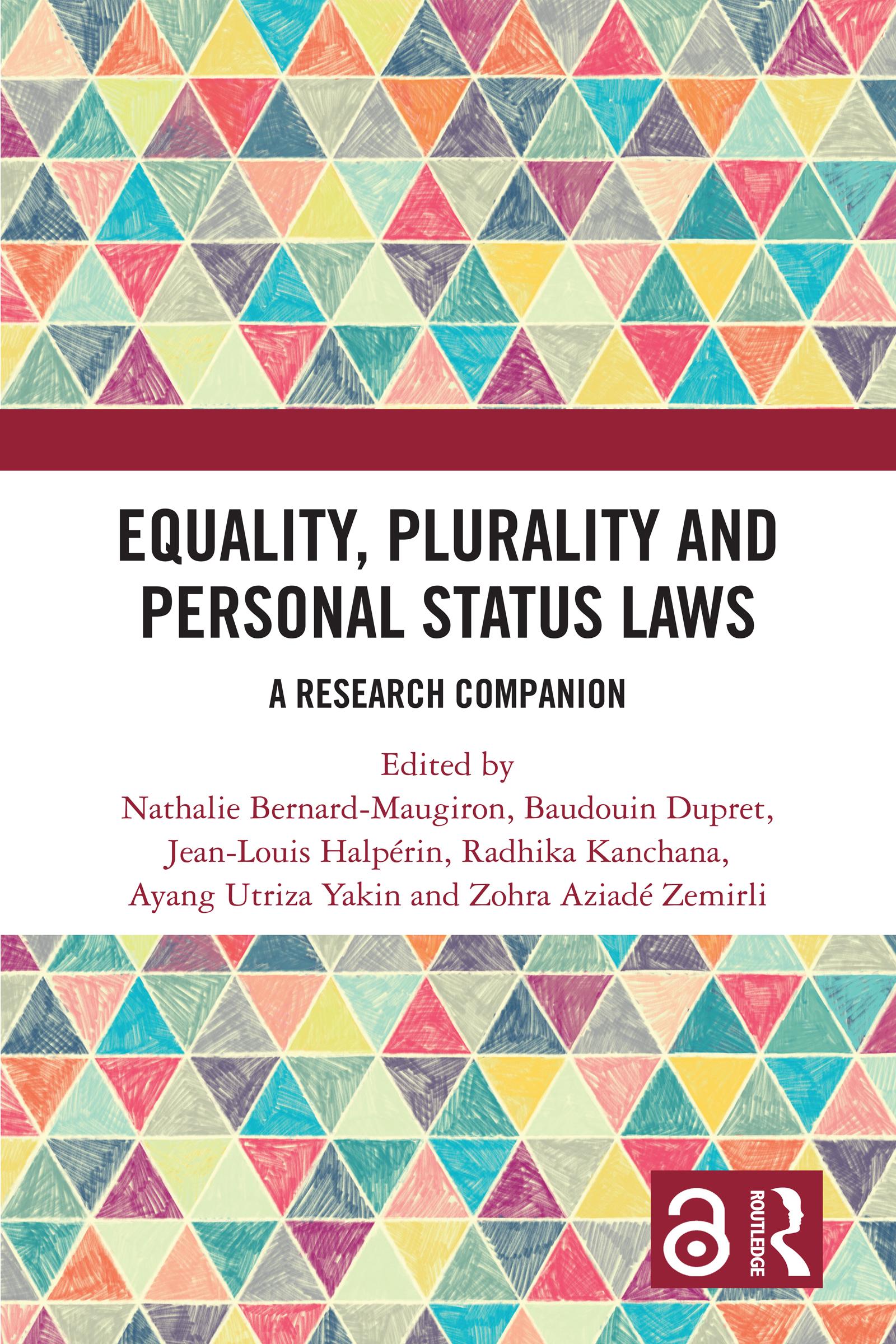
Today, a plurality of personal statuses in family matters persists in a significant number of African and Asian countries. This volume identifies 33 countries as presenting this configuration and provides a comprehensive overview of their legal systems, examining the relationship between the plurality of personal laws and the principle of equality. After a long period of stability dating from the colonial era, these countries are seeing more and more conflicts involving the plurality of personal status laws. The work takes a comparative and multi-disciplinary approach to understand the different aspects and levels involved in this heterogeneity and link them with the concepts of equality and non-discrimination. The first part of the book presents the concepts used to analyse personal status laws in their historical, sociological, ethnographic, and legal contexts. The chapters in the remainder of the book, each devoted to a country or in some cases a group of neighbouring countries, are written by specialists drawn from a large international and interdisciplinary pool. With its multi-disciplinary approach, including law, history and anthropology, the work will be a major contribution to the field of “socio-historical jurisprudence.” It will be of interest to academics and researchers working in the areas of socio-legal studies, human rights, religion-inspired law, and law and politics.
Płać wygodnie kartą, Klarną, Apple Pay lub Google Pay. Nie jesteś zadowolony? Zawsze masz 14-dniową gwarancję zwrotu pieniędzy. Więcej przeczytasz w naszych warunkach. Masz pytania? Napisz do nas na hello@memmo.org.
Memmo ułatwia naukę – gdziekolwiek jesteś na świecie. U nas znajdziesz podręczniki i sprytne narzędzia do nauki w jednym miejscu: streszczenia, quizy, podcasty i fiszki. A do tego Ted, Twój kumpel do nauki, który odpowie na wszystko, co Cię nurtuje. Ponad 50 000 studentów już tu się uczy – stworzone, byś uczył się szybciej i mniej stresował.