
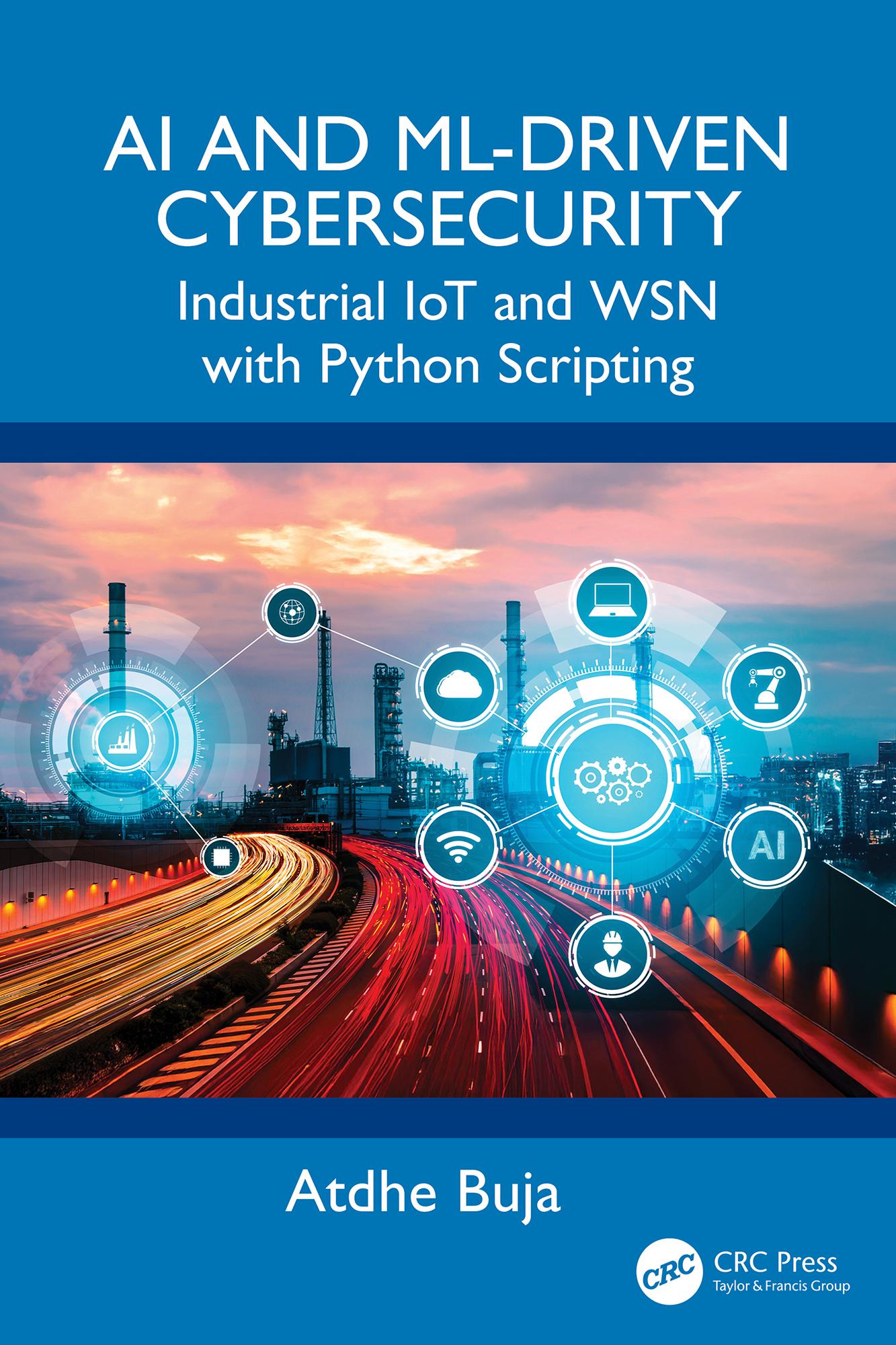
While the Industrial Internet of Things (IIoT) and Wireless Sensor Networks (WSNs) continue to redefine industrial infrastructure, the need for proactive, intelligent, and scalable cybersecurity solutions has never been more pressing. This book provides a hands-on, research-driven guide to building, deploying, and understanding machine learning models tailored for securing IIoT and WSN environments.
Whether you’re a student, researcher, or professional, this book takes you through the full data science lifecycle—from data collection and EDA to model development and deployment—with a special focus on real-world attack detection, anomaly analysis, and predictive defense strategies.
You’ll learn:
- How to run a cybersecurity-focused exploratory data analysis (EDA)
- Step-by-step model design, training, and evaluation for threat detection
- Building and deploying web-based AI cybersecurity solutions
- Practical use of Python
- Visualizing attacks and insights to drive decision-making
- Future trends including Edge AI, federated learning, and zero-trust security
This book is intended for cybersecurity professionals working in industrial or smart environments, including smart cities, aerospace, manufacturing, etc. It is also a valuable resource for data scientists and ML engineers applying AI to security, industrial engineers, and university students and educators in computer science, data science, and security. Build secure, data-driven defenses for the next generation of connected systems—start here.
Płać wygodnie kartą, Klarną, Apple Pay lub Google Pay. Nie jesteś zadowolony? Zawsze masz 14-dniową gwarancję zwrotu pieniędzy. Więcej przeczytasz w naszych warunkach. Masz pytania? Napisz do nas na hello@memmo.org.
Memmo ułatwia naukę – gdziekolwiek jesteś na świecie. U nas znajdziesz podręczniki i sprytne narzędzia do nauki w jednym miejscu: streszczenia, quizy, podcasty i fiszki. A do tego Ted, Twój kumpel do nauki, który odpowie na wszystko, co Cię nurtuje. Ponad 50 000 studentów już tu się uczy – stworzone, byś uczył się szybciej i mniej stresował.