
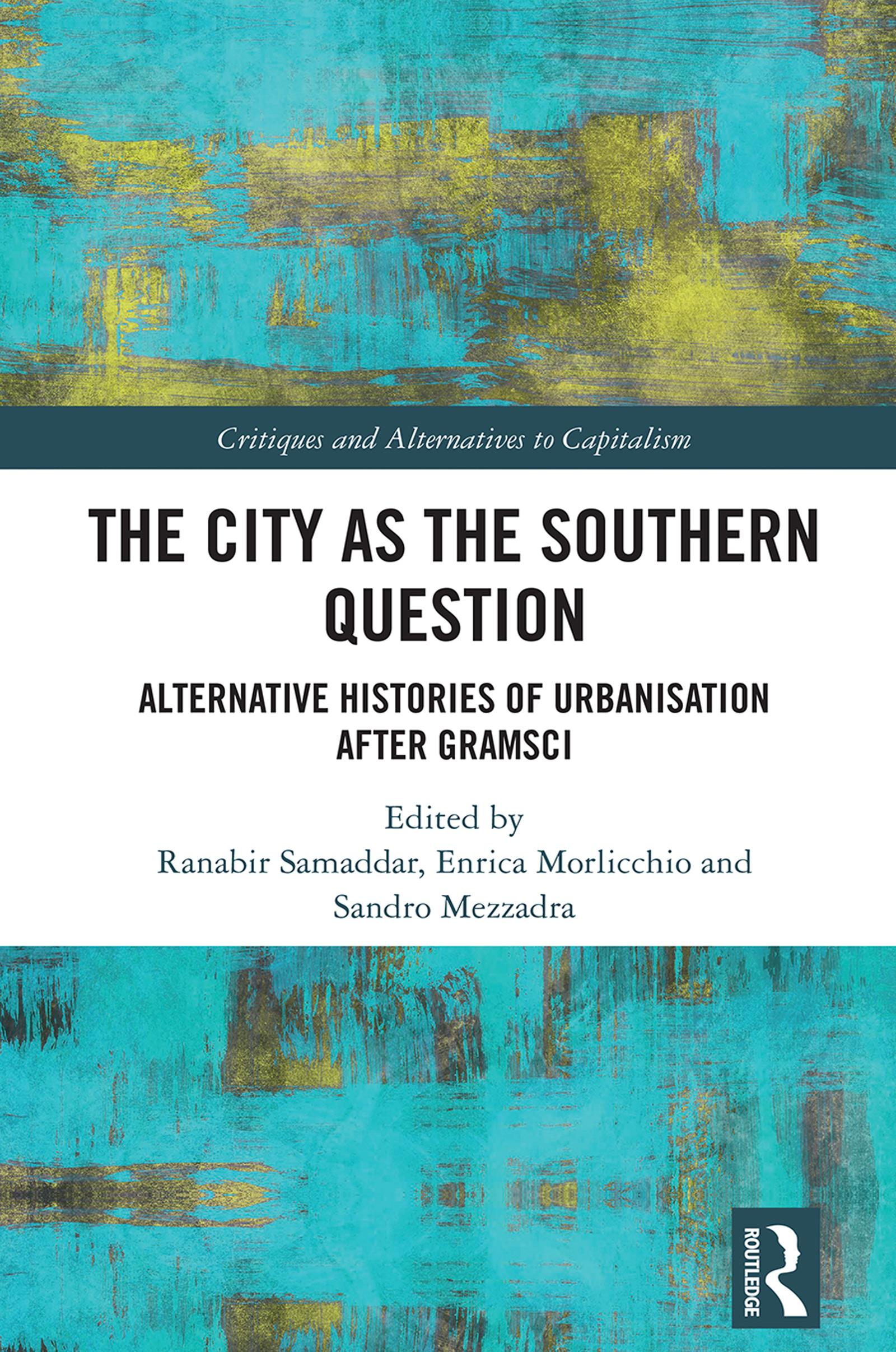
This innovative edited volume places global urbanism in the context of the phenomenal growth of cities of the South, investigating their colonial contentiousness and asking how their history plays out in the twenty-first-century phenomenon of urbanisation.
Inspired by Antonio Gramsci’s reflections on the problem of the South, it shows that the question of southern urbanism is about the anomalies and growth of southern cities, the histories of struggles, technological and logistical reorientations, new zoning practices of neoliberal capitalism and the remaking of urban geographies towards a possible urban future that aims to be just. Crucially, it asks whether today’s city is a seamless formation of several overlapping phases of growth or if there is a decisive break today, marked by the hyper growth of these cities. To understand the implications of these questions for visions of an urban future, this volume takes a number of southern cities of Asia and Europe as case studies, including Kolkata, Mumbai, Chittagong, Beirut, Athens, Naples and Marseille. It shows how these cities are paradoxically marked by both fractured geographies and new types of popular mobilisations, solidarities and an ethic of protection and care, showing this to be the core of the Southern question, constituting the urban experience of our time.
It will appeal to advanced-level students and scholars with interests in urban sociology, Southern urbanisation, postcolonial studies, political science, political economy and urban geography.
Płać wygodnie kartą, Klarną, Apple Pay lub Google Pay. Nie jesteś zadowolony? Zawsze masz 14-dniową gwarancję zwrotu pieniędzy. Więcej przeczytasz w naszych warunkach. Masz pytania? Napisz do nas na hello@memmo.org.
Memmo ułatwia naukę – gdziekolwiek jesteś na świecie. U nas znajdziesz podręczniki i sprytne narzędzia do nauki w jednym miejscu: streszczenia, quizy, podcasty i fiszki. A do tego Ted, Twój kumpel do nauki, który odpowie na wszystko, co Cię nurtuje. Ponad 50 000 studentów już tu się uczy – stworzone, byś uczył się szybciej i mniej stresował.