
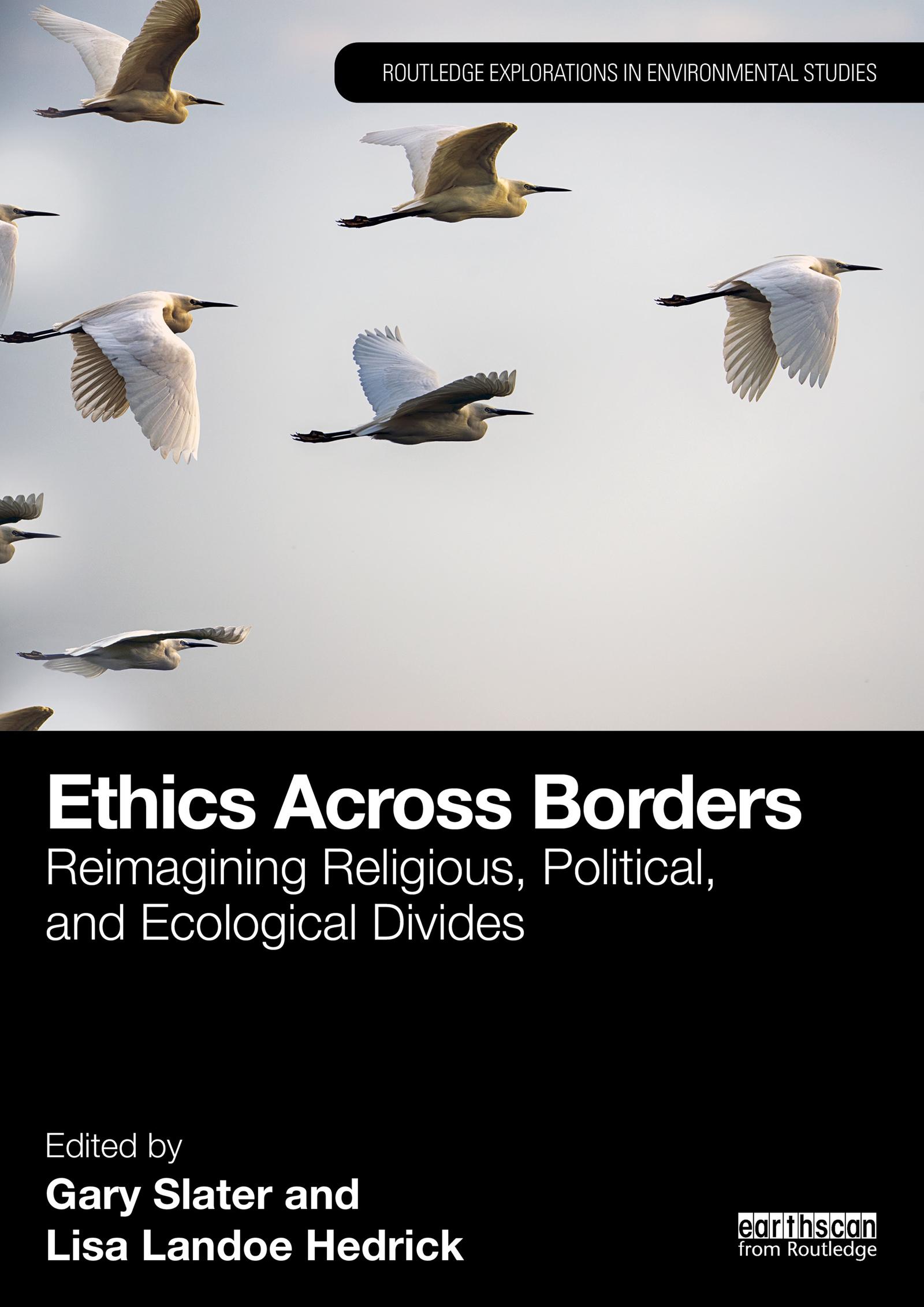
Ethics Across Borders assembles perspectives from geographers, historians, theologians, philosophers, and scientists to explore ethically relevant connections across multiple types of borders.
The contemporary global order is fluid, increasingly unstable, and riven with borders at countless and complex points. Religious, political, and ecological borders hold particular significance, where interactions carry compounding social and environmental consequences. As the first collected volume to look at these three types of borders, both from an interdisciplinary perspective and as distinct forms, it demonstrates the value of thinking across borders as an ethical project. Taking Simone Weil’s perspective that every separation is a link, it posits that separations within sovereignty, species, and religion become links between political, ecological, and theological perspectives, and that boundaries within human life have taken on ecological significance in the age of the Anthropocene. In this framing, religion interacts with the political and the ecological in three ways: as foundational to sovereignty, as an influence on perspectives on contemporary boundaries, and as morally and philosophically implicated in the human/nonhuman interactions that ground environmental ethics.
Ethics Across Borders offers lessons on how to reimagine borders and how to engage more justly with ecological systems and human communities. It will appeal to readers in environmental and religious ethics, philosophy, and border studies.
Płać wygodnie kartą, Klarną, Apple Pay lub Google Pay. Nie jesteś zadowolony? Zawsze masz 14-dniową gwarancję zwrotu pieniędzy. Więcej przeczytasz w naszych warunkach. Masz pytania? Napisz do nas na hello@memmo.org.
Memmo ułatwia naukę – gdziekolwiek jesteś na świecie. U nas znajdziesz podręczniki i sprytne narzędzia do nauki w jednym miejscu: streszczenia, quizy, podcasty i fiszki. A do tego Ted, Twój kumpel do nauki, który odpowie na wszystko, co Cię nurtuje. Ponad 50 000 studentów już tu się uczy – stworzone, byś uczył się szybciej i mniej stresował.