
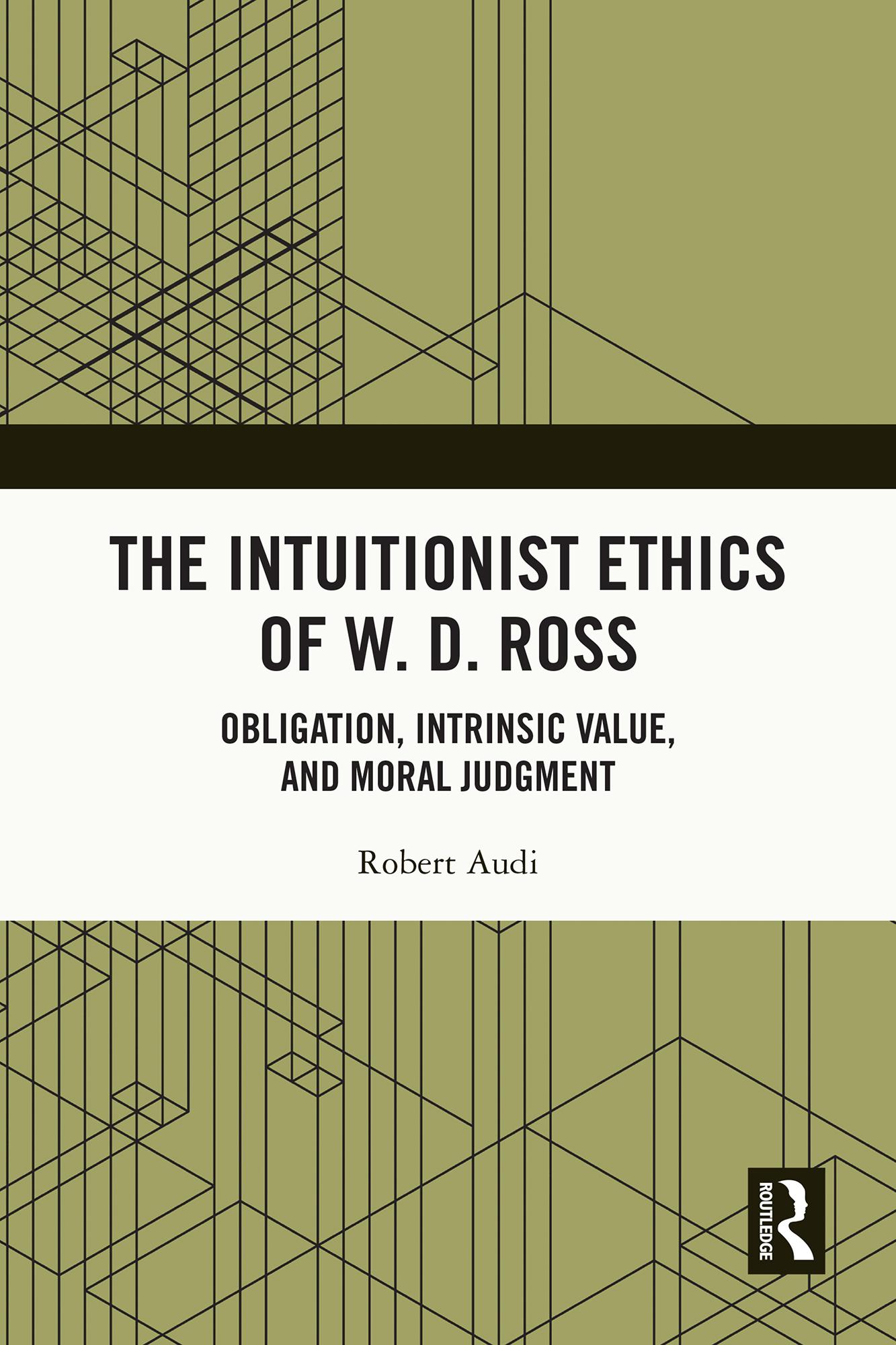
This is the first full-scale analytical and critical monograph on the moral philosophy of W. D. Ross. It shows why Ross is admired as a major figure in ethics. He provided one of the most distinctive and powerful theories in the field, and Robert Audi sets out and explains Ross’s comprehensive ethics, including his theory of obligation—of duty and the right—and his theory of value, of the good and the bad. Ross is conceptually sophisticated, rich in ideas, and historically informed. He reflects the best in Aristotle’s ethics and is an astute critic of Kant, Mill, Moore, and others.
Audi clarifies Ross’s substantive moral views, from their metaphysical grounds to their practical applications, and explains how Ross illuminates much in contemporary ethics, theoretical and applied—intuition, reflective equilibrium, defeasibility, and many distinctions: between grounds and constitution, basic and consequential obligations, commensurability and combinability, moral stringency and moral predominance, enumerative and intuitive induction, rightness and creditworthiness, and many others. The Intuitionist Ethics of W. D. Ross presents Ross as demonstrating the powers of intuition in moral practice, portraying the diversity of standards for determining duty, and preserving the plurality of values in moral reflection. He is a judicious exemplar of full-scale ethical intuitionism, as both a method of moral thinking and a major option in doing and teaching ethics.
Płać wygodnie kartą, Klarną, Apple Pay lub Google Pay. Nie jesteś zadowolony? Zawsze masz 14-dniową gwarancję zwrotu pieniędzy. Więcej przeczytasz w naszych warunkach. Masz pytania? Napisz do nas na hello@memmo.org.
Memmo ułatwia naukę – gdziekolwiek jesteś na świecie. U nas znajdziesz podręczniki i sprytne narzędzia do nauki w jednym miejscu: streszczenia, quizy, podcasty i fiszki. A do tego Ted, Twój kumpel do nauki, który odpowie na wszystko, co Cię nurtuje. Ponad 50 000 studentów już tu się uczy – stworzone, byś uczył się szybciej i mniej stresował.