
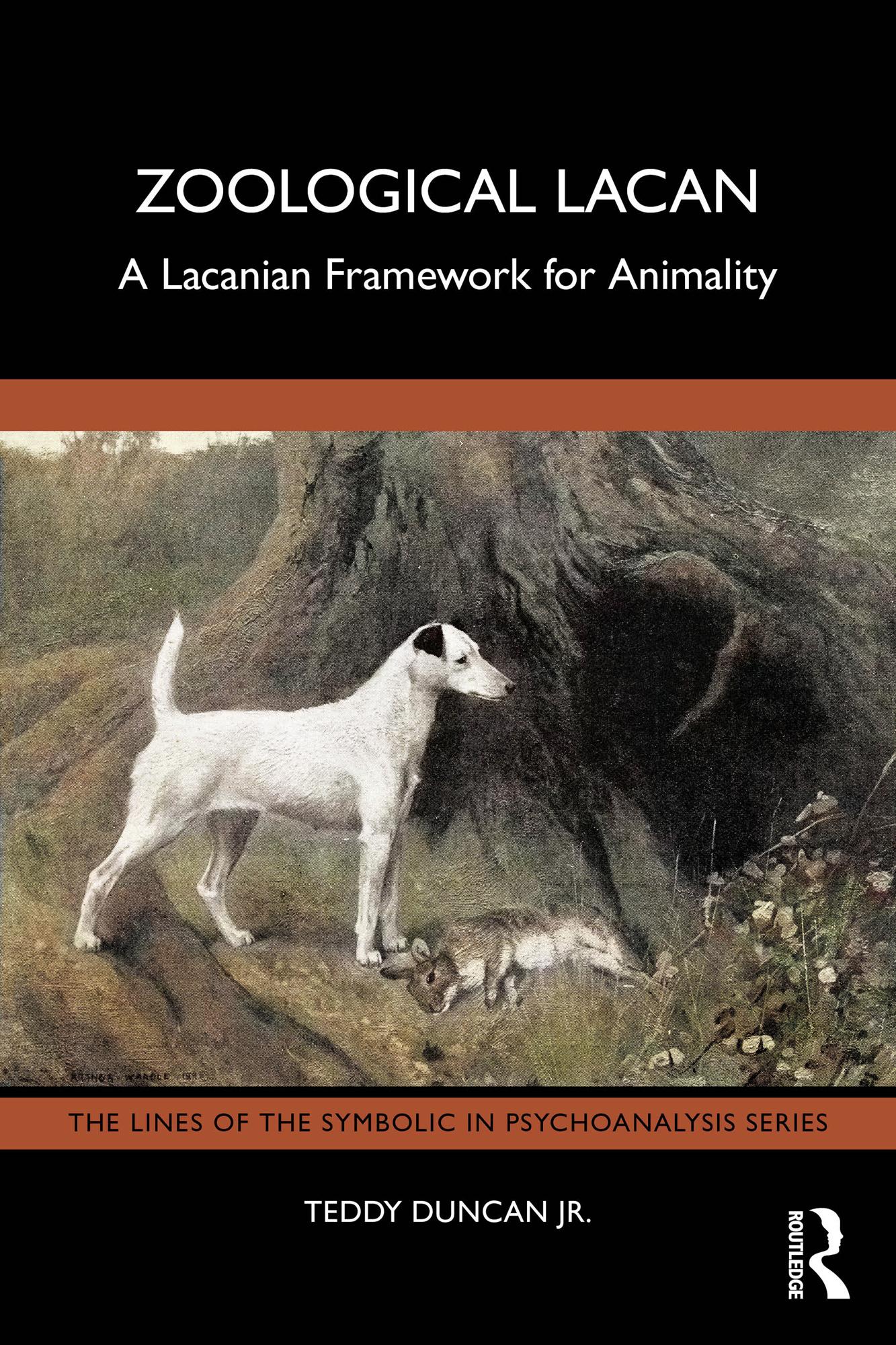
Zoological Lacan examines the importance of Lacanian theory for understanding animals by situating them within Lacan’s thought, relying on the occasional and fleeting (but surprisingly consistent) statements on animality throughout his work.
Teddy Duncan Jr. considers questions about animal subjectivity and the epistemological challenges that animals present, suggesting that a return to Lacan can resolve many of the lacunas within our comprehension of them. Using the Lacanian triad (the symbolic, the imaginary, and the Real), Duncan develops a “Zoological Lacanianism” that not only delineates a psychoanalytic understanding of animal interiority but also supplies fresh insights into animal behavior and subjectivity, exceeding Lacan’s direct comments on animality. This book extends Lacan’s thought by providing new theoretical interventions on topics such as animal interiority, communication, guilt, jouissance, trauma, the unconscious, and human-animal love. While carefully avoiding collapsing the subjectivity of animals and humans, animals are shown to be psychoanalytic subjects. The book also reflects on the significance these areas can have for other fields such as philosophy, psychoanalysis, and animal studies.
Zoological Lacan announces—to the study of animals, psychoanalysis, and philosophy—that a new theory has emerged on the scene, one that warrants substantive and sustained engagement.
Płać wygodnie kartą, Klarną, Apple Pay lub Google Pay. Nie jesteś zadowolony? Zawsze masz 14-dniową gwarancję zwrotu pieniędzy. Więcej przeczytasz w naszych warunkach. Masz pytania? Napisz do nas na hello@memmo.org.
Memmo ułatwia naukę – gdziekolwiek jesteś na świecie. U nas znajdziesz podręczniki i sprytne narzędzia do nauki w jednym miejscu: streszczenia, quizy, podcasty i fiszki. A do tego Ted, Twój kumpel do nauki, który odpowie na wszystko, co Cię nurtuje. Ponad 50 000 studentów już tu się uczy – stworzone, byś uczył się szybciej i mniej stresował.