
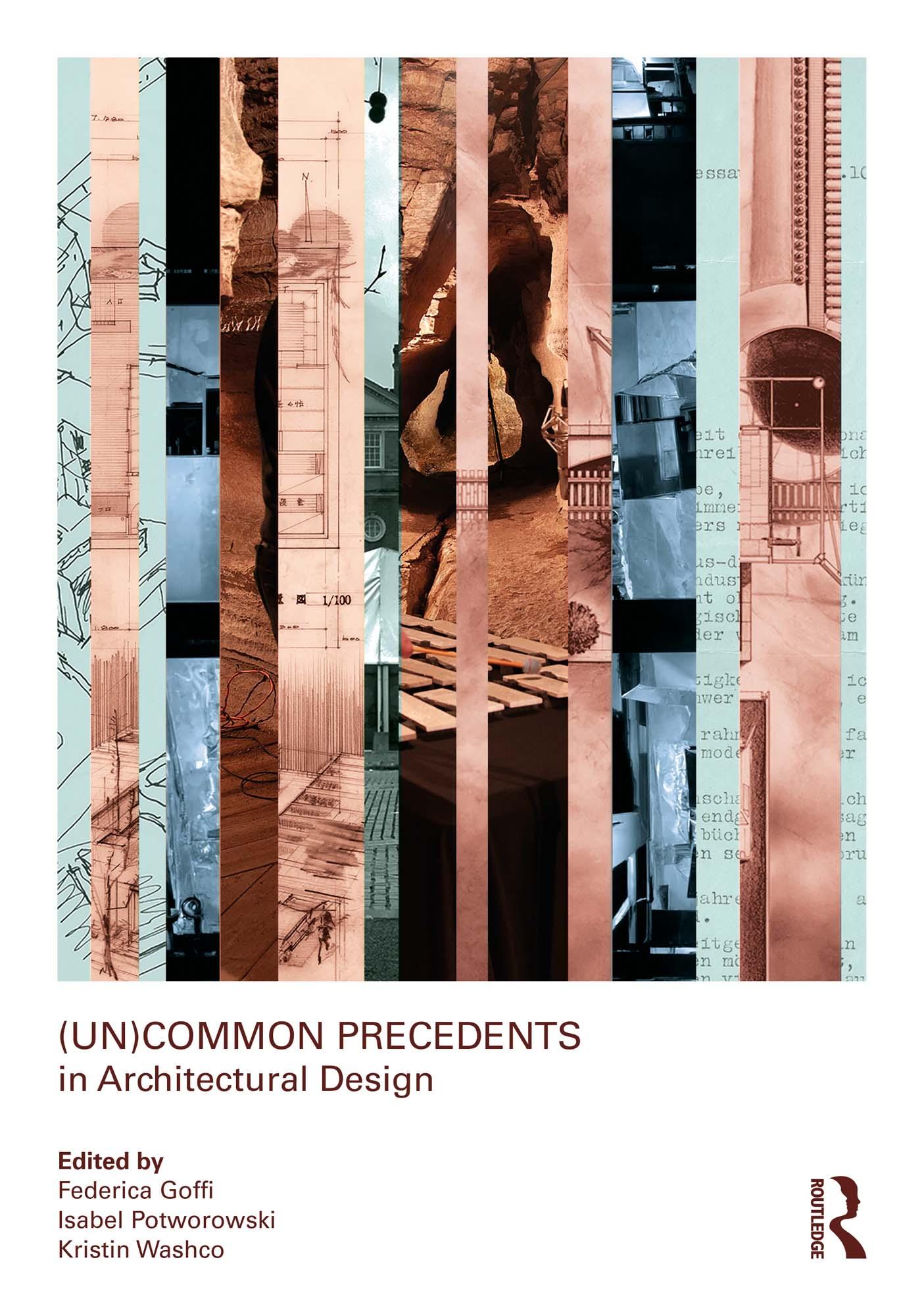
(Un)Common Precedents in Architectural Design calls for an attentive examination of the uncommon that inspires creativity, prompting a re-examination of both common and marginalised precedents. Precedents and their origins can be idiosyncratic, and it is not surprising that they often lead to unpredictable outcomes. The uncommon is explored as an undervalued, unregulated, and informal approach to precedents, acknowledging a radical imagination in architectural design that extends beyond visual and typological considerations, expanding the field of influence beyond buildings to investigate interdisciplinary exchanges and a multisensory imagination. This book addresses a critical need to re-examine architectural precedents, understanding why, how, and what we study to reveal the intentions, transmedia explorations, and referents behind the workings of a more inclusive architectural imagination nurtured in multicultural practices and teaching environments. (Un)Common Precedents thus underlines the non-conformity and inordinance of precedents and the necessity of their divergence, drawing attention to different socio-political contexts that resist, reject, and replace the canonisation of precedents based on dominant ocular-centric approaches with local, experiential, transdisciplinary, and uncommon ones. The book offers an alternative to the compulsion to normalise, universalise, repeat, restate, and re-enact, transforming the documentation of far-removed precedents through first-person experiences.
Płać wygodnie kartą, Klarną, Apple Pay lub Google Pay. Nie jesteś zadowolony? Zawsze masz 14-dniową gwarancję zwrotu pieniędzy. Więcej przeczytasz w naszych warunkach. Masz pytania? Napisz do nas na hello@memmo.org.
Memmo ułatwia naukę – gdziekolwiek jesteś na świecie. U nas znajdziesz podręczniki i sprytne narzędzia do nauki w jednym miejscu: streszczenia, quizy, podcasty i fiszki. A do tego Ted, Twój kumpel do nauki, który odpowie na wszystko, co Cię nurtuje. Ponad 50 000 studentów już tu się uczy – stworzone, byś uczył się szybciej i mniej stresował.