
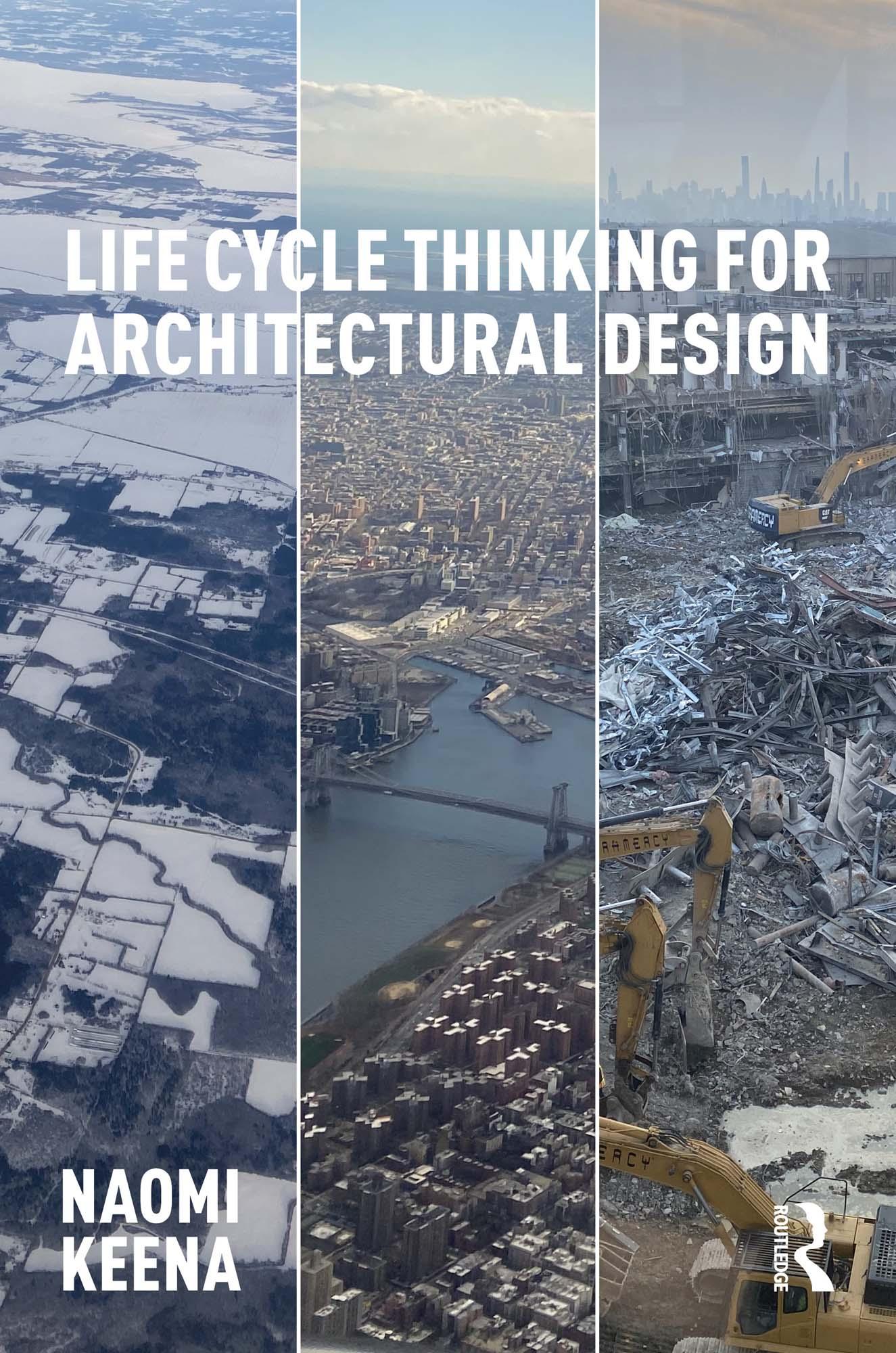
This book provides an accessible and holistic understanding of life cycle assessment, allowing readers to build life cycle thinking into their design process.
Life cycle analysis is becoming more commonplace in architectural discourse to understand embodied carbon in buildings. However, life cycle cost analysis and social life cycle analysis are often not considered. By combining these methods of analyses, a clear understanding of the environmental, economic, and social aspects of the entire life cycle of a building and its design emerges. Drawing from seminal texts as well as contemporary thinking on systems theory, urban systems, and ecological analyses, this book frames architectural design processes within the socio-ecological context of 21st-century challenges. It also highlights the role data visualization and data storytelling play in capturing the memory or embodied aspects of a building's life cycle. This is critical for evidence-based decision-making during the design process as well as documenting the temporal scale of a building to allow for future use architecture. Finally, a case study comparing the life cycle of Grand Central Terminal and Pennsylvania Station in New York highlights the environmental, economic, and social costs borne by the demolition and rebuild of Penn Station, and provides a demonstration of how the theory works in practice.
This will be an essential resource for all architects and designers at the beginning of their careers.
Płać wygodnie kartą, Klarną, Apple Pay lub Google Pay. Nie jesteś zadowolony? Zawsze masz 14-dniową gwarancję zwrotu pieniędzy. Więcej przeczytasz w naszych warunkach. Masz pytania? Napisz do nas na hello@memmo.org.
Memmo ułatwia naukę – gdziekolwiek jesteś na świecie. U nas znajdziesz podręczniki i sprytne narzędzia do nauki w jednym miejscu: streszczenia, quizy, podcasty i fiszki. A do tego Ted, Twój kumpel do nauki, który odpowie na wszystko, co Cię nurtuje. Ponad 50 000 studentów już tu się uczy – stworzone, byś uczył się szybciej i mniej stresował.