
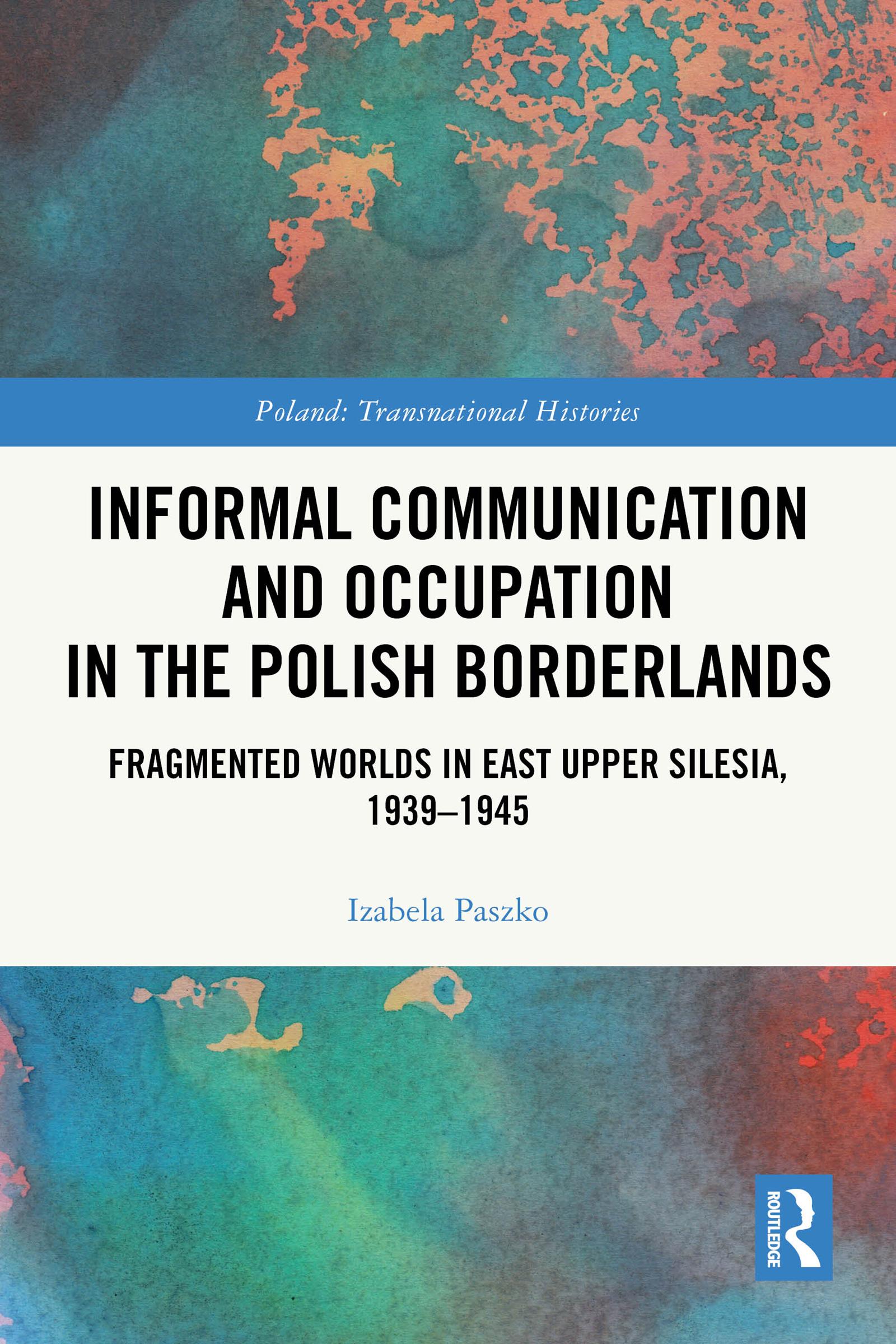
The book explores the neglected role and social dynamics of informal communication – interpersonal channels not controlled ‘from above’ – in the region of Upper Silesia under the German occupation during the Second World War (1939–1945).
Whereas the classic dichotomies, such as private-public and formal-informal, have been widely explored and discussed in the humanities, the main focus of this volume lies in the reconstruction of the information landscape of wartime and its deployment by families, co-workers, neighbours, and other social groups. Through the prism of personal stories, the book analyses functions and forms of informal communication that existed in a contextual and ephemeral way such as gossip, rumours, and workers’ conversations, offering an interdisciplinary perspective on everyday life during this period.
Informal Communication and Occupation in the Polish Borderlands is primarily aimed at scholars of contemporary history, social history, and Eastern European history, while its important lens as a study of fake news and misinformation in modern times will also be engaging to undergraduate classrooms and general readers.
Płać wygodnie kartą, Klarną, Apple Pay lub Google Pay. Nie jesteś zadowolony? Zawsze masz 14-dniową gwarancję zwrotu pieniędzy. Więcej przeczytasz w naszych warunkach. Masz pytania? Napisz do nas na hello@memmo.org.
Memmo ułatwia naukę – gdziekolwiek jesteś na świecie. U nas znajdziesz podręczniki i sprytne narzędzia do nauki w jednym miejscu: streszczenia, quizy, podcasty i fiszki. A do tego Ted, Twój kumpel do nauki, który odpowie na wszystko, co Cię nurtuje. Ponad 50 000 studentów już tu się uczy – stworzone, byś uczył się szybciej i mniej stresował.