
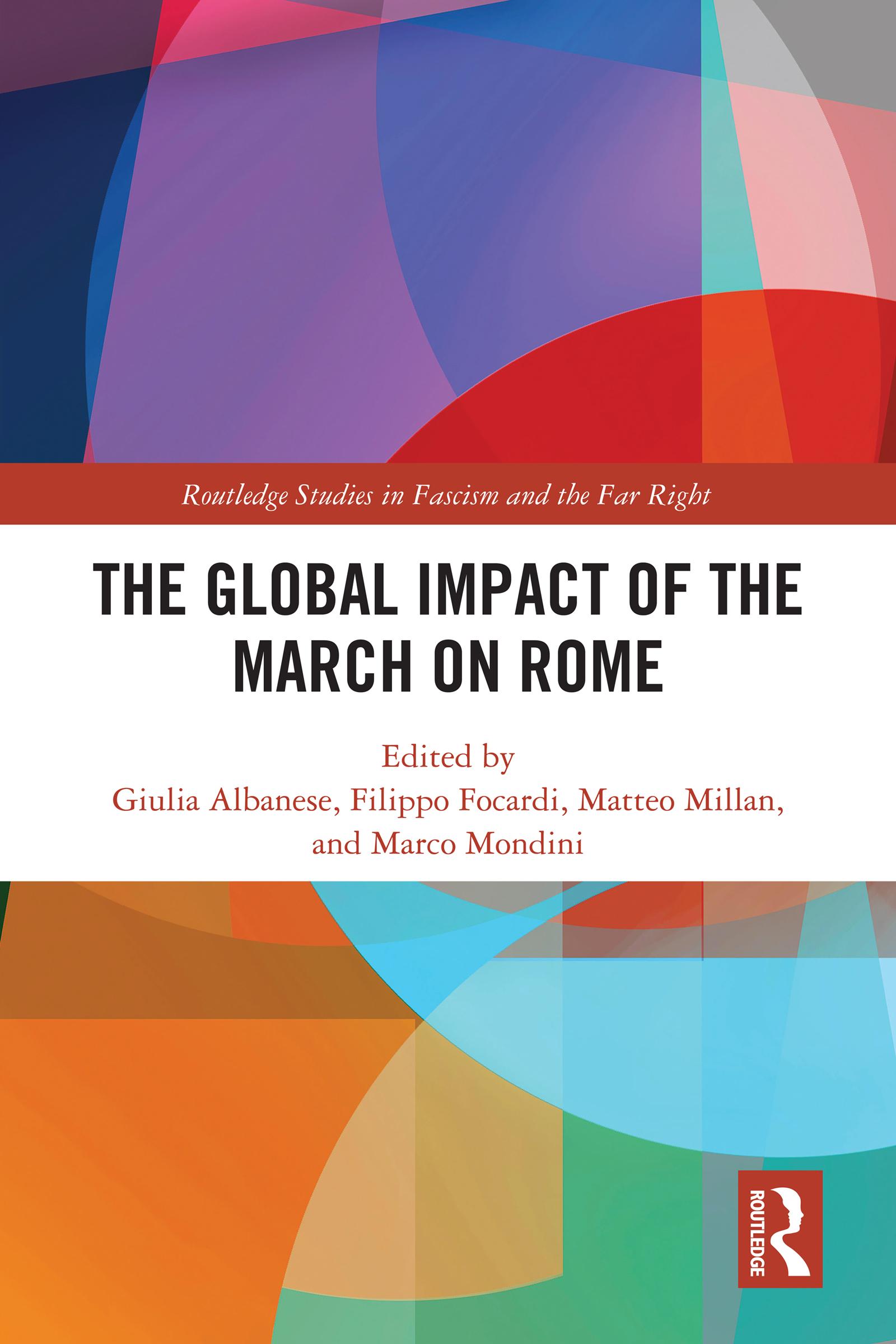
This comprehensive collection of chapters provides a nuanced and multifaceted analysis of the global impact of the March on Rome, offering valuable insights into the spread and adaptation of Fascist ideologies in different cultural and political contexts beyond Italy in the 1920s and 1930s.
The chapters seek to contextualise the transformation of political cultures in 1920s Europe and provide a better understanding of the reasons for Fascism's success in the interwar world. By exploring these diverse perspectives and experiences, the book sheds light on the complex processes of ideological transfer, adaptation, and resistance that characterised the global reception of Fascism in the wake of the March on Rome. It underscores the importance of considering local contexts, transnational networks, and individual actors in tracing the trajectory of Fascist influence across Western and Eastern Europe, Latin America and the United States.
This book will appeal to an academic and scholarly audience at many levels, particularly in undergraduate and postgraduate courses on Italian and European history. Its accessible engagement of the broader issue of fascism and its transnational spread will also be of interest to a general readership interested in the history of Europe during the interwar period.
Płać wygodnie kartą, Klarną, Apple Pay lub Google Pay. Nie jesteś zadowolony? Zawsze masz 14-dniową gwarancję zwrotu pieniędzy. Więcej przeczytasz w naszych warunkach. Masz pytania? Napisz do nas na hello@memmo.org.
Memmo ułatwia naukę – gdziekolwiek jesteś na świecie. U nas znajdziesz podręczniki i sprytne narzędzia do nauki w jednym miejscu: streszczenia, quizy, podcasty i fiszki. A do tego Ted, Twój kumpel do nauki, który odpowie na wszystko, co Cię nurtuje. Ponad 50 000 studentów już tu się uczy – stworzone, byś uczył się szybciej i mniej stresował.