
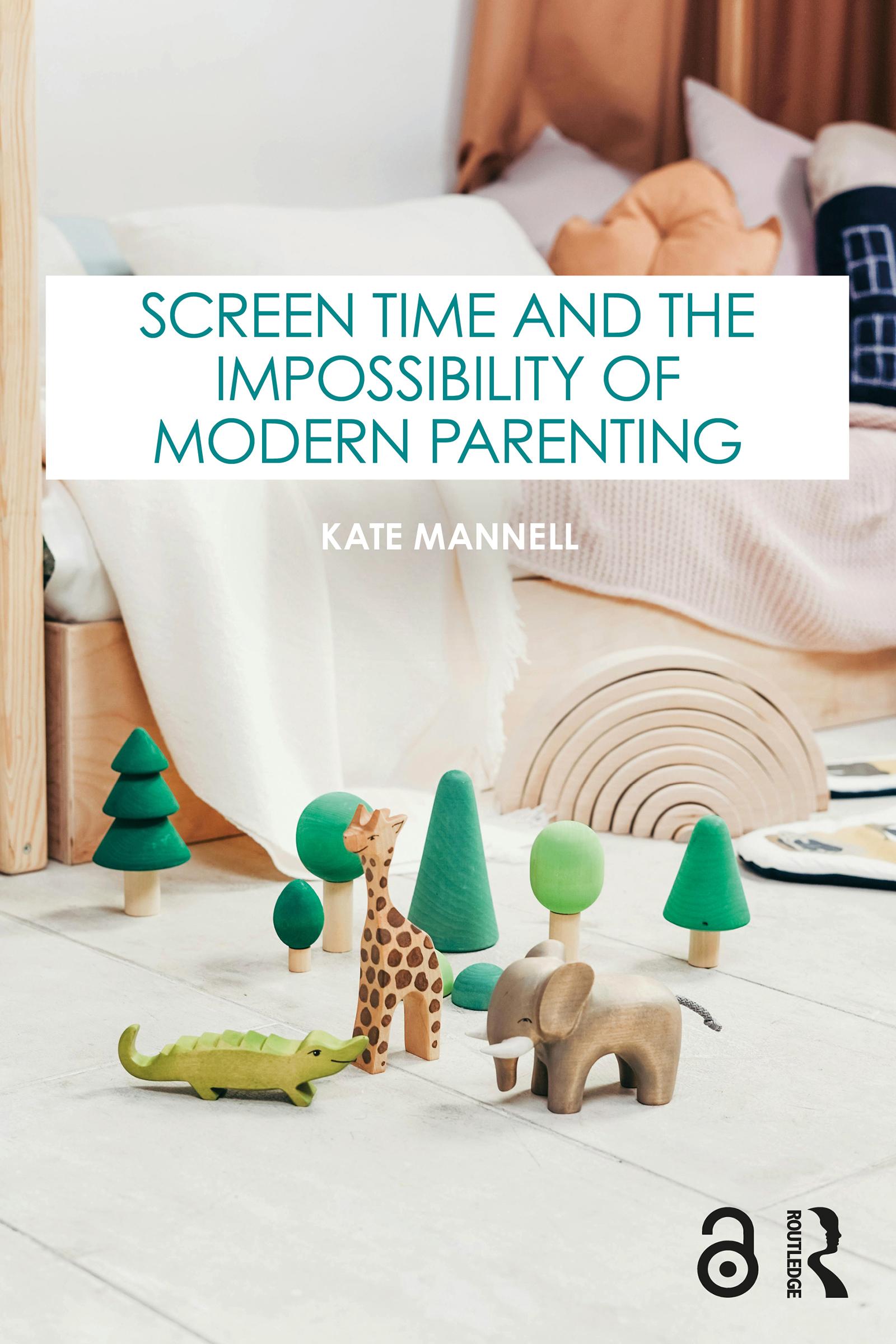
How much screen time is harmful to a child's brain? Does 'high stimulation' screen time cause more tantrums than 'low stimulation' screen time? What screen time is best, and worst, for a child’s language development? For parents of young children, this kind of talk is ubiquitous—it is in news headlines and social media content, arguments with partners, and conversations with friends.
Scholars have argued that the catch-all concept of ‘screen time’ limits discussions about children's digital media use: it assumes all screen use is alike and is associated with an overwhelming focus on harm. Yet talk about screen time dominates everyday culture. Why has this discourse proven so persistent and powerful?
Rather than debating the impacts of children's media use or the validity of ‘screen time’ as a term, this book steps further back to investigate discourse about screen time and early childhood as a cultural phenomenon in itself. It examines how dominant ideals and narratives about parenting shape the way screen time is defined and made to matter.
Drawing on diverse forms of data, including social media analysis, news reporting, and interviews with parents, this book maps the key narratives about screen time that saturate parents’ everyday lives. It unpacks the powerful cultural norms around parenting that have enabled these narratives to become common sense, and explores how parents grapple with and navigate these narratives in ways that are often complex and contradictory. In doing so, the book offers insights into why discussions of screen time have endured and take their current form, the pressures and challenges that parents experience as a result, and how researchers can most meaningfully intervene. This book will be of interest to scholars and students from Media and Communication, Sociology, Cultural Studies, and Education, as well as anyone seeking robust analysis of children, families, and technology.
Chapter 1 of this book is freely available as a downloadable Open Access PDF at http://www.taylorfrancis.com under a Creative Commons [Attribution-Non Commercial-No Derivatives (CC BY-NC-ND)] 4.0 license.
Płać wygodnie kartą, Klarną, Apple Pay lub Google Pay. Nie jesteś zadowolony? Zawsze masz 14-dniową gwarancję zwrotu pieniędzy. Więcej przeczytasz w naszych warunkach. Masz pytania? Napisz do nas na hello@memmo.org.
Memmo ułatwia naukę – gdziekolwiek jesteś na świecie. U nas znajdziesz podręczniki i sprytne narzędzia do nauki w jednym miejscu: streszczenia, quizy, podcasty i fiszki. A do tego Ted, Twój kumpel do nauki, który odpowie na wszystko, co Cię nurtuje. Ponad 50 000 studentów już tu się uczy – stworzone, byś uczył się szybciej i mniej stresował.