
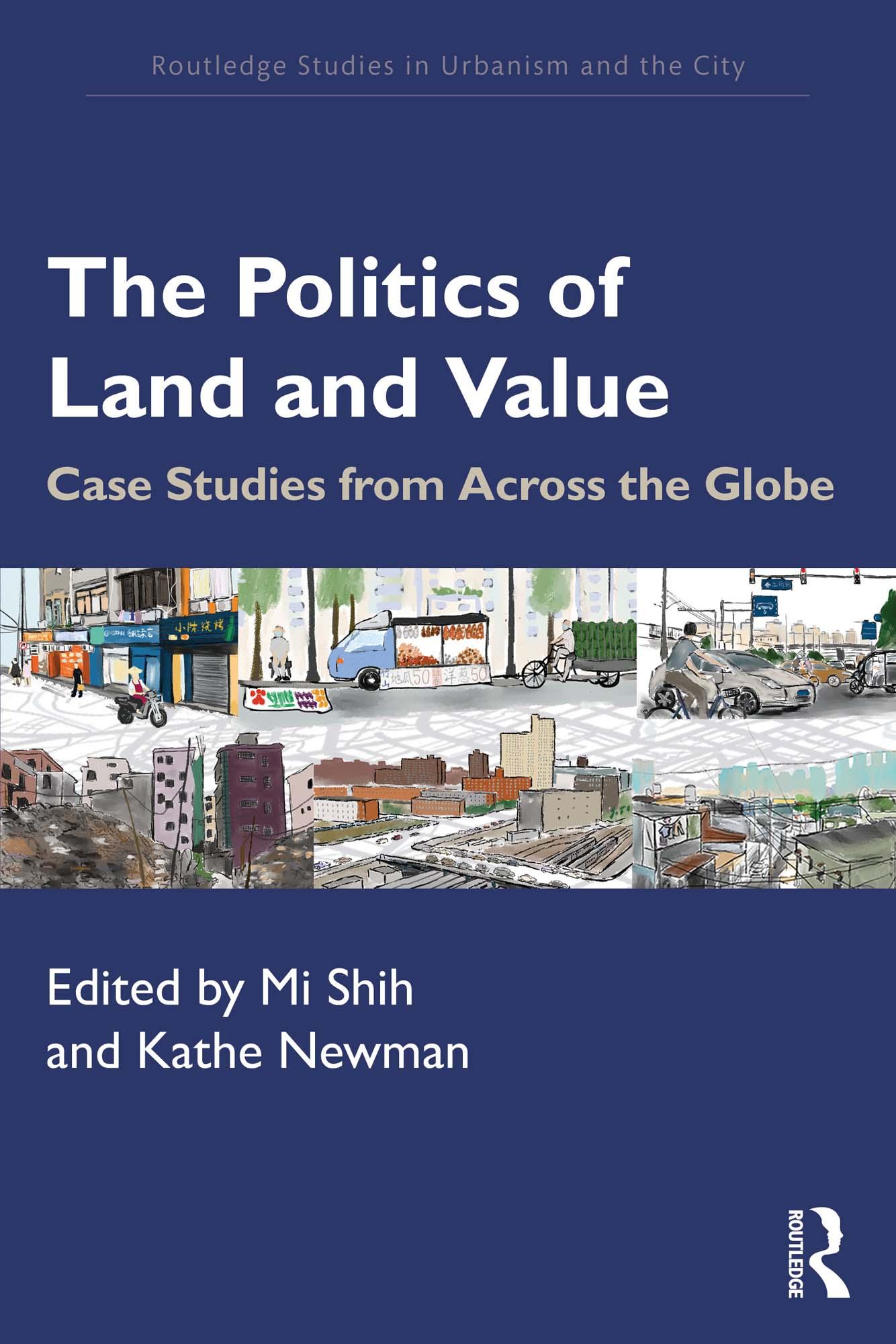
This book investigates the treatment of land as a source of money in global urban processes. Probing land development at moments of value creation, capture, negotiation, contestation, and transformation, it sheds light on how and why value practices matter in transforming the politics of the status quo so that the social life of land may thrive.
This book approaches value as a mode of practice to investigate how the deepening treatment of land as a source of municipal revenue and private profit has become a hegemonic project that penetrates and shapes key aspects of how we run cities and live our urban life. Closely related is a set of issues that greatly concern urban scholars, municipal planners, and community organizers around the world: the use and politics of land value capture (LVC); the role of the state in land taking and assemblage; mechanisms of land development tools and their impacts; public–private power relations; the conceptualization, production, negotiation, and distribution of costs and benefits; fiscal policy; and community mobilization and political contestation. Nine global case studies offer insights into the centrality of land development as a source of money, the narrowing of how land is valued, the resulting problematic outcomes of market capture of land value, the politics of the status quo, and community experimentations with counter and alternative practices. A value framework serves as a heuristic to help probe the politics of land development more deeply at different moments of practice: value creation, value capture, value negotiation, value contestation, and value transformation. Bringing the case studies into a useful juxtaposition, the value framework also outlines how to engage practices to generate a transformative politics of land under which competing value logics and the social life of land may thrive.
This book is particularly useful for urban scholars, municipal planners, community organizers, educators, and students in fields related to urban planning and geography and those who are interested in issues around LVC, land development tools, urban redevelopment, public–private negotiation, urban political economic analysis, community mobilization, alternative urbanism, equity, and justice.
Płać wygodnie kartą, Klarną, Apple Pay lub Google Pay. Nie jesteś zadowolony? Zawsze masz 14-dniową gwarancję zwrotu pieniędzy. Więcej przeczytasz w naszych warunkach. Masz pytania? Napisz do nas na hello@memmo.org.
Memmo ułatwia naukę – gdziekolwiek jesteś na świecie. U nas znajdziesz podręczniki i sprytne narzędzia do nauki w jednym miejscu: streszczenia, quizy, podcasty i fiszki. A do tego Ted, Twój kumpel do nauki, który odpowie na wszystko, co Cię nurtuje. Ponad 50 000 studentów już tu się uczy – stworzone, byś uczył się szybciej i mniej stresował.