
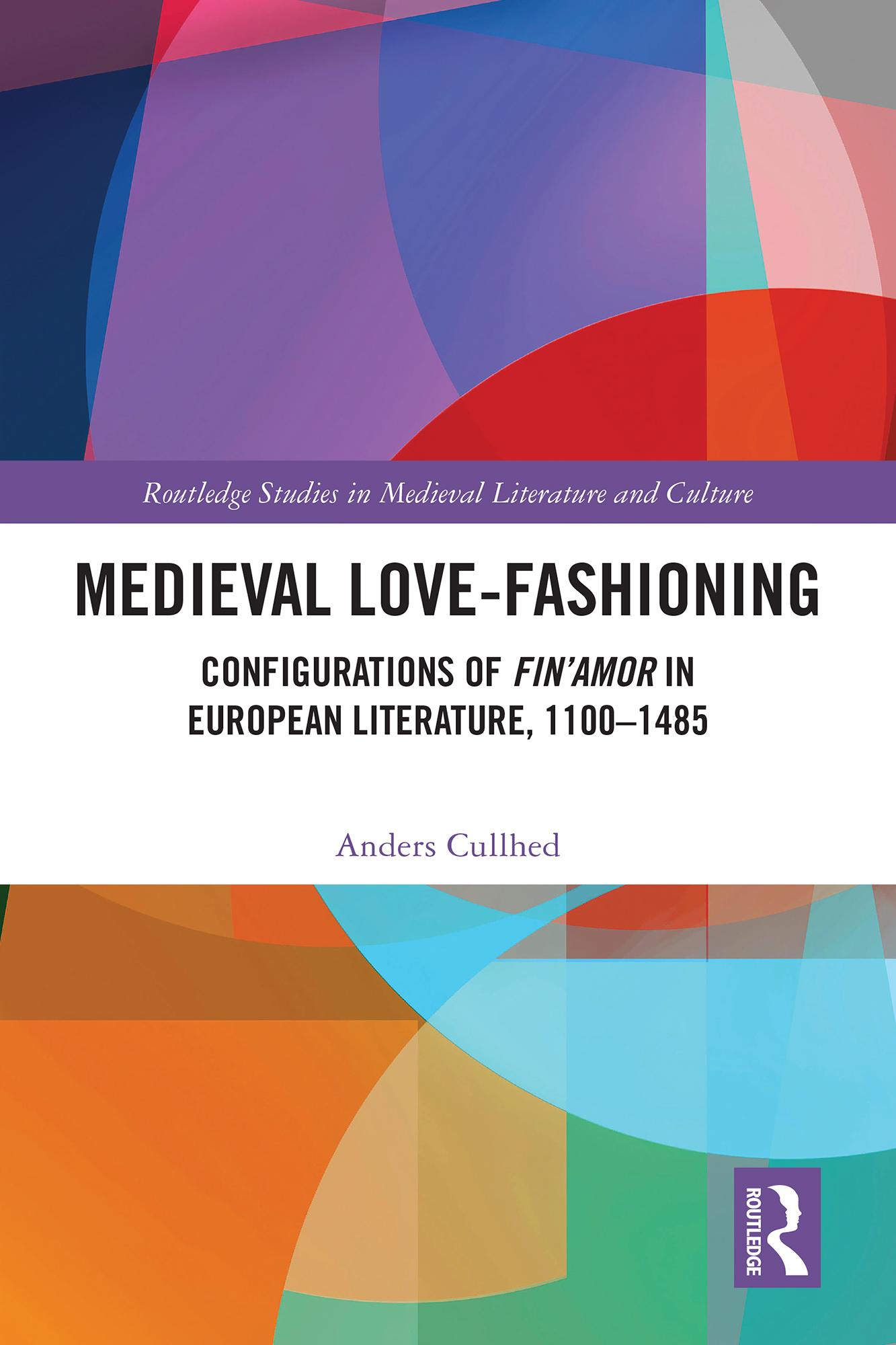
Medieval Love-Fashioning examines the topic of fin’amor, “gentle love”, in poetry, verse romances, and prose from the European High and Late Middle Ages.
It shows how fin’amor was established in twelfth-century troubadour poetry, then modified, parodied, and critiqued through four centuries of imaginative literature. This approach aims to do justice to the diversity of literary representations and interpretations of love in the Middle Ages, while at the same time maintaining a strict focus on fin’amor (rather than the tried-and-tested but historically cumbersome concept of “courtly love”). In this book, fin’amor is treated as a malleable trope (rather than a fixed concept), a metaphorical cluster incorporating classical (Ovidian) commonplaces, feudal phraseology, and liturgical formulae. A brief background survey is followed by presentations of poets such as the troubadour Bernart de Ventadorn, covering the twelfth century in some detail. The account continues, more synoptically, with enquiries into mostly canonical works from the later Middle Ages, such as Dante’s Comedy (early fourteenth century) and Geoffrey Chaucer’s Troilus and Criseyde (mid-1380s). The rationale for this arrangement is to allow the isolation of a well-defined and carefully delimited topic through four centuries of medieval literature, demonstrating its mobility across borders, languages, and genres.
Płać wygodnie kartą, Klarną, Apple Pay lub Google Pay. Nie jesteś zadowolony? Zawsze masz 14-dniową gwarancję zwrotu pieniędzy. Więcej przeczytasz w naszych warunkach. Masz pytania? Napisz do nas na hello@memmo.org.
Memmo ułatwia naukę – gdziekolwiek jesteś na świecie. U nas znajdziesz podręczniki i sprytne narzędzia do nauki w jednym miejscu: streszczenia, quizy, podcasty i fiszki. A do tego Ted, Twój kumpel do nauki, który odpowie na wszystko, co Cię nurtuje. Ponad 50 000 studentów już tu się uczy – stworzone, byś uczył się szybciej i mniej stresował.