
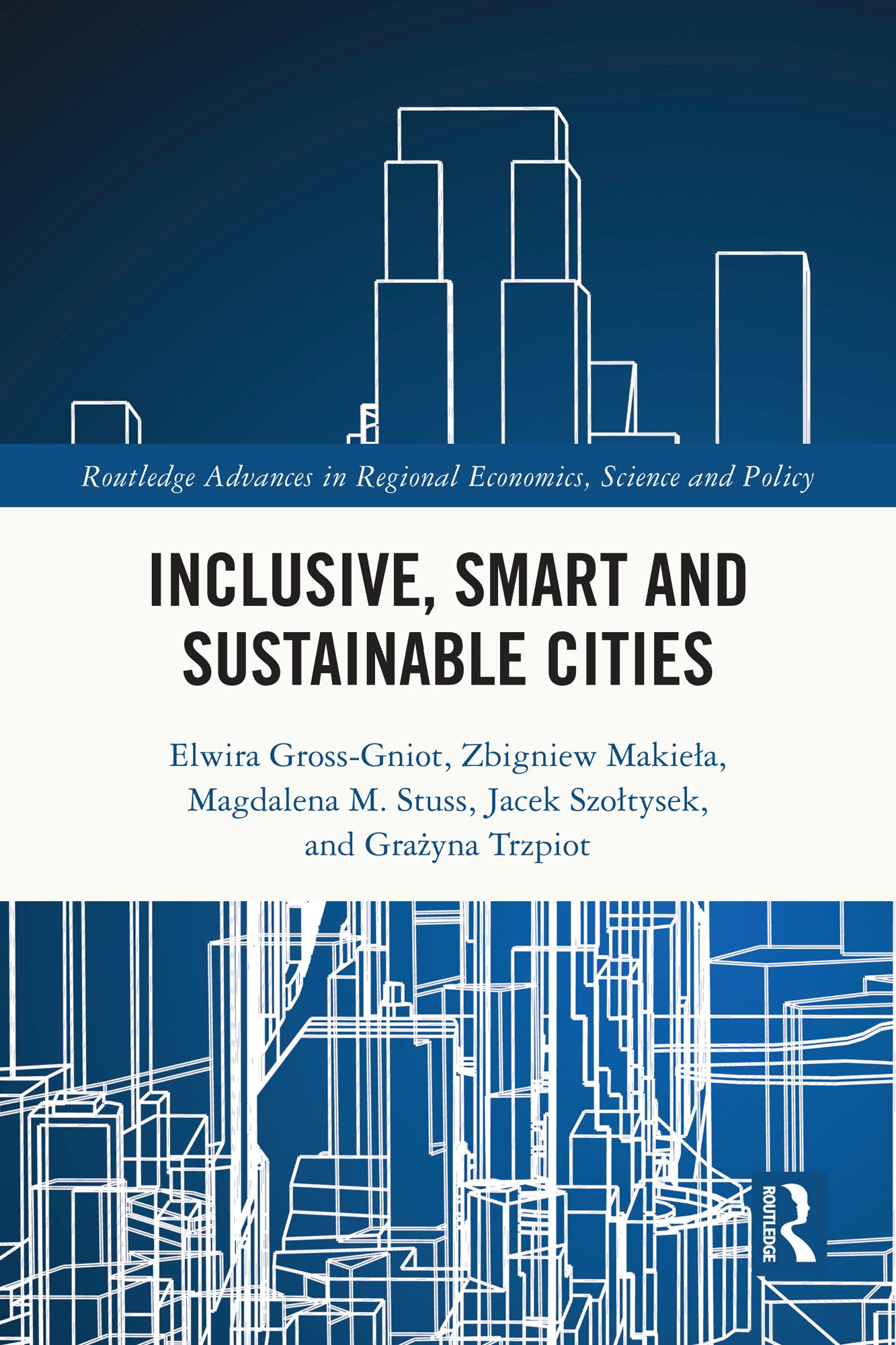
This book addresses critical issues for contemporary cities building their future, presenting a cohesive narrative rooted in the diverse experiences of its authors and reflecting the systemic nature of urban environments. The authors attribute the success of programming and implementing the development of future cities to the deliberate creation of stakeholder competencies, primarily through the use of smart city tools. It is assumed that, over time, these competencies will evolve both qualitatively and diversely, with their co-creation remaining a dynamic process due to shifts among stakeholders driven by migration, natural population growth or decline, and changes in stakeholder structures.
While urban communities differ significantly in various locations, conditioned culturally, politically, economically, etc., the book argues that the mechanisms of smart cities can be unified due to available technological tools and methods of filtering big data for the needs of cognitive and decision-making processes. In this area, international experiences of both cities and technology companies indicate the universality of solving problems of city functioning and the great ability to disseminate knowledge in this area. The identified trends and applied conceptual approaches can serve as a benchmark for searching for smart city competences that serve the constant increase in the inclusiveness of cities. The book will appeal to academics, researchers and advanced students, as well as policymakers and practitioners.
Płać wygodnie kartą, Klarną, Apple Pay lub Google Pay. Nie jesteś zadowolony? Zawsze masz 14-dniową gwarancję zwrotu pieniędzy. Więcej przeczytasz w naszych warunkach. Masz pytania? Napisz do nas na hello@memmo.org.
Memmo ułatwia naukę – gdziekolwiek jesteś na świecie. U nas znajdziesz podręczniki i sprytne narzędzia do nauki w jednym miejscu: streszczenia, quizy, podcasty i fiszki. A do tego Ted, Twój kumpel do nauki, który odpowie na wszystko, co Cię nurtuje. Ponad 50 000 studentów już tu się uczy – stworzone, byś uczył się szybciej i mniej stresował.