
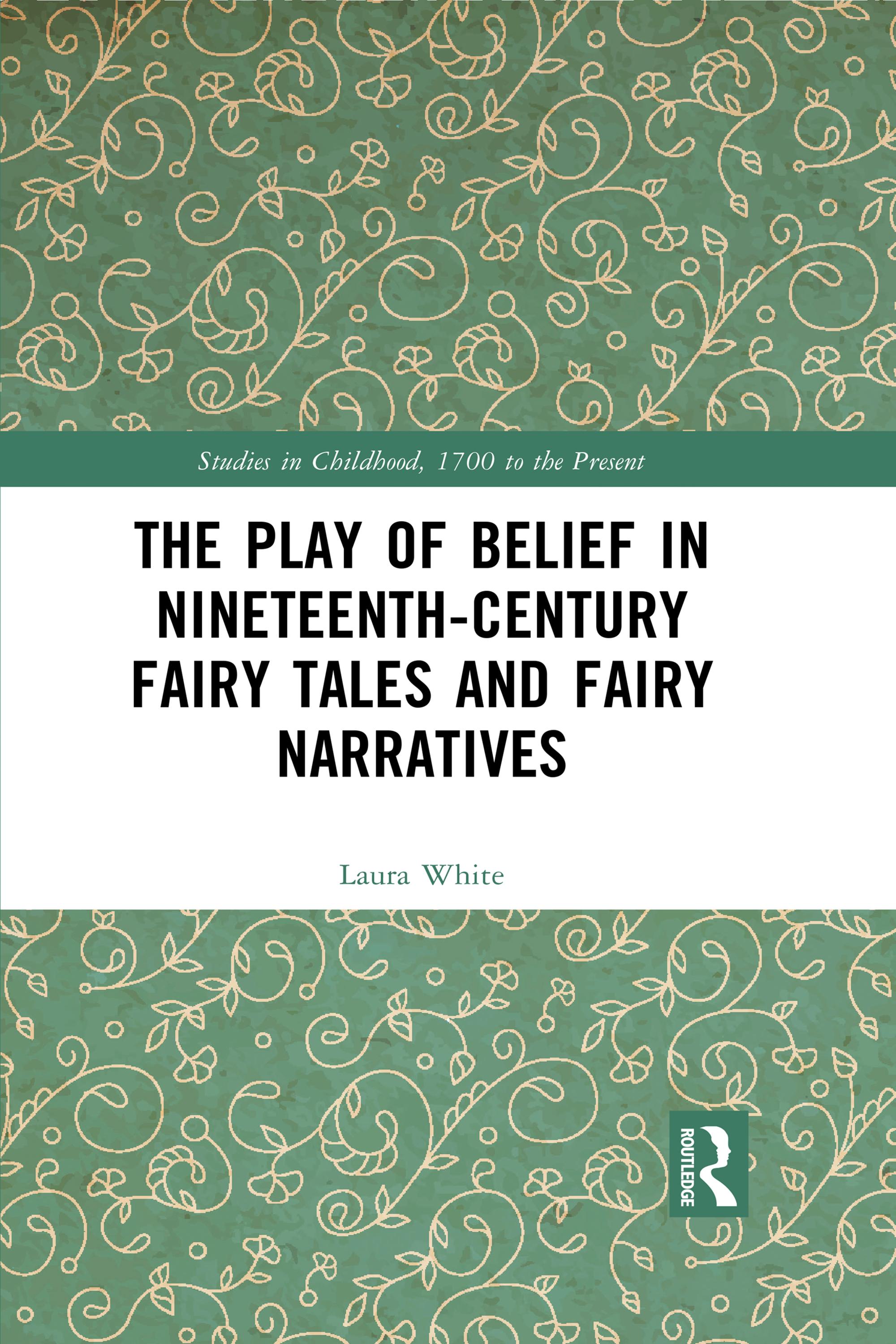
The Play of Belief in Nineteenth-Century Fairy Tales and Fairy Narratives examines the range of playful negotiations with truth claims in British and American fantasies for children of the nineteenth century within the context of the era’s ebbing Christian commitments and competing forces for belief and disenchantment.
While Victorian culture was broadly Christian, its fantasy literature for children shed the explicit piety of writers of earlier generations to embrace magical tales of many stripes. In many ways the story of children’s literature in the nineteenth century is one of a Christian culture disinheriting itself, turning its angels into fairies, its faith into a range of doubts, and blending its Christian ethics with progressive evolutionary ideals. The study shows how authors embraced a wide variety of rhetorical and narrative strategies by which play, ambiguity, and hesitation could suggest what is or is not “real.” Inevitably, such strategies brought disenchantment in their wake, for the more Victorian authors foregrounded the problem of belief, the more they betrayed the nervousness of their own affirmations, especially in the glut of sentiment and frenzied fantasy which typifies fin de siècle fairy tales.
This essential study illuminates the historical nature of children’s literature, making it indispensable reading for scholars of Victorian culture, children's fantasy, and anyone fascinated by the enduring power of fairy tales.
Płać wygodnie kartą, Klarną, Apple Pay lub Google Pay. Nie jesteś zadowolony? Zawsze masz 14-dniową gwarancję zwrotu pieniędzy. Więcej przeczytasz w naszych warunkach. Masz pytania? Napisz do nas na hello@memmo.org.
Memmo ułatwia naukę – gdziekolwiek jesteś na świecie. U nas znajdziesz podręczniki i sprytne narzędzia do nauki w jednym miejscu: streszczenia, quizy, podcasty i fiszki. A do tego Ted, Twój kumpel do nauki, który odpowie na wszystko, co Cię nurtuje. Ponad 50 000 studentów już tu się uczy – stworzone, byś uczył się szybciej i mniej stresował.