
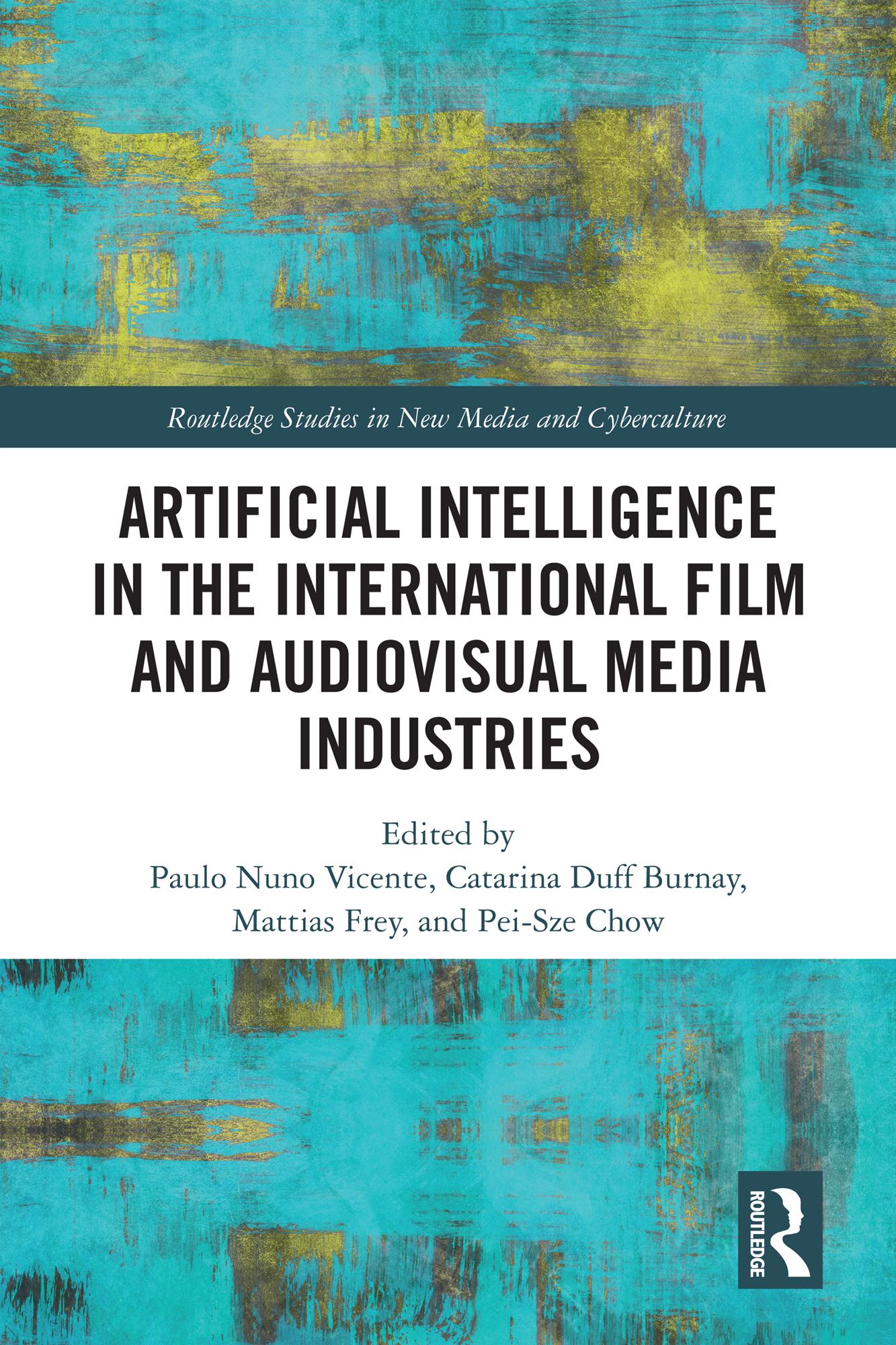
This edited volume explores the transformative impact of artificial intelligence (AI) on the film and audiovisual media industries.
Up to now, discussion of this topic has largely dwelled on a few discrete topics, such as the representations of AI in cinematic history or the generation of photorealistic images of de-aged or dead actors. The thrust of this book is to demonstrate how AI now plays a role in each and every stage of the value chain, from development and scriptwriting to editing workflows, post-production special effects, and audience engagement. Uniquely, this collection establishes a comprehensive understanding of AI’s role with not only cutting-edge original academic research but also practitioner interviews and industry insights from diverse global perspectives. Chapters closely examine case studies of how AI is influencing scriptwriting, storytelling, visual effects, music scoring, and how these tools are also changing film distribution, programming, marketing, and the viewer experience. Key overarching themes include how AI is both augmenting and constraining human creativity, the ethical and socio-cultural implications of AI across the film and media value chain, and the potential biases inherent in AI-generated content.
This volume is an essential resource for researchers, students, practitioners, and policymakers, offering a nuanced perspective on the emergence and integration of AI in the audiovisual sector and its implications for the future of creative media production.
Płać wygodnie kartą, Klarną, Apple Pay lub Google Pay. Nie jesteś zadowolony? Zawsze masz 14-dniową gwarancję zwrotu pieniędzy. Więcej przeczytasz w naszych warunkach. Masz pytania? Napisz do nas na hello@memmo.org.
Memmo ułatwia naukę – gdziekolwiek jesteś na świecie. U nas znajdziesz podręczniki i sprytne narzędzia do nauki w jednym miejscu: streszczenia, quizy, podcasty i fiszki. A do tego Ted, Twój kumpel do nauki, który odpowie na wszystko, co Cię nurtuje. Ponad 50 000 studentów już tu się uczy – stworzone, byś uczył się szybciej i mniej stresował.