
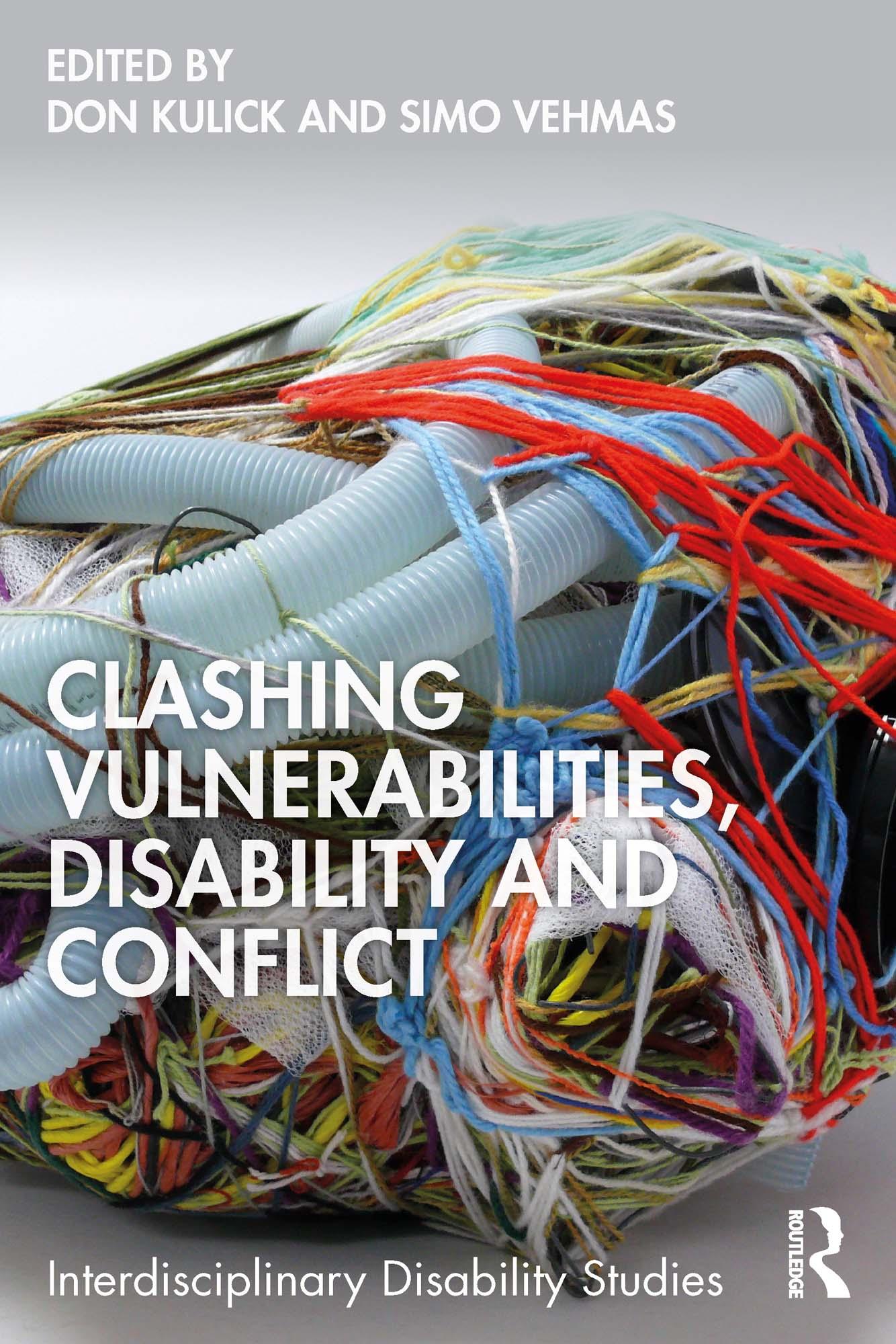
This book is about how we might think about vulnerability—what it is and how it operates—by looking at cases where different kinds of vulnerabilities clash.
Disability is often portrayed as a vulnerability in itself, and disabled people are often labelled a prototypical “vulnerable group”. This book disassembles that label by highlighting how vulnerabilities involving people with disabilities emerge and how they often conflict with other vulnerabilities: the vulnerabilities of disabled students vs. the vulnerabilities of under-educated and harassed teachers, for example. Or the struggles for legitimacy that pit neuro-divergent groups against people with chronic illnesses, one casting doubt on the validity of the other. Or the different uses of curb cuts for people in wheelchairs and people with visual impairments—uses which sometimes clash. Clashes like these illustrate the role that conflict plays in defining “vulnerability” and they lead us to think about how we might try to adjudicate between different claims of what can count as a vulnerability.
Providing new insight into power and non-power, ideology, socioeconomic structures, and the vicissitudes of disability as both a subject position and a lived experience, this book will be of interest to scholars and students of disability studies, anthropology and sociology, policy, and philosophy.
Płać wygodnie kartą, Klarną, Apple Pay lub Google Pay. Nie jesteś zadowolony? Zawsze masz 14-dniową gwarancję zwrotu pieniędzy. Więcej przeczytasz w naszych warunkach. Masz pytania? Napisz do nas na hello@memmo.org.
Memmo ułatwia naukę – gdziekolwiek jesteś na świecie. U nas znajdziesz podręczniki i sprytne narzędzia do nauki w jednym miejscu: streszczenia, quizy, podcasty i fiszki. A do tego Ted, Twój kumpel do nauki, który odpowie na wszystko, co Cię nurtuje. Ponad 50 000 studentów już tu się uczy – stworzone, byś uczył się szybciej i mniej stresował.