
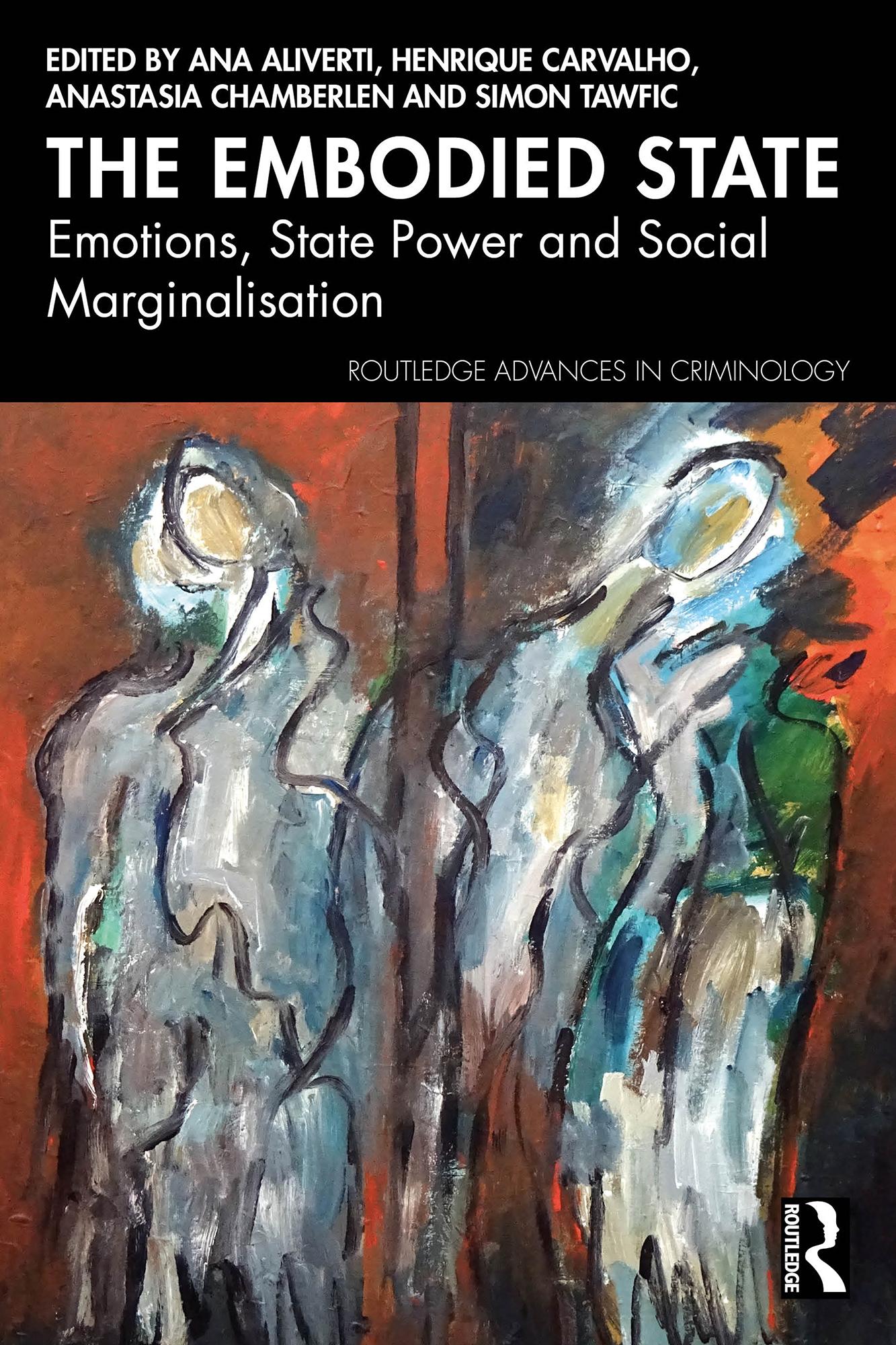
This edited collection advances a reconceptualisation of state power through emotions. Methodologically, it rethinks the study of the state from the bottom up, by seeking contributions that engage with performances and enactments of state power at the ground level, by frontline staff in direct contact with marginalised populations, and those that reflect on encounters with symbols and practices of state power. Conceptually, it advances a new theory of state power which places values and affects at the heart of its analysis.
In doing so, it seeks to make a crucial intellectual intervention in the study of the people, images and processes involved in the governance of social marginality in various institutional settings – criminal justice, immigration and asylum bureaucracies, the welfare system, the care sector, etc. – to explore how emotions are mobilised, how their expression in contemporary institutional settings of state power connects to broader moral and affective economies, the contradictions, and dilemmas they embody and reproduce, and the implications of these emotionalised forms of governance for state praxis and theory.
The Embodied State will therefore appeal to students and scholars of critical criminology, political sociology, anthropology, migration and border studies, and penology. It will also be of interest to policymakers and professionals involved in these fields.
Płać wygodnie kartą, Klarną, Apple Pay lub Google Pay. Nie jesteś zadowolony? Zawsze masz 14-dniową gwarancję zwrotu pieniędzy. Więcej przeczytasz w naszych warunkach. Masz pytania? Napisz do nas na hello@memmo.org.
Memmo ułatwia naukę – gdziekolwiek jesteś na świecie. U nas znajdziesz podręczniki i sprytne narzędzia do nauki w jednym miejscu: streszczenia, quizy, podcasty i fiszki. A do tego Ted, Twój kumpel do nauki, który odpowie na wszystko, co Cię nurtuje. Ponad 50 000 studentów już tu się uczy – stworzone, byś uczył się szybciej i mniej stresował.