
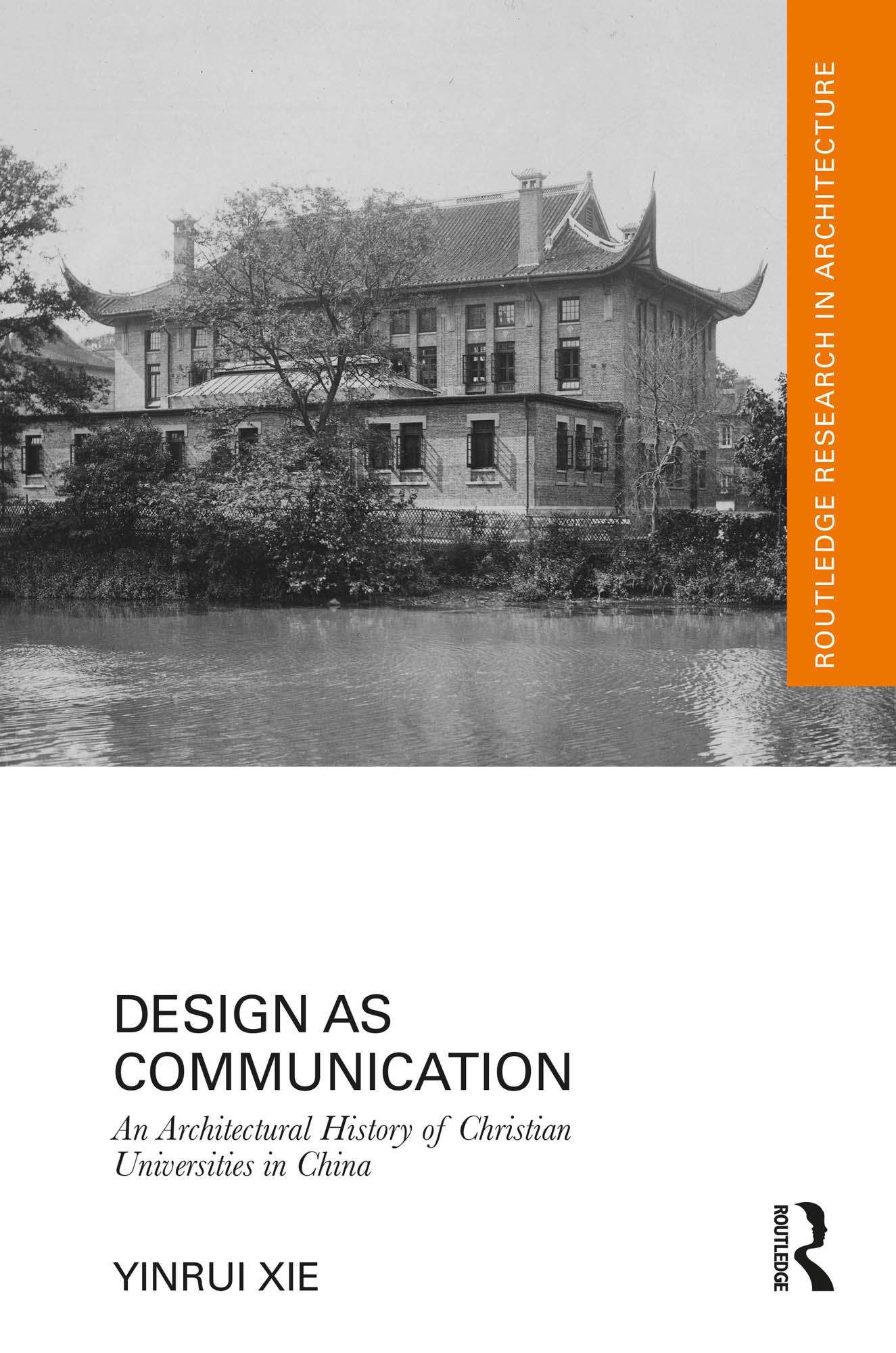
This book explores the architectural history of Christian universities in China, revealing how quasi‑colonial power interaction and cross‑cultural communication of meaning were channelled through religious and educational architecture in modern China.
The Christian universities in China witnessed an experimental representation of Chinese architectural identity, as the country – subject to an informal version of colonialism – struggled to become a modern nation‑state and to rethink its identity. This book offers new knowledge to the prospering postcolonial studies of the architectural history of Asian countries, deepening our understanding of the scope and content of the nuanced colonial encounters between the East and the West, and the relationship between architecture and power. Borrowing ideas from architectural semiotics, this book explores how architectural meaning has been interpreted and sometimes modified by its audience(s), whose voice has been largely ignored in traditional architectural historical studies. It provides a unique scope to further understand the communicative function of architecture, throwing light upon the broader socio‑cultural dialogue between China and the Western world in the twentieth century.
Design as Communication will be an enriching reference for those interested in the architectural dialogue between China and the West, architecture and postcolonialism and the localisation of Christianity in the world.
Płać wygodnie kartą, Klarną, Apple Pay lub Google Pay. Nie jesteś zadowolony? Zawsze masz 14-dniową gwarancję zwrotu pieniędzy. Więcej przeczytasz w naszych warunkach. Masz pytania? Napisz do nas na hello@memmo.org.
Memmo ułatwia naukę – gdziekolwiek jesteś na świecie. U nas znajdziesz podręczniki i sprytne narzędzia do nauki w jednym miejscu: streszczenia, quizy, podcasty i fiszki. A do tego Ted, Twój kumpel do nauki, który odpowie na wszystko, co Cię nurtuje. Ponad 50 000 studentów już tu się uczy – stworzone, byś uczył się szybciej i mniej stresował.