
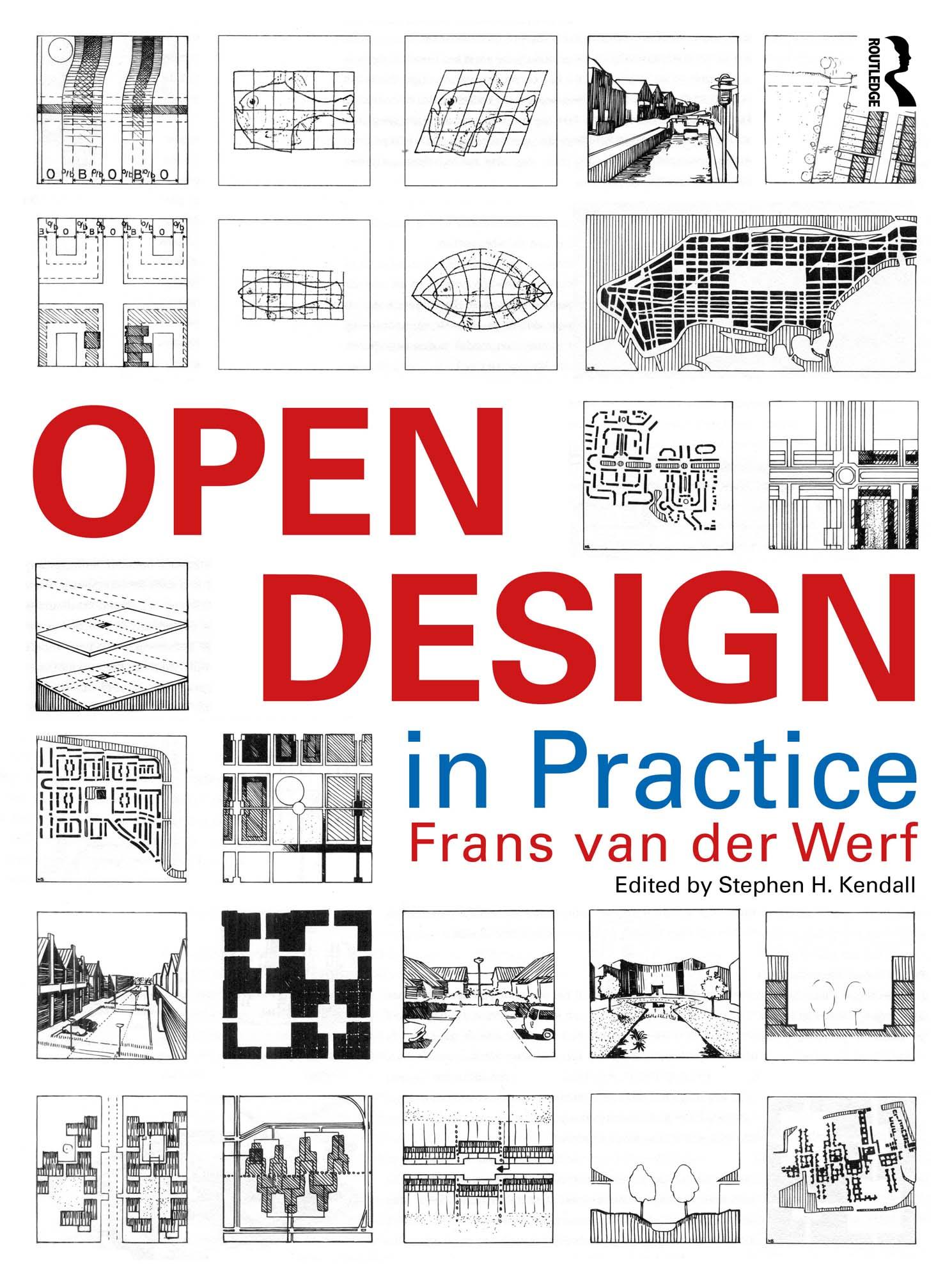
Architect and urban planner Frans van der Werf discloses in this book his own experiences as one of the pioneers of the worldwide Open Building approach. He designed Molenvliet, the first executed housing project that fully exemplifies the Open Building philosophy and methods. He shares his practice over the course of four decades in four Urban Tissue projects and seven Support Structures in the Netherlands and abroad. They still stand today as exemplars of how this approach can produce affordable user-centric environments of high quality that balance the common and the individual spheres of interest present in all housing projects.
This book is organized around the distinction of the three ‘Levels of Intervention’ in the built environment: Urban Tissue, Support and Infill, the fundamental insight introduced by John Habraken in the 1960s. After an extensive introduction, van der Werf goes into the design process of Urban Tissues, illustrated by his realized projects. Then he follows how he designed Supports and answers many questions of low-budget social housing projects, offering each occupant their own unique dwelling layout. Finally, he discusses the opportunities and challenges of the Infill level. He demonstrates open decision-making on the Levels of Support and Urban Tissue by the use of the ‘Pattern Language’ for communication and on the Infill Level for direct consultation with each user.
Frans concludes this book with personal reflections on the use of Open Design in daily practice and adds some additional resources that inspired him. This book is essential reading for students, architects, urbanists, developers and city authorities and also for groups of future inhabitants who want to consider Open Building for a truly sustainable environment.
Płać wygodnie kartą, Klarną, Apple Pay lub Google Pay. Nie jesteś zadowolony? Zawsze masz 14-dniową gwarancję zwrotu pieniędzy. Więcej przeczytasz w naszych warunkach. Masz pytania? Napisz do nas na hello@memmo.org.
Memmo ułatwia naukę – gdziekolwiek jesteś na świecie. U nas znajdziesz podręczniki i sprytne narzędzia do nauki w jednym miejscu: streszczenia, quizy, podcasty i fiszki. A do tego Ted, Twój kumpel do nauki, który odpowie na wszystko, co Cię nurtuje. Ponad 50 000 studentów już tu się uczy – stworzone, byś uczył się szybciej i mniej stresował.