
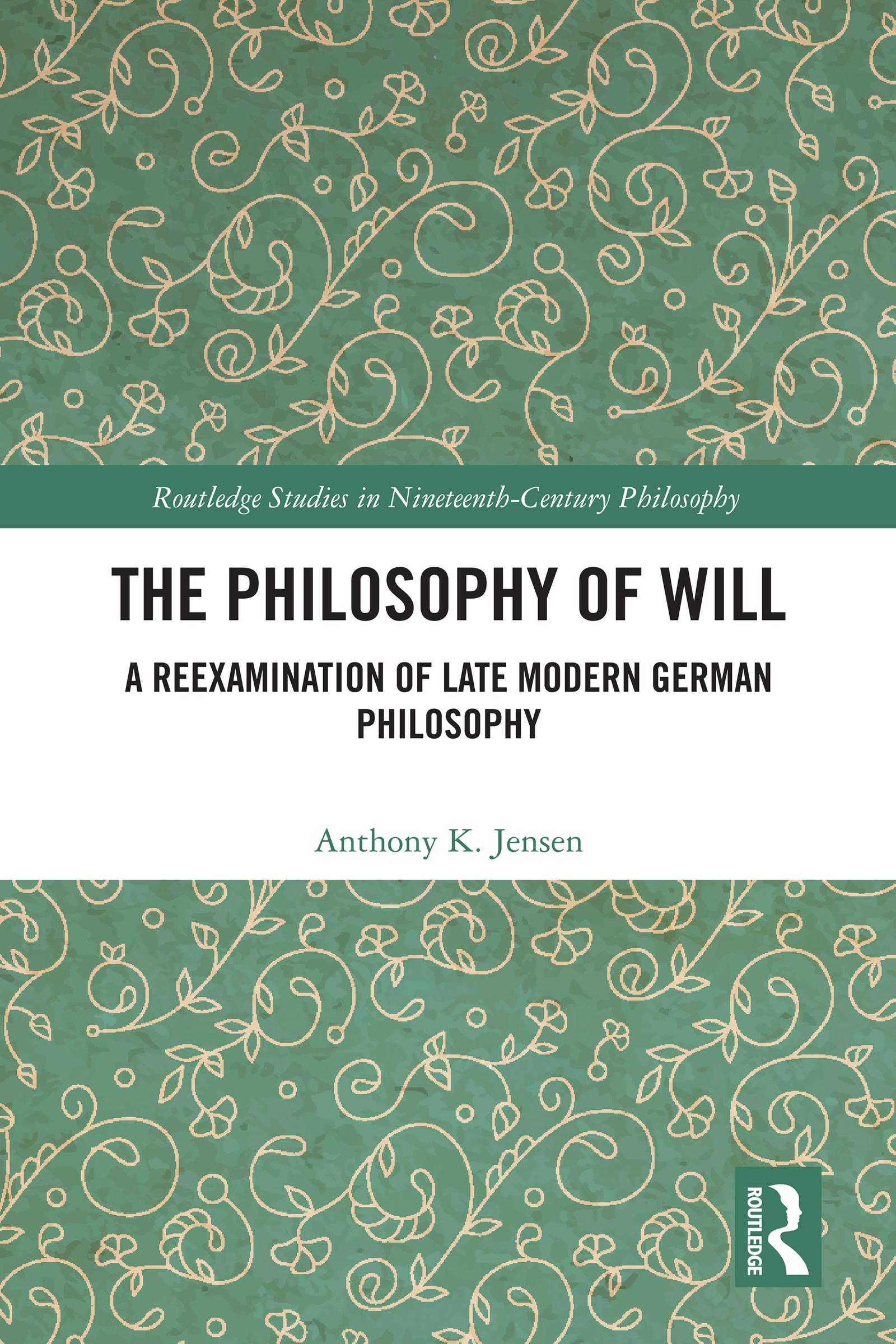
This book argues that the history of 19th-century German philosophy has neglected an important narrative: the philosophy of ‘Will’. It aims to reconsider the history of late modern philosophy in terms of the interconnected philosophies of ‘Will’ of several notable thinkers: Goethe, Schelling, Schopenhauer, Eduard von Hartmann, Philipp Mainländer, Julius Bahnsen, and Nietzsche.
The book has four goals. First, it shows that philosophy of Will really was a tradition, whose members were each working to put forward their notion of Will in self-consciously critical dialogue with the other members. Second, it shows that the 19th-century conception of Will is fundamentally diff erent from the commonplace use of Will as a synonym for what propels intentional or motivated human agency. Each figure considers their specific formulation of Will to be in some sense the essence of reality. Will is dynamic growth in the natural world, expresses itself in artistic creativity, impresses on us our existential condition, is the lever of history, and is the wellspring from which moral values are drawn. Third, by focusing on these philosophers of Will, this book reveals a clearer interrelation between philosophy and the wider history of German intellectual culture than has typically been done. Will theory bears immediate connection to the day’s reigning issues in politics, art, psychology, historiography, and the natural sciences. Finally, it aims to reexamine these thinkers’ position in the history of philosophy. Some, like Goethe, have long been on the periphery of mainstream philosophy. Some, like Hartmann, Mainländer, and Bahnsen, have long been forgotten. And some, like Nietzsche, have been characterized as more a radical innovator and less a critical respondent to the tradition of Will philosophy.
A complex yet lively contribution to the history of philosophical ideas, The Philosophy of Will is essential reading for scholars and graduate students interested in German systematic metaphysics and more broadly anyone interested in the intellectual history of late modern philosophy, science, epistemology, aesthetics, politics, and ethics.
Płać wygodnie kartą, Klarną, Apple Pay lub Google Pay. Nie jesteś zadowolony? Zawsze masz 14-dniową gwarancję zwrotu pieniędzy. Więcej przeczytasz w naszych warunkach. Masz pytania? Napisz do nas na hello@memmo.org.
Memmo ułatwia naukę – gdziekolwiek jesteś na świecie. U nas znajdziesz podręczniki i sprytne narzędzia do nauki w jednym miejscu: streszczenia, quizy, podcasty i fiszki. A do tego Ted, Twój kumpel do nauki, który odpowie na wszystko, co Cię nurtuje. Ponad 50 000 studentów już tu się uczy – stworzone, byś uczył się szybciej i mniej stresował.