
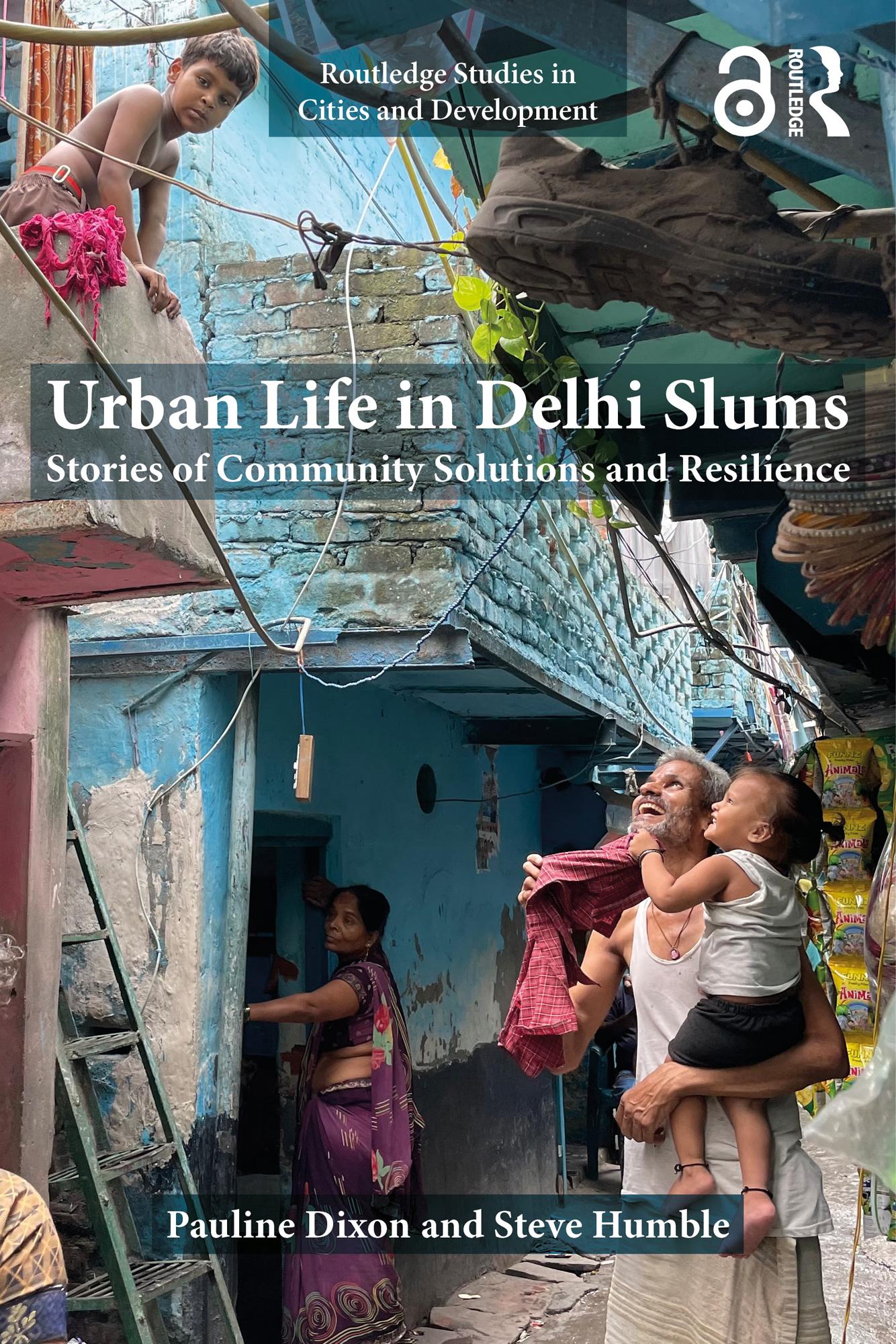
This book investigates urban life in the slums of Delhi, demonstrating how individuals and communities self-organise to solve problems that arise in their neighbourhoods.
Around one-quarter of the world’s urban population live in informal, slum and squatter settlements, representing a significant economic and cultural force. Despite this, settlements are often perceived as marginal, homogenous places, overlooking the resilience and agency of the diverse actors, networks and social groups working collectively within them. This book draws on extensive qualitative and quantitative data from squatter and resettlement colonies in and around Delhi, foregrounding the voices of residents to build a bottom-up picture of place and urban development. The book analyses the contexts in which households operate within their communities and the adaptiveness of individuals living in different slum types, with differing levels of governance. In doing so, the book demonstrates the effect which different institutional agreements and governance systems have on enterprise, empowerment, resilience, trust, dignity and engaging in life that has purpose and meaning.
This book’s detailed assessment of slum spaces and networks will be of interest to researchers across a range of fields, including international development, geography, urban planning, politics and sociology, as well as to policy makers and civil society organisations.
Płać wygodnie kartą, Klarną, Apple Pay lub Google Pay. Nie jesteś zadowolony? Zawsze masz 14-dniową gwarancję zwrotu pieniędzy. Więcej przeczytasz w naszych warunkach. Masz pytania? Napisz do nas na hello@memmo.org.
Memmo ułatwia naukę – gdziekolwiek jesteś na świecie. U nas znajdziesz podręczniki i sprytne narzędzia do nauki w jednym miejscu: streszczenia, quizy, podcasty i fiszki. A do tego Ted, Twój kumpel do nauki, który odpowie na wszystko, co Cię nurtuje. Ponad 50 000 studentów już tu się uczy – stworzone, byś uczył się szybciej i mniej stresował.