
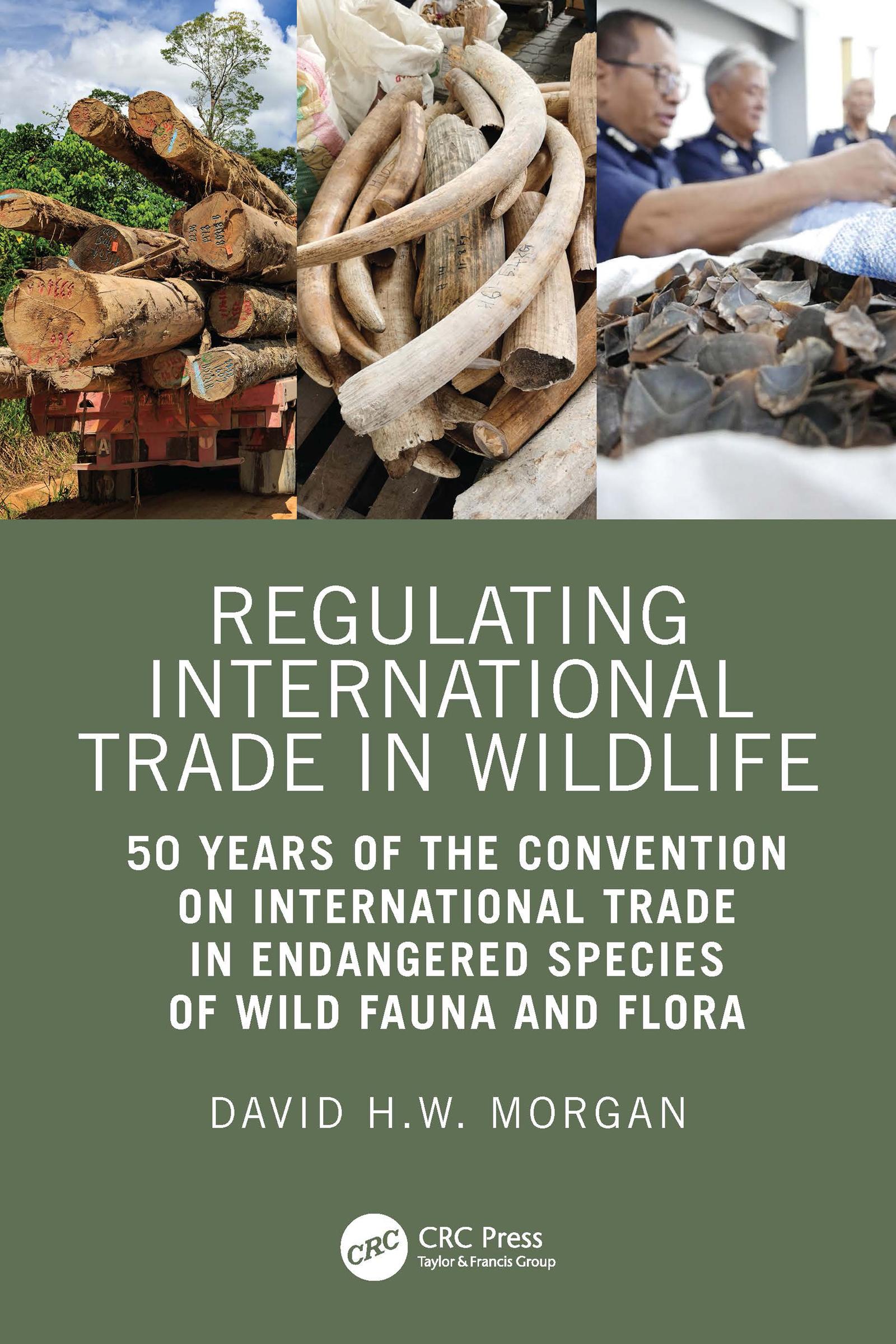
The Convention on International Trade in Endangered Species of Wild Fauna and Flora (CITES) was one of the first in a new wave of global multilateral environmental agreements (MEAs) formed after the 1972 United Nations Conference on the Human Environment. It is widely recognized as being one of the most successful biodiversity MEAs.
Regulating International Trade in Wildlife: 50 Years of the Convention on International Trade in Endangered Species of Wild Fauna and Flora represents the first published history of the Convention to coincide with the 50th anniversary of its entry into force. It examines the context under which the Convention was created, and charts the development of its internal organization, including its governing and intersessional bodies and its secretariat, and the personalities that built them.
CITES’ business is about the conservation of species affected by international trade. This book reviews the application of CITES to whales, the African elephant, crocodilians, vicuña, timber and tree species, fish and other marine species. The Convention’s compliance framework is arguably its most pre-eminent feature. The book looks at the way that key obligations on Parties have been identified, the standards of implementation set, what efforts are made to help Parties comply with these, and what sanctions are taken against Parties that fail to implement them.
Finally, the author offers some personal reflections on the successes and failures of CITES, based on his 40 years of engagement with the Convention, and looks ahead to how it might develop in its second half-century. Regulating International Trade in Wildlife: 50 Years of the Convention on International Trade in Endangered Species of Wild Fauna and Flora is of great interest to wildlife scientists, including conservationists, historians, biologists, as well as environmental scientists and non-governmental organizations.
FEATURES:
- Tracks the history of the development of CITES, its forerunners, origins, negotiation and entry into force
- Reviews the internal development of the Convention and its place in the wider debate about environmental security
- Is extensively referenced from primary research of the Convention’s archives
- Offers incisive analysis of its successes and failures
Płać wygodnie kartą, Klarną, Apple Pay lub Google Pay. Nie jesteś zadowolony? Zawsze masz 14-dniową gwarancję zwrotu pieniędzy. Więcej przeczytasz w naszych warunkach. Masz pytania? Napisz do nas na hello@memmo.org.
Memmo ułatwia naukę – gdziekolwiek jesteś na świecie. U nas znajdziesz podręczniki i sprytne narzędzia do nauki w jednym miejscu: streszczenia, quizy, podcasty i fiszki. A do tego Ted, Twój kumpel do nauki, który odpowie na wszystko, co Cię nurtuje. Ponad 50 000 studentów już tu się uczy – stworzone, byś uczył się szybciej i mniej stresował.