
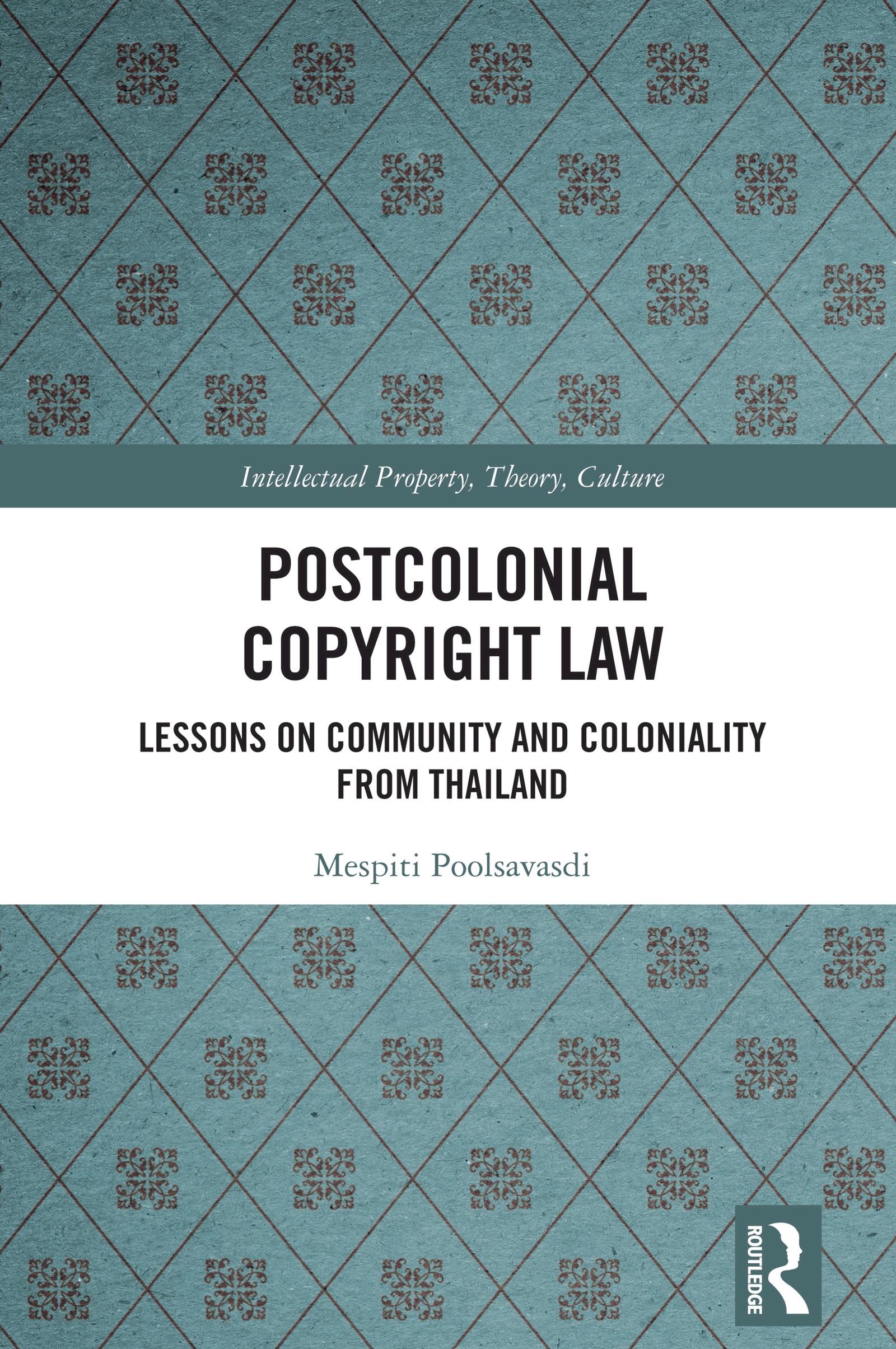
This book appraises postcolonial perspectives to rethink the meaning of copyright and makes suggestions for its future within the global landscape of intellectual property law.
Drawing on the experience of Thailand as a case study, a country with a unique yet marginal position in discussions on colonialism, the book offers valuable insights for the international field of copyright law. Thai copyright law emerged in an era when the threat of European colonial powers inspired local ruling elites to embark on a quest for modernisation and establish a modern absolutist state. One can observe similar dynamics in the recent promotion of Thailand’s Creative Economy. Contrary to these top-down developments, the book argues for greater attention to attitudes and practices on the ground. Taking an interdisciplinary approach informed by film studies, area studies, decolonial studies, and legal sociology, the book makes a case to redefine copyright as a community resource.
The book will be of interest to researchers in the field of copyright law, postcolonial and decolonial studies, and sociolegal studies.
Płać wygodnie kartą, Klarną, Apple Pay lub Google Pay. Nie jesteś zadowolony? Zawsze masz 14-dniową gwarancję zwrotu pieniędzy. Więcej przeczytasz w naszych warunkach. Masz pytania? Napisz do nas na hello@memmo.org.
Memmo ułatwia naukę – gdziekolwiek jesteś na świecie. U nas znajdziesz podręczniki i sprytne narzędzia do nauki w jednym miejscu: streszczenia, quizy, podcasty i fiszki. A do tego Ted, Twój kumpel do nauki, który odpowie na wszystko, co Cię nurtuje. Ponad 50 000 studentów już tu się uczy – stworzone, byś uczył się szybciej i mniej stresował.