
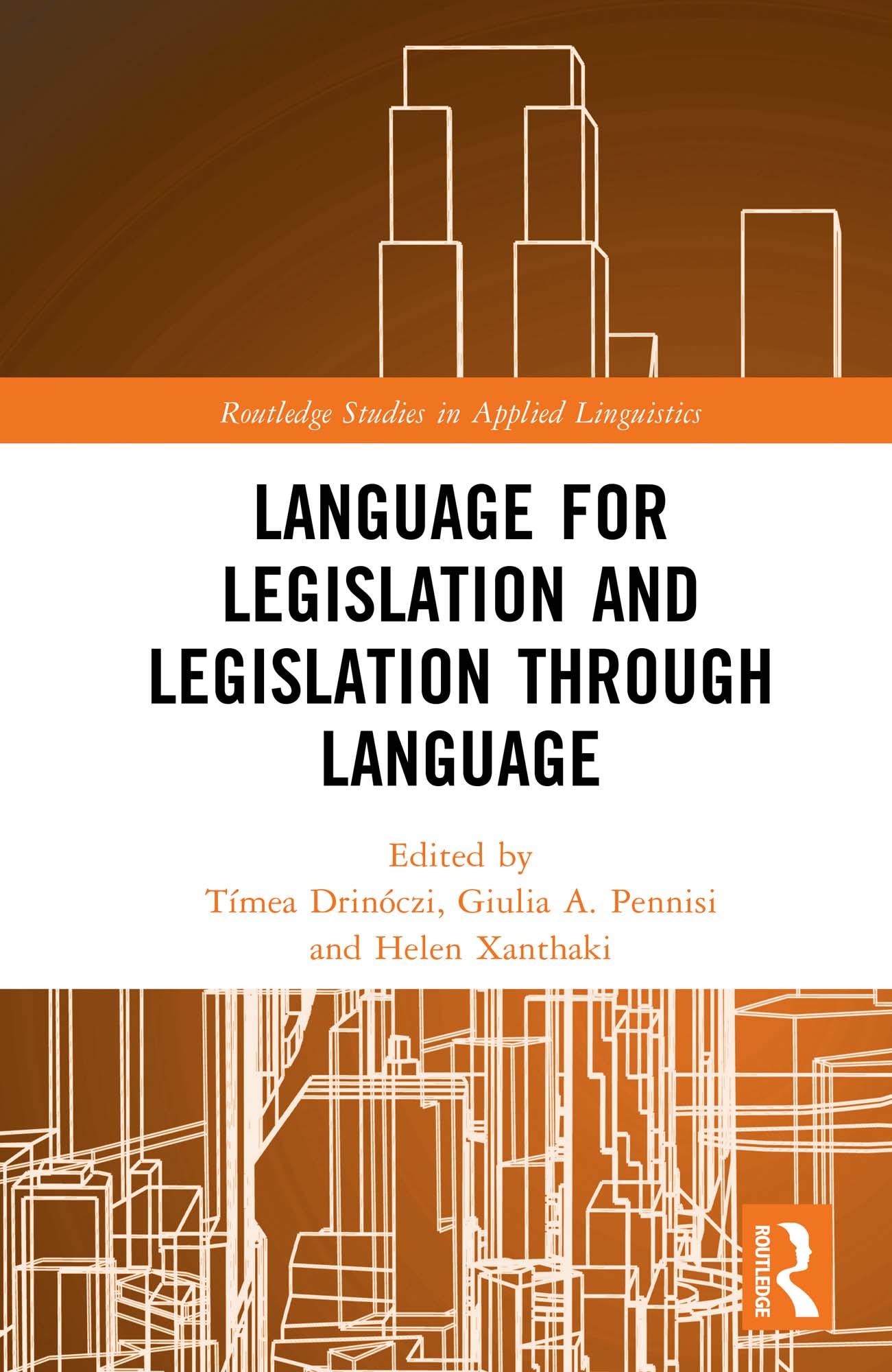
This collection teaches us how language and legislation interact to produce effective laws. It brings linguistics, lawyers, theory, and practices together to show how linguistic tools, concepts, and methodologies can be applied to improve the law’s clarity, transparency, and efficiency, thus widening its social reach.
Drawing on case studies across Europe, chapters critically reflect on the dynamics of legislative drafting and the dissemination of legislation and the ways in which drafted legislation both creates laws and serves to communicate their meaning. This volume features perspectives from national and transnational examples to demonstrate the impact of varied stakeholders—legislative bodies, law interpreters, and law enforcers—on the implementation of legislation, particularly when legislative texts are translated and interpreted across different settings. Through the lens of discourse analysis, legislative texts are analyzed in lexico‑grammatical and textual terms, highlighting the disparity between what is conceived and what might be expressed clearly in words and how this knowledge can inform better drafting practices. This collection charts a way forward for linguistics as a discipline to contribute to a better understanding of the nuances around effective legislative expression.
This book will appeal to scholars and stakeholders working at the intersection of language and the law, in such fields as applied linguistics, forensic linguistics, regulation, legislation, and legislative drafting.
Płać wygodnie kartą, Klarną, Apple Pay lub Google Pay. Nie jesteś zadowolony? Zawsze masz 14-dniową gwarancję zwrotu pieniędzy. Więcej przeczytasz w naszych warunkach. Masz pytania? Napisz do nas na hello@memmo.org.
Memmo ułatwia naukę – gdziekolwiek jesteś na świecie. U nas znajdziesz podręczniki i sprytne narzędzia do nauki w jednym miejscu: streszczenia, quizy, podcasty i fiszki. A do tego Ted, Twój kumpel do nauki, który odpowie na wszystko, co Cię nurtuje. Ponad 50 000 studentów już tu się uczy – stworzone, byś uczył się szybciej i mniej stresował.