
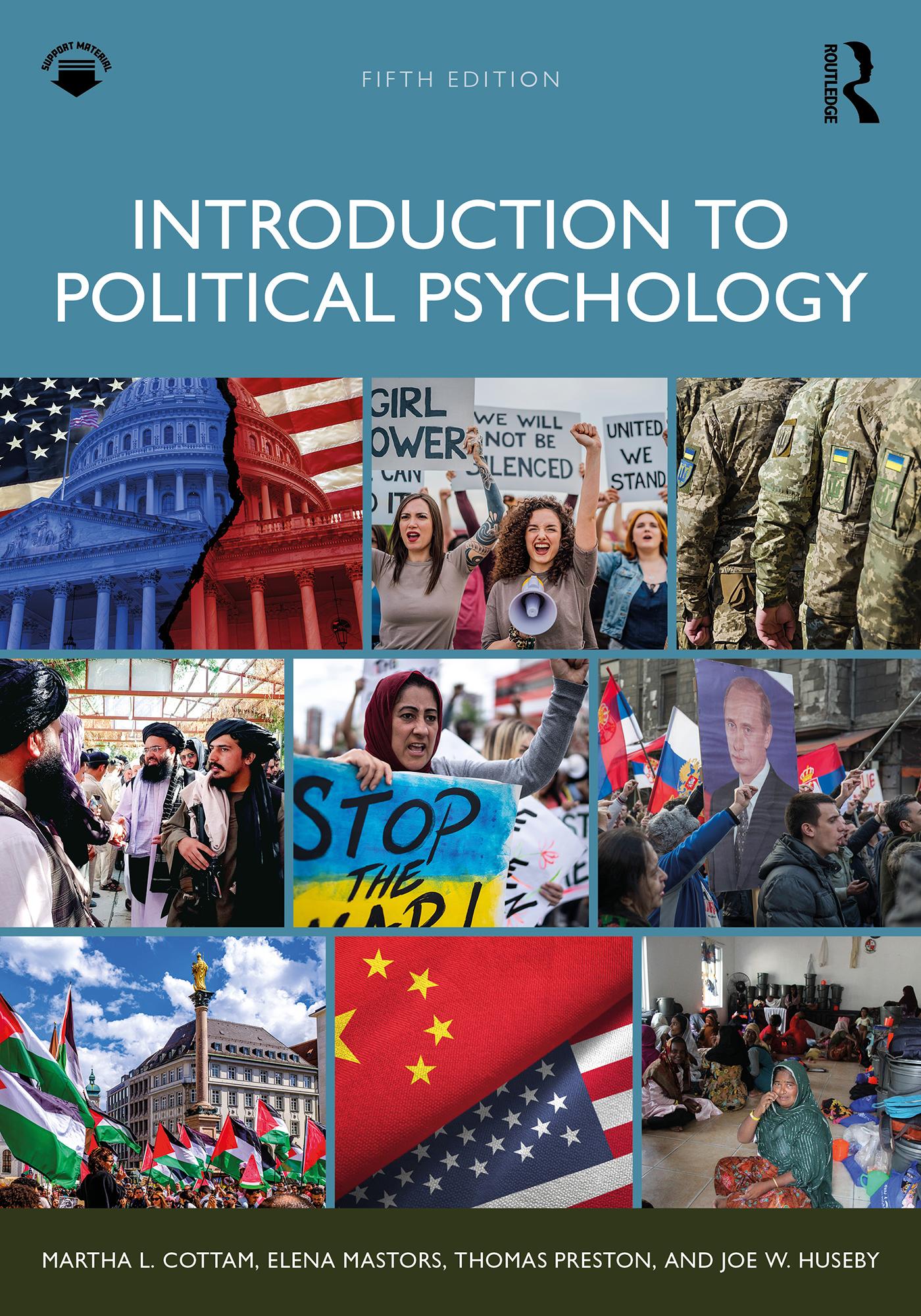
This fifth edition of Introduction to Political Psychology explores the many psychological patterns that influence individual political behavior. The authors introduce readers to a broad range of theories, concepts, and case studies of political activity, arguing that individuals are driven or motivated to act in accordance with personality characteristics, values, beliefs, and attachments to groups. The book explains many aspects of political behavior—whether seemingly pathological actions or normal decision-making practices, which sometimes work optimally, and sometimes fail.
Thoroughly updated throughout, the book examines patterns of political behavior in areas including leadership, group behavior, voting, race, nationalism, terrorism, and war. This edition features:
- Detailed coverage of political polarization, and the psychology behind it;
- Up-to-date topics and case studies focused on the 2024 US election, the war in Ukraine, and the Israel–Palestine conflict, as well as social movements such as climate change activism, Black Lives Matter, and #MeToo;
- A robust suite of timesaving support material.
Accessibly written and comprehensive in scope, it is an essential companion for all graduate and upper-level undergraduate students of psychology, political science, and political psychology. It will also be of interest to those in the policy-making community, especially those looking to learn more about the extent to which perceptions, personality, and group dynamics affect the policy-making arena.
Płać wygodnie kartą, Klarną, Apple Pay lub Google Pay. Nie jesteś zadowolony? Zawsze masz 14-dniową gwarancję zwrotu pieniędzy. Więcej przeczytasz w naszych warunkach. Masz pytania? Napisz do nas na hello@memmo.org.
Memmo ułatwia naukę – gdziekolwiek jesteś na świecie. U nas znajdziesz podręczniki i sprytne narzędzia do nauki w jednym miejscu: streszczenia, quizy, podcasty i fiszki. A do tego Ted, Twój kumpel do nauki, który odpowie na wszystko, co Cię nurtuje. Ponad 50 000 studentów już tu się uczy – stworzone, byś uczył się szybciej i mniej stresował.