
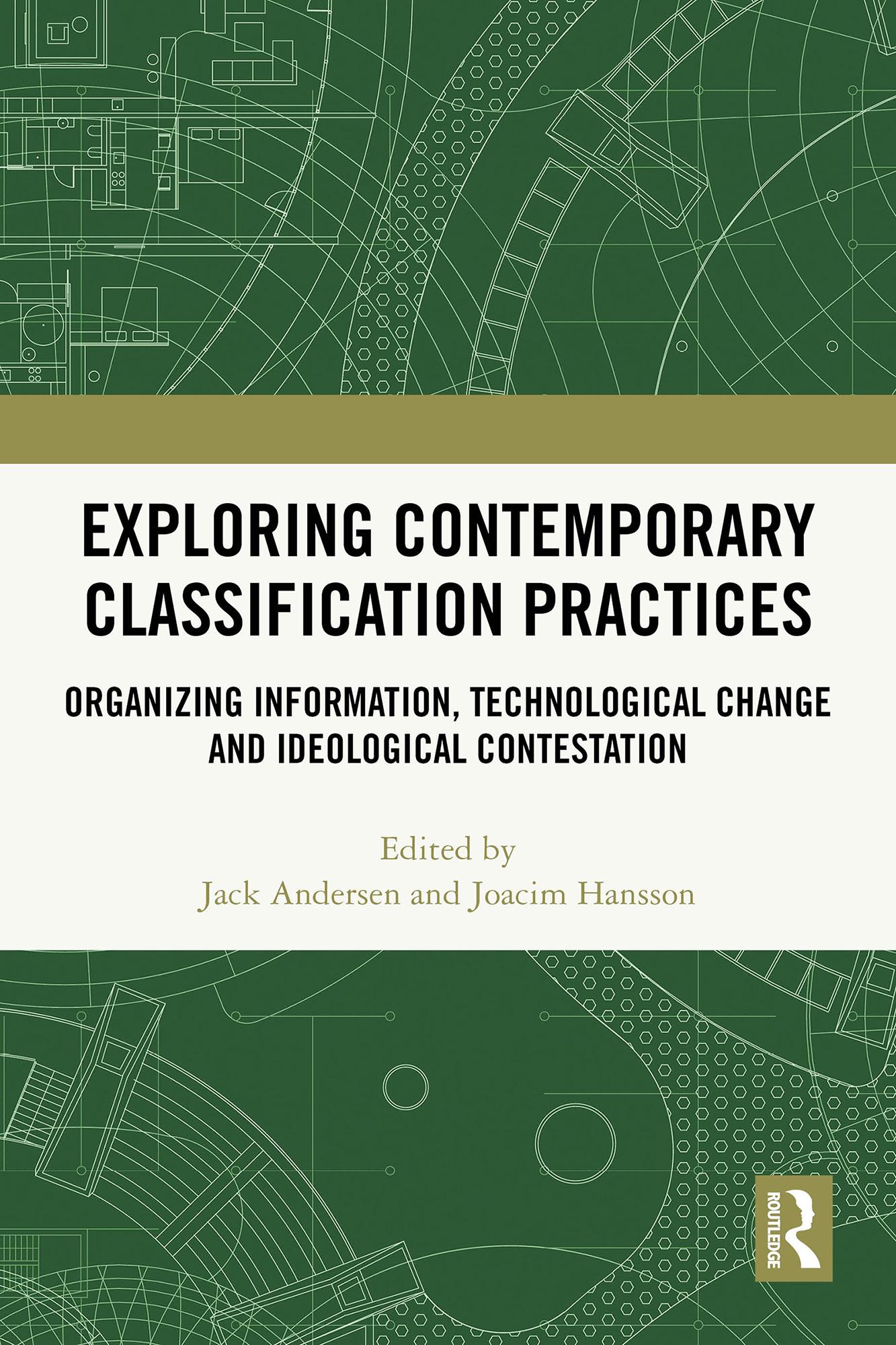
The contributions in Exploring Contemporary Classification Practices analyse various aspects of classification and their importance to contemporary debates surrounding cultural heritage and information access.
Specific focus is on systems of classification, media technologies, and cultural institutions (such as libraries, archives, and museums) and how they respond to challenges, including classificatory bias, truth, neutrality, institutional tradition, and technological innovation. Raising awareness of classification practices in modern culture serves to emphasize how sorting things into categories is both an everyday accomplishment and a highly cultural and political activity with consequences for those who are classified and for those who classify. Throughout this book, ‘classification’ is defined as the practice and activity of systematically ordering and categorizing entities to bring structure and understanding to diverse contexts. This book addresses several timely issues both in terms of theoretical advancement and empirical diversity. The scholarly discussion on the classification and organization of knowledge has developed with digital technologies from a bibliographic paradigm into something much wider, as the need for metadata and classification has become critical for usability and legitimacy. This development has also led research on classification and knowledge organization to confront a new, post-humanist reality with not only emerging varieties of information currents in society, but also the development of new theoretical and methodological strands, such as post-colonial and intersectional perspectives, and digital humanities methodologies. In doing so, this book seeks to address critical questions for the archives, library, and museum sectors concerning the organization of information.
Exploring Contemporary Classification Practices will, therefore be of interest to academics, researchers, and practitioners with interests in library and information science, archives, cultural heritage, and digital heritage.
Płać wygodnie kartą, Klarną, Apple Pay lub Google Pay. Nie jesteś zadowolony? Zawsze masz 14-dniową gwarancję zwrotu pieniędzy. Więcej przeczytasz w naszych warunkach. Masz pytania? Napisz do nas na hello@memmo.org.
Memmo ułatwia naukę – gdziekolwiek jesteś na świecie. U nas znajdziesz podręczniki i sprytne narzędzia do nauki w jednym miejscu: streszczenia, quizy, podcasty i fiszki. A do tego Ted, Twój kumpel do nauki, który odpowie na wszystko, co Cię nurtuje. Ponad 50 000 studentów już tu się uczy – stworzone, byś uczył się szybciej i mniej stresował.